

 Iranians and supporters of the NCRI hold a major rally in Berlin, Germany, on February 7, 2026
THIS PAGE WILL BE UPDATED WITH THE LATEST NEWS
UPDATE: 09:30 PM CEST
Iran’s Internal Repression Is Exporting Instability to the World

Iran’s geography ensures that the consequences of its domestic politics cannot remain within its borders. The country overlooks the Strait of Hormuz, lies between the Persian Gulf and the Caspian Sea, and connects the Middle East with Central and South Asia. Prolonged instability in Iran can therefore threaten regional security, disrupt energy supplies and impose costs on the global economy.
Yet Western policy continues to treat the Iranian people’s demand for political change as separate from these strategic concerns. Human rights are discussed in one forum, nuclear proliferation in another and regional security in a third. In reality, they are different dimensions of the same crisis.
A government that cannot rely on the consent of its people must seek security through other means. In Iran, that has meant repression at home, confrontation abroad and the cultivation of proxy forces across the region. The regime’s domestic fragility does not encourage moderation; it creates an incentive to export insecurity beyond Iran’s borders.
This connection has become particularly visible during the latest war. While international attention has focused on military strikes, missile capabilities and the security of energy corridors, the Iranian authorities have intensified repression inside the country. The war has provided not only a national-security justification for silencing dissent but also a degree of international invisibility. Executions that might otherwise provoke widespread condemnation risk becoming footnotes amid reports of airstrikes and diplomatic negotiations.
Iran Is Repeating the Crime Of 1988

August casts a long shadow over Iran. Thirty-eight years ago, facing one of the gravest crises in its history, the clerical regime turned its fury against political prisoners.
The result was the 1988 prison massacre, in which some 30,000 prisoners, most of them members and supporters of the principal Iranian opposition movement, the People’s Mojahedin Organisation of Iran (PMOI/MEK), were summarily executed and buried in secret mass graves, according to the PMOI’s own count. Independent human rights organisations, among them Amnesty International and Human Rights Watch, put the toll at between 2,800 and 5,000. The regime believed that by exterminating its most steadfast opponents, it could secure its own survival.
Today, the Tehran regime is again reaching for the same bloody playbook.
The parallels are striking. In 1988, Ruhollah Khomeini had just accepted a ceasefire in the Iran-Iraq war after years of insisting that the conflict continue until the conquest of Jerusalem. Weakened, humiliated, fearful of internal dissent and confronted by an organised opposition it could not politically defeat, the regime turned its repression against defenceless political prisoners.
The Mullahs’ Worst Nightmare Isn’t Street Protesters. It’s The Underground Network Washington Ignores

For more than four decades, the Islamic Republic has confronted a persistent challenge that it has never been able to eliminate: an organized resistance committed to ending clerical rule and establishing a democratic alternative in Iran.
This distinction is increasingly important as Iran experiences repeated waves of popular unrest. The protests of 2009, 2017-18, 2019, 2022, and particularly 2026, demonstrated the depth of public anger toward the regime. But they also raised a critical question for anyone assessing Iran’s future: What happens when spontaneous public anger encounters a government prepared to use overwhelming force?
The Iranian opposition is often portrayed abroad as a collection of dissidents, activists, and diaspora groups. That description overlooks a significant reality: There is an organized resistance operating inside Iran, with networks capable of surviving one of the most repressive security systems in the world, and even growing.
UPDATE: 09:00 AM CEST
Evin Political Prisoners Defy Iran’s Regime to Support Simay Azadi Telethon
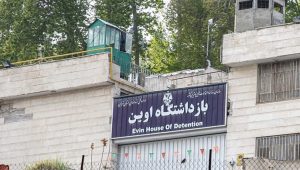
Defying immense risks and the regime’s brutal repression, political prisoners inside Iran’s notorious Evin Prison have sent a message of solidarity to the 30th national telethon of Simay-e Azadi (Iran National TV), the television network of the Iranian Resistance.
The ability of these political prisoners, who supporters of the People’s Mojahedin Organization of Iran (PMOI/MEK), to send a message from behind the cold and heavy walls of Evin demonstrates that the regime’s crackdowns have failed to break the spirit of the Iranian people. This bold act of defiance proves that Simay-e Azadi is much more than a television network; it is the definitive, unyielding voice of a nation that refuses to surrender to tyranny.
International Youth Day: Architects of a Free Iran Facing Repression
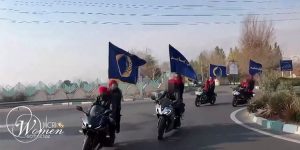
In Iran, International Youth Day on August 12 serves as a powerful testament to a fearless generation that leads the charge for freedom and equality, confronting one of the world’s most brutal authoritarian regimes.
At the forefront of this ongoing struggle for fundamental freedoms and the right to life stand Iran’s young women and girls. They do not seek minor reform or superficial policy tweaks; by directly confronting misogynistic laws and state security apparatuses, they have demonstrated an uncompromising resolve to break free from tyranny. This courage draws from a deep historic lineage. Concurrently marking the anniversary of the 1988 massacre—in which 30,000 political prisoners were executed, a significant portion of whom were idealist young women fighting for freedom—today’s generation of young women proves that the banner of that historical resistance flies higher than ever in their hands.
The Regime’s Fear Gives It Away: Why Hawza News Is Obsessed With the Resistance
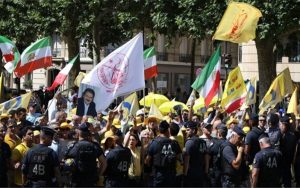
A lengthy attack by the regime’s own religious news agency reveals more than its authors intended: growing anxiety over the PMOI’s organizational endurance, the Resistance Units, and the prospect of a new generation joining the struggle for regime change. There is a revealing contradiction in the Iranian regime’s latest propaganda campaign against its principal organized opposition. The regime’s official religious news agency, Hawza News, has published an unusually detailed account of the People’s Mojahedin Organization of Iran (PMOI/MEK), tracing what it describes as four decades of changes in the organization’s strategy—from armed struggle and the formation of the National Liberation Army to political activity, intelligence operations, and the establishment of “Resistance Units” inside Iran. On the surface, the article is another familiar exercise in demonization. But beneath the accusations and hostile language lies something considerably more significant: the regime is worried.
Iran: Escalation of Repression Targeting Supporters of the PMOI and Protesting Prisoners
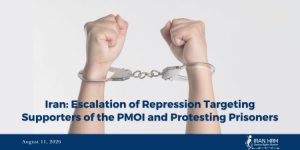
On Saturday, August 8, ward housing political prisoners in Evin Prison was subjected to another raid by prison guards. This new wave exhibits an intense focus on pressure, physical assault, and enforced disappearance targeting supporters of the People’s Mojahedin Organization of Iran (PMOI/MEK). Earlier, Iran Human Rights Monitor (IranHRM) had reported the July 31 raid by prison guards on Ward 7, involving the beating and arbitrary transfer of political prisoners—including Pejman Toubereh-Reizi, Mojtaba Taghavi, Amir-Hossein Moradi (an elite student), all supporters of the PMOI), and Afshin Heyritian (a child rights activist)—and reminded the necessity of immediate international action. Now, just one week later, these attacks against supporters of this organization and protesting prisoners have been repeated once again.
Profiles of the Commanders Appointed to Iran’s New Military chiefs as U.S-Iran War and Hormuz Talks Continue
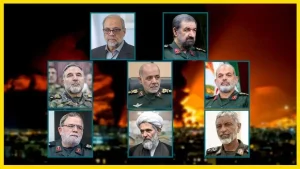
From a former Quds Force commander and ex-IRGC intelligence chief to the man who led the IRGC for 16 years during the Iran-Iraq War, eight military and security figures have moved into key positions in Iran within days. Their records span war and foreign operations to the AMIA case and the suppression of protests. As the Iran-U.S. war enters its sixth month and negotiations over maritime traffic through the Strait of Hormuz continue, Mojtaba Khamenei on August 10 appointed six senior military officials to lead the General Staff of the Armed Forces, the Islamic Revolutionary Guard Corps (IRGC), the IRGC Navy and the Basij. Several days earlier, two veteran IRGC figures, Mohsen Rezaei and Mohammad Bagher Zolghadr, were also moved into senior positions in Iran’s security establishment and the office of the supreme leader.
Stockholm Exhibition Honors Martyrs of Iran’s 1988 Massacre and Recent Uprisings
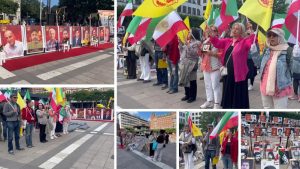
A photo exhibition and demonstration honoring the martyrs of Iran’s uprisings and the martyrs of the 1988 massacre was held in Stockholm, Sweden. The event was organized by supporters of the People’s Mojahedin Organization of Iran (PMOI/MEK). The gathering called for justice for those killed in the 1988 massacre and for all those who have lost their lives in the Iranian people’s struggle for freedom. Participants emphasized the importance of preserving the memory of those who died in pursuit of freedom and human rights. The exhibition highlighted what organizers described as the Iranian regime’s continuing human rights violations while commemorating one of the darkest chapters in Iran’s modern history. Participants remembered the 1988 massacre, during which more than 30,000 political prisoners—many of them supporters and members of the PMOI—were reportedly executed.
How the Strait of Hormuz Crisis Impacts the Livelihoods of the Iranian People
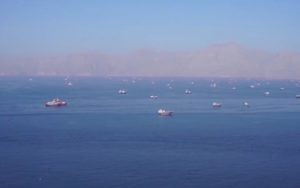
Military tensions and the Iranian regime’s blockade of the Strait of Hormuz have pushed the livelihoods of people inside Iran into a critical phase. Reckless and adventurist actions in recent months have brought numerous severe economic and security consequences for the country. The closure of international shipping routes has caused a sharp decline in the arrival of essential goods and raw materials at Iranian ports. By imposing a blockade at the mouth of the Gulf, the United States has completely halted the unloading of commercial vessels. According to official reports published by the state-run Donya-e-Eqtesad on August 1, commercial shipping traffic in the region has fallen to the lowest possible level. Traffic through the Strait of Hormuz has dropped to its lowest level in recent years. Severe shortages of medicines and food products have placed additional pressure on low-income segments of society. Supply shortages have pushed food inflation above 70.5%, severely eroding household purchasing power. People’s tables are shrinking every day, while currency fluctuations have made basic food supplies increasingly unstable. Disruptions around the Strait of Hormuz have multiplied the transportation costs of imported goods.