

THIS PAGE WILL BE UPDATED WITH THE LATEST NEWS
UPDATE: 10:30 AM CEST
Minister Anand Announces Additional Sanctions Against Iranian Individuals Obstructing Navigation Rights In and Around the Strait of Hormuz

Today, the Honourable Anita Anand, Minister of Foreign Affairs, announced that Canada is imposing additional sanctions against five individuals under the Special Economic Measures (Iran) Regulations for their involvement in military, legal and communications activities, which undermine international peace, security and stability.
The sanctions target senior officials of the Islamic Republic of Iran (Iran), including members of the Islamic Revolutionary Guard Corps (IRGC) for their activities that have threatened a critical international waterway, and obstructed navigation rights in and around the Strait of Hormuz, contrary to international law.
The measures align with allies’ and partners’ efforts to counter Iran’s destabilizing activities and malign influence in the Middle East and elsewhere. The sanctions also send a clear message of Canada’s continued condemnation of Iran’s destabilizing activities, including violations of international navigation rights in and around the Strait of Hormuz, which undermine international peace and security.
UPDATE: 9:00 AM CEST
Inside Iran, a Resistance That Remains Standing

The war has given Iran’s rulers a new and powerful pretext to tighten their grip on the country. Invoking national security, the authorities have intensified arrests, accelerated judicial proceedings, and increasingly resorted to executions as an instrument of intimidation.
Amnesty International has warned that the authorities are explicitly invoking the “conditions of war” to justify repression, while the UN High Commissioner for Human Rights has cautioned that executions are being used to spread fear and silence dissent.
The conflict abroad did not create this machinery of repression. It has reinforced a structure that already existed. The regime’s deepest concern is internal: preventing the resurgence of the kind of organized protest that has repeatedly shaken the country.
Inside Evin’s Crowded Solitary Confinement: How the Regime Is Suffocating Political Prisoners
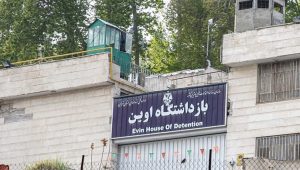
The Iranian regime is escalating its brutal crackdown on dissent as it becomes increasingly fearful of another uprising. Paralyzed by the fear of further unrest, the regime is enacting silent revenge on those behind bars. According to a new report obtained from inside Evin Prison, authorities are deliberately subjecting political prisoners to unbearable and torturous conditions, compounding their suffering through systematic abuse and violent raids.
The latest reports from inside Evin Prison indicate a catastrophic deterioration in living and sanitary conditions. In a calculated move to break the inmates physically and mentally, prison authorities are weaponizing the severe summer heat. The temperature inside some of the halls has surpassed 40 degrees Celsius. The cooling systems are entirely dysfunctional; rather than lowering the temperature, they act merely as fans, circulating boiling air in an already suffocating environment. Furthermore, direct sunlight beaming onto the walls and windows of the building drastically increases the heat inside the halls, making the conditions unbearable.
Prisoners are forced to spend long hours of the day and night in this completely closed, sweltering environment. The prison yard is exposed to intense, direct sunlight during the only hours it is available, making it virtually impossible for prisoners to use the open air. Simultaneously, the doors to the halls are kept continuously closed, heavily restricting the prisoners’ movement and access to space.
Iran: Woman Dies in Vakilabad Prison After Authorities Fail to Transfer Her to Hospital

Taktam Ramezani, a 37-year-old woman imprisoned in Vakilabad Prison in Mashhad, died on Tuesday, August 11, 2026, following a lack of medical care and the authorities’ failure to immediately transfer her to a hospital.
According to reports, Ramezani had suffered from severe abdominal and gallbladder pain for four days before her death. Despite the deterioration of her condition and repeated requests from both her and fellow inmates, prison and medical staff failed to arrange her immediate transfer to a specialized medical facility.
Her condition ultimately worsened, and she died in Ward 2 of the women’s ward of Vakilabad Prison in Mashhad after her gallbladder ruptured.
Taktam Ramezani had previously been arrested on drug-related charges and sentenced to imprisonment. During her incarceration, she also worked as a laborer in the prison’s waste collection unit.
Iran’s Labor Market Is Collapsing Beyond the Unemployment Rate
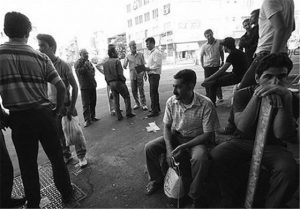
Falling labor-force participation, disappearing industrial jobs, soaring informal employment, and record economic misery reveal a labor crisis far deeper than official unemployment figures suggest.
Iran’s labor market is suffering from a crisis that cannot be captured by the country’s official unemployment rate alone.
The headline figure may suggest an unemployment rate of around 7 percent, but beneath that number is a far more troubling reality: people are increasingly disappearing from the labor force altogether.
Those who stop looking for work are no longer counted among the economically active population. On paper, this can reduce the unemployment rate. In reality, it signals something much darker—growing hopelessness about finding a decent, stable job.
According to a report by the Iranian Labor News Agency (ILNA), citing official statistics and economic experts, more than one million people have reportedly left Iran’s labor market over the past year.
Rudy Giuliani: Iran’s Democratic Alternative Is Ready to Lead the Transition

Former New York City Mayor Rudy Giuliani has reaffirmed his support for Iran’s organized democratic opposition, arguing that the National Council of Resistance of Iran (NCRI) and the People’s Mojahedin Organization of Iran (PMOI/MEK) constitute a prepared and viable alternative to the ruling regime.
In an exclusive interview with Simay-e Azadi at the Luigi Einaudi Foundation in Rome, Giuliani said the international community should recognize that there is a political force prepared to lead Iran through a transition and establish a democratic republic.
The interview came amid growing internal pressure on the Iranian regime, continued protests, and an intensified campaign of executions.
Giuliani emphasized that the question of what happens after the fall of the regime already has an answer.
According to him, the NCRI and PMOI have spent decades preparing for a political transition and have developed a network of experienced individuals capable of assuming responsibility for key government ministries during a transitional period.
Iran’s Execution Machine: The Regime’s Front Line Against a Restive Society

Poverty and soaring prices are devastating Iranian households. Economic misery is reaching unprecedented levels, inflation is spiraling out of control, retirees are demanding the basic right to live with dignity, and rent-seeking has become a defining feature of Iran’s political and economic vocabulary.
Yet beneath all these crises lies an even more urgent reality: the regime’s escalating use of executions in response to persistent social unrest and its fear of another nationwide uprising.
Iran’s economic and social crises cannot be separated from the regime’s political crisis. The structural causes of economic instability are rooted in a political system whose overriding priority is self-preservation through repression and economic oligarchy. National revenues and resources are diverted toward maintaining the regime and its coercive apparatus, with devastating political and economic consequences.
The result is a cycle in which political repression produces deeper economic dysfunction, while economic deprivation fuels further public discontent—and, in turn, prompts even harsher repression.
Iranian Medical Student Sentenced to Death for Helping Injured Protesters

The Iranian regime’s judiciary has sentenced Sepehr Amirzadeh, a medical student and political prisoner held in Isfahan Prison, to death. Human rights sources say his assistance to injured protesters during the nationwide January protests played a significant role in the case against him.
The Human Rights Society of Iran announced on Thursday, August 13, that the details of the charges, the court’s evidence, and the full text of the death sentence against the young protester have not yet been published or made available.
However, reports indicate that the medical assistance and first aid provided by the student, who was born in 2003, to a number of injured protesters became a factor considered by government and judicial authorities during the investigation and sentencing process.
Sepehr Amirzadeh, who is originally from Ramhormoz in Khuzestan Province and lived in Isfahan, was arrested at his home in Isfahan on January 13. After his arrest, he was held for a period in security detention facilities before being transferred to the city’s prison for further interrogation.
The full court ruling, details of the evidence used to impose the death penalty, and sufficient information about Sepehr Amirzadeh’s access to a lawyer of his choice and his opportunity to mount an effective defense have not yet been released.
Purchasing Power of Iranian Workers at Very Low Levels
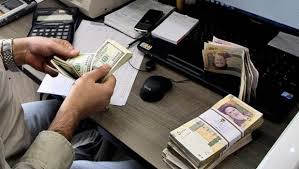
The livelihood situation of workers in Iran has entered a worrying stage. The continuous rise in the prices of essential goods has widened the gap between household income and expenses.
According to a report published by the state-run Khabar Online news website on August 9, millions of workers are waiting for a decision by Iran’s Supreme Labor Council by mid-September. Under Article 10 of the council’s resolution, it is required to review changes to the benefits of workers covered by Iran’s labor law.
This decision has become significant as living costs have risen faster than workers’ incomes. The labor community now expects the review to result in a real increase in take-home pay. However, it remains unclear how much the September decision can compensate for workers’ declining purchasing power.
Statistics published by the Statistical Center of Iran provide a clear picture of the pressure from living costs. According to the figures cited in the report, annual inflation for the food and beverages category has reached 66%. Among essential goods, some items have seen even steeper price increases. Cooking oil tops the list with 162% inflation. Bread and cereals have experienced 122% inflation, while dairy inflation has reached 99%.
The consequence of this situation is not limited to reduced purchasing power. Changing consumption patterns have also become one of the results of rising prices. Households are shifting toward cheaper goods, while lower-income families are being hit the hardest.
Egypt And Bahrain Condemn Iranian Regime Attacks on Oil Tankers

In a statement, Bahrain’s Foreign Ministry strongly condemned the Iranian regime’s attack on two United Arab Emirates oil tankers while they were passing through the Strait of Hormuz.
The statement said that the attack constituted a clear violation of international law, the United Nations Convention on the Law of the Sea, relevant UN Security Council resolutions, including Resolution 2817, and resolutions of the International Maritime Organization. Bahrain’s Foreign Ministry also affirmed the country’s full solidarity with the United Arab Emirates and its complete support for the measures the UAE takes to protect its security, stability, and vital interests.
The ministry stressed that the security and stability of the United Arab Emirates are an inseparable part of the national security of Bahrain and the member states of the Gulf Cooperation Council.
Bahrain also called for preventing the Strait of Hormuz from being used as a tool for pressure or economic blackmail, saying this is essential for safeguarding energy security, maintaining stable food and medicine supplies, ensuring the flow of global trade, and strengthening security, stability, and prosperity in the region and around the world.
Iran Faces 14M Liter Daily Fuel Deficit as Multi-Hour Gas Station Lines Surge Nationwide
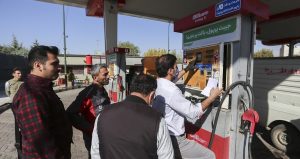
TEHRAN — Growing fuel supply constraints and severe reductions in station quotas across Iran have sparked widespread waiting lines and public frustration, presenting a stark contrast between official management efforts and the daily reality on the ground.
Official statements from government representatives highlight ongoing administrative adjustments aimed at managing consumption and curbing smuggling. According to a report published by the Donya-e-Eqtesad news agency on August 1, 2026, Iranian government spokesperson Fatemeh Mohajerani stated that while the primary monthly quota of 60 liters at 15,000 rials per liter remains unchanged, the second-tier quota priced at 30,000 rials was reduced to 50 liters. Mohajerani emphasized that any future changes regarding non-quota station rates would be announced in advance.
The systemic gap between production and demand was underscored by official figures released mid-month. As reported by the Entekhab news agency on August 12, 2026, Ali Saqqab-Esfahani, head of Iran’s Optimization Organization, stated that daily gasoline consumption in Iran reached approximately 135 million liters, compared to a daily production capacity of nearly 112 million liters, leaving a daily deficit of around 14 million liters. Saqqab-Esfahani noted that authorities were evaluating multiple scenarios, including limiting supply without raising prices, and stressed that no definitive decision had been finalized to alter fuel mechanism pricing nationwide.
Paris Exhibition Condemns Executions, Amplifies Iranians’ Call for a Democratic Republic

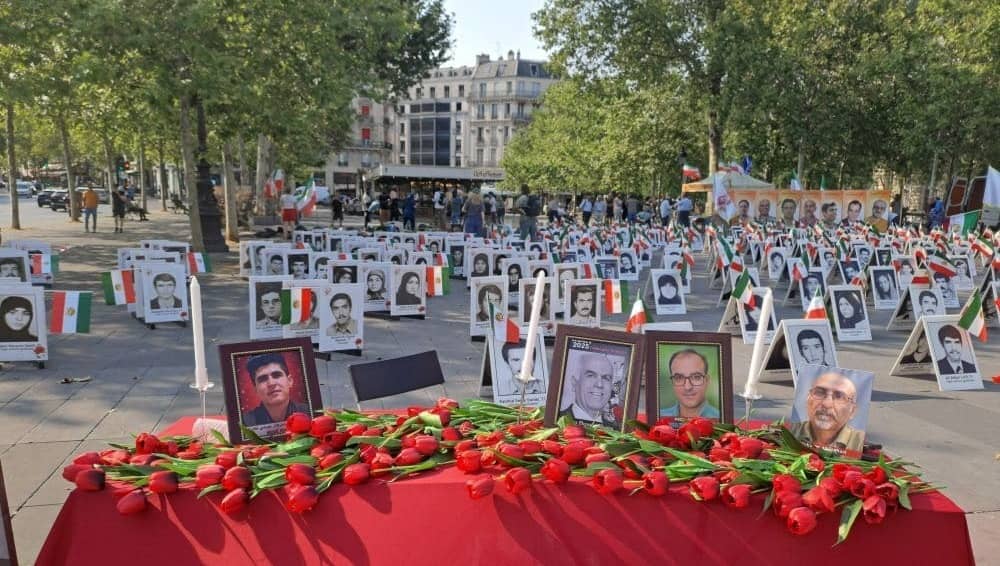
Paris, France – August 13, 2026 – Supporters of the People’s Mojahedin Organization of Iran (PMOI/MEK) held a book table and photo exhibition in Paris condemning the execution of political prisoners and the continued detention of protesters arrested during Iran’s January 2026 uprising.
The event highlighted the Iranian people’s call for a democratic republic and presented the Iranian Resistance as a path toward peace, freedom, and justice.
Organizers called on the French public and the international community to recognize the suffering of the Iranian people and their rejection of all forms of dictatorship, whether monarchical or theocratic.
Through photographs, personal testimonies, and other materials, the exhibition highlighted the courage and sacrifices of those who took part in the January 2026 uprising. It also drew attention to what organizers described as the Iranian regime’s continuing human rights violations, including the execution of political prisoners.
The organizers urged the international community to stand with the Iranian people and support their aspirations for a free and democratic future rather than endorse any form of authoritarian rule. They reaffirmed their commitment to promoting political rights, civil liberties, and accountability for human rights violations, while emphasizing the need for a democratic republic in Iran.