

THIS PAGE WILL BE UPDATED WITH THE LATEST NEWS
UPDATE: 9:00 AM CEST
Zahedan Resistance Units Reject War and Dictatorship, Call for Democratic Republic
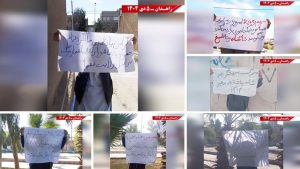
On August 28, PMOI/MEK Resistance Units resumed their weekly activities in Zahedan, southeast Iran, displaying placards in public places despite the regime’s security measures. Their messages reiterated their commitment to overthrowing the clerical regime while rejecting a return to monarchical dictatorship.
“A dictator is a dictator, whether with a turban or a crown,” one placard read. Another declared: “No to mullahs, no to shah. Yes to freedom and a democratic republic.”
The activities continued a recurring campaign by Resistance Units in Zahedan. In previous weekly actions, activists have likewise rejected both the ruling theocracy and restoration of the former monarchy, while advocating a democratic republic as Iran’s future.
PMOI reports have documented the escalation of repression under wartime conditions. In June, the regime’s State Security Forces announced 6,500 arrests, including 567 people it said were connected to the PMOI.
280 Arab Figures From 11 Countries Condemn Iran Regime’s Regional Interference
Simay Azadi – A group of 280 Arab political figures from 11 countries, including former ministers and current and former members of parliament, have issued a joint statement condemning the Iranian regime’s interference in Arab countries, support for proxy forces, export of terrorism, and policies they say threaten the security and sovereignty of countries across the region.
🚨 280 Arab Figures From 11 Countries Back Organized Resistance as the Solution for Iran
A statement signed by 280 Arab figures, including former ministers and current and former parliamentarians from Jordan, Bahrain, Tunisia, Sudan, Syria, Iraq, Palestine, Lebanon, Egypt,… pic.twitter.com/wn4osyoPZ9
— SIMAY AZADI TV (@en_simayazadi) August 28, 2026
In a statement Mousa Al-Maaytah, a former Jordanian minister of political and parliamentary affairs, chairman of the Arab-Islamic Committee to Counter the Iranian Regime’s Interference in the Region. said it was being issued at a time when activities by the Iranian Resistance inside Iran were expanding despite intensified repression and restrictions imposed by the regime under the pretext of war. The statement said the regime had sought to project cohesion and strength through public displays involving Ali Khamenei, while the Resistance Units affiliated with the People’s Mojahedin Organization of Iran (PMOI/MEK) continued their activities in cities across the country. According to the committee, the expansion of these activities reflected the Resistance Units’ growing presence, broader popular opposition to the regime, and the depth of its internal crisis.
Iranian Female Protesters Flogged and Imprisoned for Joining 2026 Uprising

Iranian regime authorities flogged two female protesters detained during the January 2026 uprisings before sending them to prison to begin serving their time.
Neda Dadehjani and Setayesh Sarabi, residents of Qorveh in western Iran, were flogged 31 times each, on Saturday, August 22, after responding to a summons at the Qorveh Criminal Court, after which they were taken into custody and transferred to Sanandaj Prison, in Iran’s Kurdistan province.
The two female protesters had previously been sentenced to imprisonment, floggings, and internal exile in a two-part case.
In the first part of the case, Branch 102 of the Qorveh Criminal Court sentenced each of them to one year in prison, 31 lashes, and a two-year internal exile to Nik Shahr, Sistan and Baluchestan Province, on charges of “disrupting public peace and order.”
In the second part, Branch 1 of the Qorveh Revolutionary Court sentenced each woman to two years in prison on charges of “assembly and collusion to commit crimes against internal security.” Under these rulings, two years of the total prison sentence issued for each individual is enforceable.
Neda Dadehjani and Setayesh (Behnoush) Sarabi were arrested by security forces during the January 2026 nationwide protests.
Working to Survive: Iranian Women Between Poverty, Exhaustion, and Lack of Labor Protection
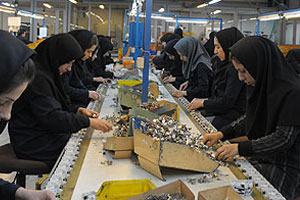
For many Iranian Women, losing a job or failing to find sustainable employment is not just about being unemployed; it marks the beginning of a cycle of economic insecurity, temporary labor, and physical burnout. In recent years, alongside the worsening cost-of-living crisis, rising inflation, and shrinking stable job opportunities, more Iranian Women have been forced into jobs that lack job security, insurance, legal protections, and even any guarantee of continuing work in the months ahead.
In such conditions, many women entering the workforce actually have no choice but to work due to economic pressure and declining household income. For these women, choosing a career gradually gives way to a sheer desperate need to earn an income, an income that often comes with long hours, physical burnout, and the deprivation of even the most basic labor rights.
This situation is not limited to women working in factories or manufacturing units. In the country’s underprivileged regions, women who were previously homemakers or searching for stable jobs have now been pushed into seasonal, backbreaking agricultural labor, work that, rather than being a sign of economic empowerment, reflects the deepening cost-of-living crisis within families.
Iran’s Class Divide Is Now Deepening Inside Universities

The Iranian regime’s deepening class-based policies are no longer confined to wages, housing, healthcare, or access to basic necessities. They are increasingly shaping who gets access to higher education—and, consequently, who gets a realistic chance at a better future.
A revealing report published by the regime-affiliated Arman-e Melli daily on August 26, 2026, exposes the extent of this divide. According to figures cited by the newspaper, students from the three lowest income deciles account for only about 5.6 percent of more than 500,000 students enrolled in Iran’s public universities. By contrast, students from the eighth through tenth income deciles account for approximately 62 percent.
The figures offer a stark picture of an education system in which economic status increasingly determines educational opportunity.
For decades, university education was regarded by many Iranian families as one of the principal avenues for escaping poverty and improving their children’s social and economic position.
Arresting Teachers and Students Cannot Stop Iran’s Explosive Social Anger

The Iranian regime is intensifying its campaign of summonses, arrests, expulsions, and intimidation against teachers, students, workers, and labor activists as social discontent continues to deepen across the country.
While the regime has routinely responded to demands for basic rights with repression, the latest wave appears increasingly preventive. Rather than waiting for protests to erupt, security authorities are attempting to identify and neutralize people capable of organizing, mobilizing, and connecting different sectors of society.
In an interview, Jila Andalib, an engineer and supporter of the Iranian Resistance, described the latest arrests as an indication not of the regime’s strength, but of its growing fear of society and the possibility of a new nationwide uprising.
According to Andalib, the recent arrests should not be viewed as isolated incidents.
“When we put these reports together, we see that the regime is deeply concerned about the situation in society and the emergence of another uprising,” she said.
From Iran’s Prisons to Norway’s Streets: “No to Executions” Campaign Challenges Global Silence
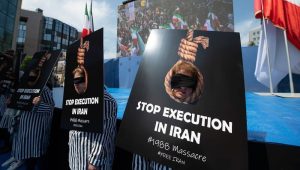
The Iranian regime’s escalating use of executions as a tool of repression has prompted growing opposition both inside Iran and abroad. While prisoners across Iran continue to participate in the “No to Execution Tuesdays” campaign, supporters of the Iranian Resistance in European countries are organizing demonstrations, exhibitions, and political meetings to challenge the regime’s execution machine and prevent its crimes from being met with silence.
In Norway, these activities have included repeated demonstrations in Oslo, commemorations of the 1988 massacre of political prisoners, meetings with politicians and civil society representatives, and efforts to raise public awareness about the continuing wave of executions in Iran.
In an interview, Delaram Dashti, a supporter of the Iranian Resistance in Norway, described these activities and their reception among Norwegian citizens and political figures.
Iran: Hamidreza and Abdolreza Fathi, Two Imprisoned Brothers, at Risk of Execution
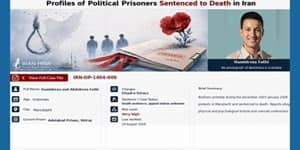
Hamidreza and Abdolreza Fathi are brothers from Marvdasht in Fars Province. No reliable information is available concerning their ages, dates of birth, education, occupations or family circumstances. Their names became public after their arrest during the protests of December 2025 and January 2026 and the imposition of death sentences in a joint case. A photograph of Hamidreza Fathi is available, but no verified image of Abdolreza Fathi had been obtained by the time of this report. Hamidreza and Abdolreza Fathi were arrested in Marvdasht during the protests of December 2025 and January 2026. Saeed Zarei Kordshouli and Hamidreza Sabet-Ray have also been prosecuted in the same case.
On 30 April 2026, reports stated that Branch One of the Revolutionary Court in Shiraz, presided over by Judge Seyed Mahmoud Sadati, had sentenced all four defendants to death on the charge of efsad-e fel-arz (corruption on Earth). The available information does not specify the exact date on which the judgment was issued or served, the full text of the ruling, the evidence relied upon by the court, the number of hearings, or details of the defendants’ access to counsel of their choice.
Iran’s Ruling Factions Split Over How to Use Strait of Hormuz Leverage Against U.S. Sanctions
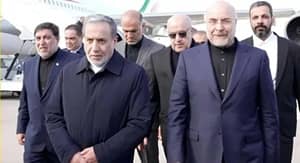
The main dispute in Tehran is no longer over the principle of resisting the United States. The disagreement is over when, and in exchange for what, Iran should convert the leverage it has created in the Strait of Hormuz into sanctions relief and a political agreement.
The Strait of Hormuz has become more than a point of confrontation between Iran and the United States. It is now a dividing line inside the Islamic Republic’s power structure. On one side, President Masoud Pezeshkian’s government and figures within the conservative camp favor a phased agreement, a managed reopening of shipping, and securing concessions on sanctions. On the other, Kayhan and a segment of the hardline camp argue that negotiating under pressure would squander the very leverage Iran gained at the cost of war.
The dispute has become more sensitive because energy markets have not waited for the crisis to be fully resolved. Tose’e Irani reported that shipping traffic has not yet returned to normal, but that “part of the oil flow through this route has resumed.”
Berlin: PMOI Supporters Continue Sit-In Against Executions, Call for a Democratic Republic in Iran
Berlin, Germany — August 28, 2026: Supporters of the People’s Mojahedin Organization of Iran (PMOI/MEK) have continued their sit-in protest outside the Iranian regime’s embassy in Berlin. The protest began on February 28 and has continued in opposition to the regime’s grave human rights violations and brutal executions, as well as to demand the closure of the embassy, which protesters denounce as a hub of espionage and terrorism.

The demonstrators are also demanding an end to the executions of PMOI political prisoners and protesters detained during the January 2026 uprising. They reaffirm their opposition to executions, war, and the policy of appeasement toward Iran’s clerical regime, emphasizing that the only viable solution is the establishment of a democratic republic based on Maryam Rajavi’s Ten-Point Plan.
PMOI Supporters in Melbourne Condemn Executions, Call for Action
Melbourne, Australia — August 28, 2026: Supporters of the People’s Mojahedin Organization of Iran (PMOI/MEK) held a book table and photo exhibition in Melbourne to protest the Iranian regime’s escalating use of executions and widespread human rights violations.

The initiative expressed support for the nationwide “No to Execution” campaign, called for immediate international action against the regime’s ongoing abuses and demanded the unconditional release of all political prisoners.
Particular attention was drawn to the intensified use of the death penalty against political prisoners and protesters arrested during the January 2026 uprising.