

THIS PAGE WILL BE UPDATED WITH THE LATEST NEWS
UPDATE: 07:30 AM CEST
“We Will Stand till The End”: How the Epic of Camp Ashraf Continues to Inspire Iran’s Resistance Units
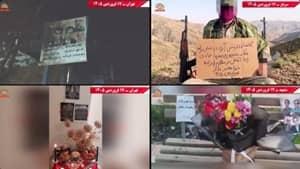
On April 7, PMOI Resistance Units across Iran launched a widespread and coordinated campaign to commemorate the martyrs murdered by the Iranian regime’s proxies in Iraq during the brutal attack on Camp Ashraf on April 8, 2011. On that dark day, the regime’s mercenaries within the Iraqi government assaulted the defenseless, empty-handed residents of Camp Ashraf, ultimately murdering 36 PMOI members.
Despite being completely unarmed, the PMOI members defended Ashraf, which stood as an unyielding bastion and a towering symbol of freedom for Iran. Their courageous sacrifice with bare hands set an enduring example of resistance that will live on throughout history.
The April 8 massacre was a starkly unequal battle between the unarmed PMOI members and heavily armed, armored forces directed by the Iranian regime and then-Iraqi Prime Minister Nouri al-Maliki. At the behest of the Iranian regime, Iraqi forces carried out a brutal morning assault, using firearms and armored vehicles to ruthlessly gun down and crush the defenseless residents.
Negotiation or War? Why Both Paths Sustain Iran’s Theocracy
For decades, policymakers have framed the question of Iran’s future in binary terms: negotiation or war. Yet this framing is fundamentally flawed. Neither engagement with nor confrontation against the ruling religious dictatorship has ever been designed to prioritize the interests of the Iranian people. Instead, foreign strategies—whether diplomatic or military—are shaped by national interests, geopolitical calculations, and economic incentives.
The result is a sobering reality: negotiation and war are not opposing solutions, but two sides of the same coin—both ultimately contributing to the survival of the regime.
Amid contradictory reports of escalating tensions and intermittent diplomacy, it is becoming increasingly clear that both appeasement and foreign military intervention have reached a strategic dead end. What is emerging in their place is a third path—one long articulated but often overlooked: the organized resistance of the Iranian people.
A Ceasefire, A Fantasy, and the Politics of Convenient Amnesia: Reza Pahlavi’s Narrative in Question
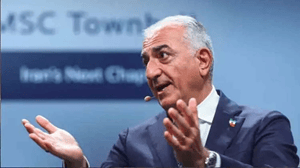
There is something deeply jarring in Reza Pahlavi’s latest message—an address that attempts to reconcile the irreconcilable: war as hope, and ceasefire as disappointment.
He tells “his compatriots” that the ceasefire has left many disheartened. One is compelled to ask: which compatriots? Those who endured bombardment, destruction of infrastructure, and the daily fear of death? Since when does the end of war become a source of despair for a population that has paid its price in blood?
This is not a minor rhetorical slip. It is a revealing contradiction. For weeks, the implicit premise behind Reza Pahlavi’s positioning was that external military pressure—airstrikes, weakening of the regime’s apparatus—was paving the way for change. Now, with a ceasefire in place, that narrative collapses. The façade of so-called “humanitarian war” has cracked, exposing a political gamble that failed to align with reality.
U.S.–Iranian Regime Talks in Uncertainty
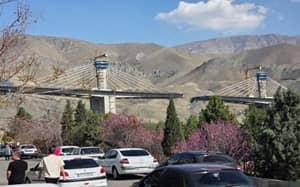
On the second day of the ceasefire between the United States and Iran’s regime, with continued transit restrictions in the Strait of Hormuz and rising tensions between Lebanon and Israel, stock markets in Asia scaled back their optimism about the ceasefire and turned downward.
In the early hours of trading, the overall Asian market index fell by about 0.7%, with Japan’s stock exchange remaining unchanged, while China recorded a 0.6% decline and South Korea a 0.4% drop.
In India as well, markets turned negative after initial optimism, and some indices experienced declines of up to one percent. This drop came despite the fact that just a day earlier, in response to the two-week ceasefire, India’s stock index had risen 4%; however, growing concerns over Middle East tensions and doubts about the durability of the ceasefire reversed the market trend.
Iran Judiciary Structure; Legal Instrument of Repression under the Supreme Leader

Judiciary is a fundamental institution in legal systems worldwide, tasked with safeguarding citizens’ rights, addressing grievances, and administering justice. A core principle underlying this institution is its independence from other branches of power; such independence cannot be realized without the principle of separation of powers. Under this principle, political authority is distributed among different institutions to prevent concentration and enable mutual oversight.

In Iran’s legal framework, the Constitution formally recognizes the separation of powers. Article 57 identifies the legislative, executive, and judicial branches as the governing authorities. However, the same article stipulates that these branches operate “under the absolute authority of the Supreme Leader.” Furthermore, Article 110 grants the Supreme Leader extensive powers, including determining general state policies, supervising their implementation, and appointing the head of the judiciary.
Fast-Track Sentencing in Iran Raises Questions Over Recent Executions
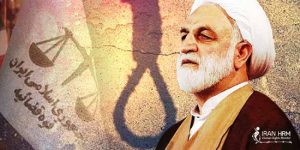
As Iran pushes accelerated judicial rulings, a wave of executions highlights growing concerns over who is being targeted.
Fast-track sentencing in Iran is gaining urgency after judiciary chief Mohseni Ejei called for quicker rulings against those labeled as “enemy agents.” The move signals a push to speed up verdicts, including capital punishment, in cases tied to national security.
But the policy is unfolding alongside a noticeable rise in executions, raising questions about whether those affected are linked to external threats—or internal dissent. Reports indicate that recent cases largely involve protest-related or political charges, not foreign operations.
Iranian Resistance Supporters in St. Gallen Condemn Executions of Political Prisoners

St. Gallen, Switzerland – April 7, 2026: Supporters of the Iranian Resistance held a book stall and photo exhibition in St. Gallen to protest the executions of six political prisoners — Mohammad Taghavi, Akbar Daneshvar Kar, Babak Alipour, Pouya Ghobadi, Vahid Bani-Amerian, and Abolhassan Montazer. The victims were affiliated with the People’s Mojahedin Organization of Iran (PMOI/MEK).
Paris Exhibit Rejects Shah and Mullah Rule, Calls for a Democratic Republic in Iran

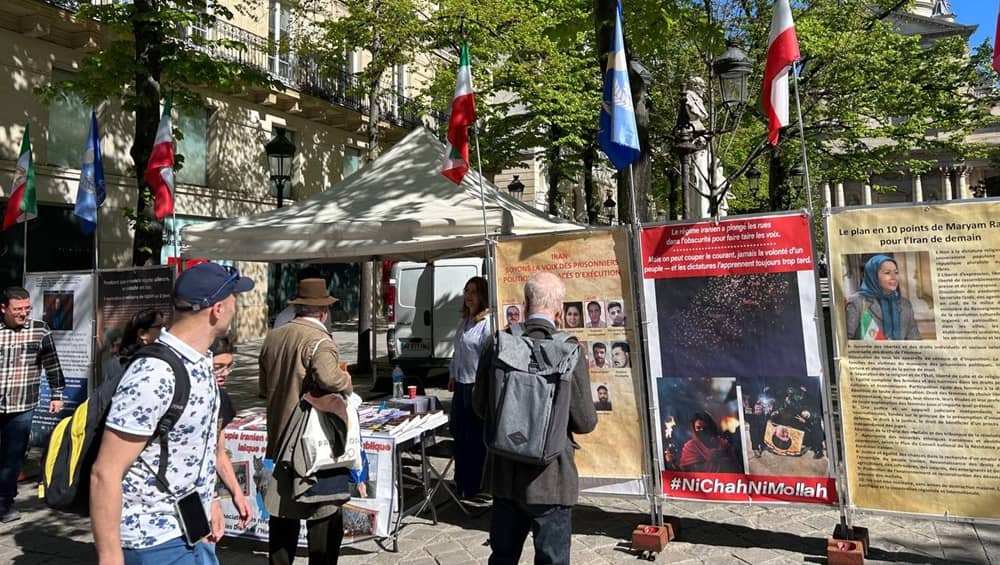
Paris, France – April 8, 2026 – A public book and photo stall by the People’s Mojahedin Organization of Iran (PMOI/MEK), honoring the martyred political prisoners affiliated with the PMOI who were recently executed by the Iranian regime, as well as the fallen protesters of the January 2026 uprising and other nationwide uprisings in Iran, was held in Paris.