

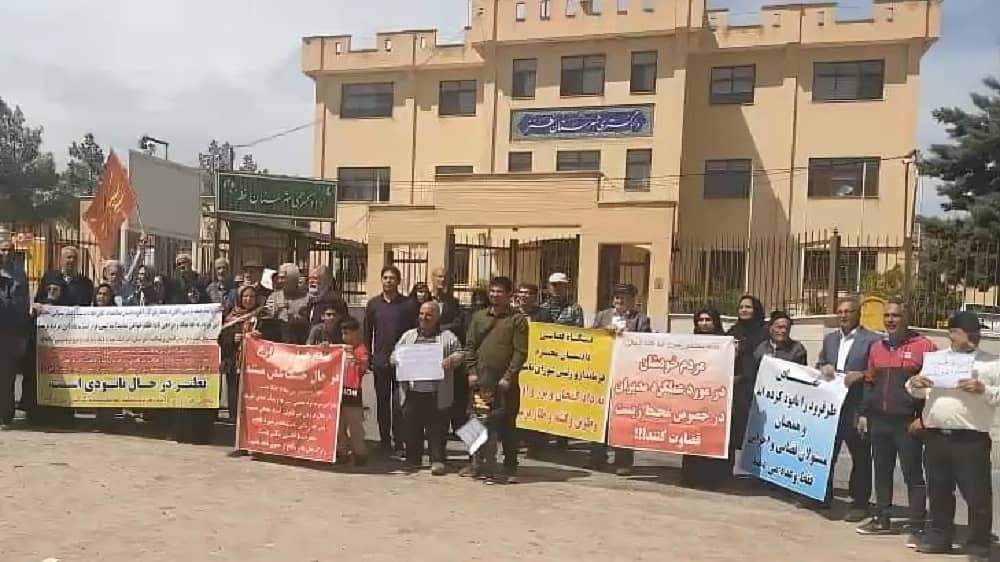
THIS PAGE WILL BE UPDATED WITH THE LATEST NEWS
UPDATE: 8:30 PM CEST
Congressional Republicans Prepare 10-Bill Sanctions Package to ‘Gut’ Iran and Punish Its Supreme Leader

Congressional Republicans are mounting an effort to codify President Donald Trump’s “maximum pressure” campaign on Tehran via a 10-bill legislative package that would sanction Tehran’s leadership, cut off its access to cash, and strangle the regime’s regional terror proxies, the Washington Free Beacon has learned.
The campaign includes “the toughest Iran sanctions package ever proposed by Congress,” according to the Republican Study Committee (RSC), the House’s largest GOP caucus, which is leading the effort. Together, according to an RSC fact sheet, the bills “would gut Iran’s ability to fund terrorism throughout the region, sanction the Supreme Leader of Iran,” and compel future presidents to fully “enforce sanctions on Iran’s oil sales,” which hit historic highs under the Biden administration.
UPDATE: 7:00 PM CEST
Iran Abandons Houthis Under Relentless US Bombardment

Iran has ordered military personnel to leave Yemen, abandoning its Houthi allies as the US escalates an air strike campaign against the rebel group. A senior Iranian official said the move aimed to avoid direct confrontation with the US if an Iranian soldier was killed.
The official said Iran was also scaling back its strategy of supporting a network of regional proxies to focus on the direct threats from the US instead. Tehran’s primary concern, the source said, was “Trump and how to deal with him”.
UPDATE: 12:30 PM CEST
UK Police Arrest Two Men Over Alleged Hezbollah Links
LONDON, April 3 (Reuters) – British counter-terrorism police said on Thursday they had arrested two men accused of being linked to the banned group Hezbollah, saying their investigation involved alleged activity both overseas and in Britain.
Detectives from London’s Counter Terrorism Command (CTC) arrested a 39-year-old man in north London on suspicion of being a member of a proscribed group, preparing acts of terrorism, and being involved in funding for the purpose of terrorism.
A second man, 35, was arrested in west London on suspicion of being a member of a banned organisation.
UPDATE: 9:00 AM CEST
PMOI Resistance Units Mark Iran’s Sizdah Bedar Holiday with Anti-Regime Activities

While Iran’s tyrannical regime attempts to silence and subdue society through escalating executions and a climate of fear, PMOI Resistance Units carried out dozens of anti-regime activities across Iranian cities on Wednesday, April 2, 2025, turning the new year into a year of defying oppression.
Chanting slogans such as “Death to the oppressor, be it the Shah or mullahs” and “On Sizdah Be-dar, Dictator Get Out,” they demonstrated at historical and cultural sites including Tus, Hafezieh, and Persepolis, as well as in the cities of Mashhad, Shiraz, Ardabil, Izeh, Tabriz, Zahedan, Isfahan, Hamedan, Kermanshah, Karaj, Nowshahr, Khorramabad, Nahavand, Rasht, Sanandaj, Arak, Babolsar, Shahrekord, Dorud, and Qom. Symbolically referencing the Sizdah Be-dar tradition (the 13th day of Nowruz, when Iranians typically spend time outdoors to cast away bad luck), they declared they were casting out the ominous presence of the oppressive mullahs and the former Shah.
Khamenei’s Empire of Poverty: How Corruption and Repression Feed Off Iran’s Economic Misery
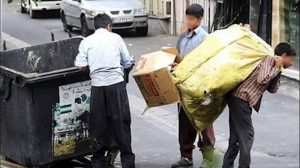
On March 24, Khabar Online, a state-run media outlet, quoted Mohammad Sadr, a member of the Iranian regime’s Expediency Discernment Council, as saying, “All experts, without exception, believe that economic problems are destroying the country. 30 million people live below the poverty line, and we must know that the solution to economic problems is not purely economic; it must also be solved from a foreign policy perspective, and foreign policy must come to the aid of economic problems.”
One of the primary reasons why 30 million Iranians have fallen below the poverty line is the rampant inflation that has crippled the country’s economy for decades. Since the late 1970s, the value of Iran’s national currency has been in continuous decline, with annual inflation rates often fluctuating between double and even triple digits.
Sanctioning Iran-Backed Houthi Network Procuring Weapons and Commodities from Russia

Today, the United States is sanctioning financial facilitators, procurement operatives, and companies operating as part of a global illicit finance network supporting the Houthis. In coordination with Iran-backed Houthi financier, Sa’id al-Jamal, the network of actors designated today has procured millions of dollars of commodities from Russia, including weapons, dual-use materials, and stolen Ukrainian grain, for shipment to Houthi-controlled areas in Yemen.
Those designated today include two Russia-based Afghan brothers who assisted Sa’id al-Jamal in orchestrating shipments of stolen Ukrainian grain from Crimea to Yemen.
To counter the Houthis’ illicit efforts to procure weapons, dual-use materials, and stolen goods, the United States also identified eight digital asset wallets used by the Houthis to transfer funds associated with the group’s activities.
Hossein-Ali Nayeri: A Legacy of Repression and Mass Murder
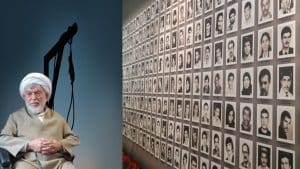
On April 3, 2025, Gholam-Hossein Mohseni-Eje’i, the Chief Justice of Iran’s judiciary, announced the death of Hossein-Ali Nayeri, a name synonymous with repression, brutality, and mass execution in contemporary Iranian history. Far from a figure of justice, Nayeri stands out as one of the Islamic Republic’s most notorious judicial enforcers. His central role in the 1988 massacre of political prisoners marks him as one of the key architects of one of the darkest chapters in the regime’s record of human rights abuses.
Hossein-Ali Nayeri began his career in the judiciary shortly after the 1979 Islamic Revolution, having studied at a religious seminary. Over the following decades, he held several senior positions in Iran’s judicial system, including:
Vida Mohammadi Sentenced to Four Years and Eight Months in Prison

Vida Mohammadi, a Tehran resident, has been sentenced to four years and eight months in prison by the Iranian regime’s judiciary.
According to the verdict issued by Branch 26 of the Tehran Revolutionary Court, Vida Mohammadi was sentenced to four years for “assembly and collusion to commit a crime against national security” and an additional eight months for “propaganda against the state.”
The court has also ordered the confiscation of her mobile phone. However, only one-fortieth of her sentence will be enforced, while the remainder has been suspended for five years.
The Iranian Regime’s Economic Crisis in a Critical Year
The Iranian year 1404 (starting on March 21) begins with a widespread consensus among Iranians of all political beliefs that the country is in an economic crisis. This crisis indicates an even grimmer future. One of the signs of this is a budget deficit of 8,700 trillion rials (approximately $8.7 billion) and an inflation rate exceeding 40%.
According to the Iranian regime’s Statistics Center, the price of goods and services used by the public has increased by 35% compared to last year. The situation for workers’ wages is even more painful, as their value has dropped by nearly 50% over the past 14 years.
“The minimum dollar wage of workers, which was nearly $300 in 2012, has dropped to below $150 in 2025, nearly halving. In other words, Iranian workers’ purchasing power has drastically declined during this period.” (State-run EcoIran, March 29, 2025)
U.S. Treasury Secretary Consults Global Banks on Iranian Oil Sanctions
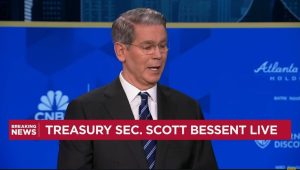
Scott Bessent, the U.S. Treasury Secretary, met with representatives of 16 global banks and federal law enforcement agencies to discuss U.S. sanctions policies against the Iranian regime, particularly efforts to reduce Iran’s oil exports. He also hinted at the possibility of increased sanctions against Tehran.
On Wednesday, April 2, in Washington, D.C., Bessent announced that the Trump administration is exerting maximum pressure on the Iranian regime to prevent it from accessing financial resources, which are used to fund Hamas and other militant groups in the Middle East, as well as the Iranian regime’s nuclear program.
He stated that these financial resources include billions of dollars that the Iranian regime earns annually from oil sales, which it uses to fund its dangerous programs and support several terrorist groups.
Report on the Situation of Political Prisoners Sentenced to Death in Iran – Part 7
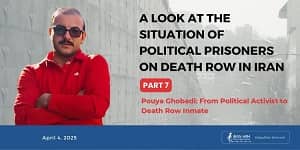
The Iranian regime has once again demonstrated its systematic violation of human rights by issuing death sentences for political prisoners, including Pouya Ghobadi and five others. This report focuses on the case of Pouya Ghobadi, a 32-year-old electrical engineer from Sonqor, and his co-defendants—Vahid Bani-Amarian, Babak Alipour, Seyed Abolhassan Montazer, Seyed Mohammad Taghavi, and Ali Akbar Daneshvarkar. It presents compelling evidence of unfair trials, torture, and inhumane prison conditions. The goal of this report is to attract the urgent attention of the international community and call for immediate intervention to halt these unjust sentences.
Pouya Ghobadi, born in 1992 in Sonqor, graduated with a degree in electrical engineering from Sanandaj University. Since 2018, he has been repeatedly targeted by Iran’s judiciary due to his political activities. His arrests include:
Gothenburg, April 1, 2025: MEK Supporters Rally in Support of the ‘No to Executions Tuesdays’ Campaign

Gothenburg, Sweden – April 1, 2025: Supporters of the People’s Mojahedin Organization of Iran (PMOI/MEK) held a rally in solidarity with the No to Executions Tuesdays Campaign, marking the twenty-eighth consecutive week of their solidarity movement. The campaign is a response to the Iranian regime’s continued executions in its prisons.