

THIS PAGE WILL BE UPDATED WITH THE LATEST NEWS
UPDATE: 8:30 AM CEST
One Year Later: The Unbreakable Legacy of PMOI Martyr Behrouz Ehsani
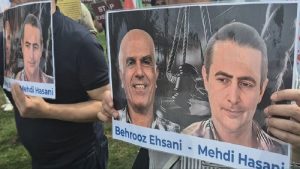
One year has passed from the Iranian regime’s heinous execution of 69-year-old veteran political prisoner and PMOI member Behrouz Ehsani, alongside his fellow PMOI member Mehdi Hassani. Their executions on July 27, 2025, were not acts of judicial justice, but rather a calculated and desperate act of terror.
The clerical regime carried out these state-sanctioned murders in a bid to intimidate a restless, defiant population and a growing movement of youth gravitating toward the Iranian Resistance. Behrouz Ehsani’s death perfectly encapsulates the PMOI’s six-decade history of struggle against both the Shah and the mullahs—a history defined by brave men and women who consciously give their lives for the cause of freedom in Iran.
Shortly after receiving his death sentence in March 2025, Ehsani penned a letter from prison that illustrated his unwavering determination to continue the PMOI’s path.
Demonstrating his profound lack of fear, Ehsani noted that upon receiving his execution order, he wrote a Quranic verse beneath it: “Every soul will taste death.” He explained this meant every being eventually owes a life to God, but what truly matters is how one chooses to live.
July 2026 Report: Death Sentences for Women Rising Up to Overthrow the Mullahs’ Regime

July 2026 Report: The clerical regime’s killing machine continued to take human lives throughout July, sending at least three women, all of whom were mothers, to the gallows. At the same time, terrified of women’s vanguard role in the uprisings, the regime’s criminal judges issued death sentences for several women who rose up to overthrow this religious fascism.
In July, at least 72 prisoners, including 3 women, were executed. Among those executed were 7 political prisoners:
- Mehdi Khankhi, 26, a law graduate, executed on charges of membership in the People’s Mojahedin Organization of Iran (PMOI/MEK) and active participation in the January 2026 uprising.
- Erfan Esfandiari, 18, executed on charges of participating in the January 2026 uprising.
- Gol Mohammad Mohammadi, 23, executed on charges of participating in the January 2026 uprising.
- Aref Khoshkar, 28, executed on charges of participating in the January 2026 uprising.
- Mohammad Amin Dehaghani, executed on charges of participating in the January 2026 uprising.
- Abolfazl Sepahi Badjani, 24, executed in public on charges of participating in the January 2026 uprising.
- Amirhossein Safari Hosseinabadi, 28, executed in public on charges of participating in the January 2026 uprising.
Iran’s Execution Policy Sparks Growing Divisions Within the Regime

For decades, the Iranian regime has relied on executions as one of its most effective tools of repression. Public hangings, politically motivated death sentences, and mass executions have been designed to instill fear and discourage dissent. Yet recent events suggest that this strategy is producing the opposite effect. Rather than silencing society, executions are fueling public resistance, strengthening prison protests, and exposing growing divisions within the regime itself.
The public execution of two young protesters in Isfahan has become a turning point. Instead of intimidating the population, it sparked protests in parts of the city. At the same time, authorities have been forced into an unprecedented confrontation with more than 1,500 death-row prisoners in Qezel Hesar Prison, whose unity has strengthened the nationwide “No to Execution Tuesdays” campaign.
The result is a growing political dilemma. Every execution intended to restore fear appears instead to deepen public anger, reinforce organized resistance, and intensify disagreements among the regime’s own political factions.
Italian Leaders Voice Support for Democratic Change in Iran at Rome Conference
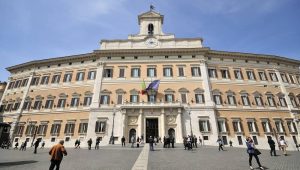
As international concern over Iran’s human rights crisis continues to grow, several prominent Italian political figures used interviews with Simay Azadi (Iran NTV) to express solidarity with the Iranian people and call for a democratic future. Their remarks, delivered following a series of events in Rome attended by international dignitaries, reflected a common message: lasting change in Iran must come through the Iranian people, supported by sustained international pressure on the ruling regime.
Although each interview approached the issue from a different perspective—ranging from human rights and economic governance to European foreign policy and democratic transition—the speakers agreed that Europe should adopt a firmer stance while supporting the Iranian people’s aspirations for freedom.
Fabio Roscani, a member of the Italian Parliament, emphasized that support for the Iranian people’s struggle transcends party politics and reflects shared democratic values. He described the Iranian people’s resistance as a fight for universal principles such as liberty, democracy, and human dignity.
Roscani expressed solidarity with Iran’s youth and women, who have borne the brunt of state repression, and voiced support for the democratic aspirations represented by the Iranian Resistance. Addressing viewers in Iran directly, he encouraged them to maintain hope despite ongoing repression, assuring them that many in Italy and across Europe stand beside them in their pursuit of a peaceful and democratic future.
Iran’s Statistical Center: Point-To-Point Inflation in July Reached Nearly 88%
Amid Iran’s deepening economic crisis and mounting pressure on household livelihoods, the Statistical Center of the Iranian regime announced that the point-to-point inflation rate reached 87.9% in July 2026, while annual inflation rose to 66%.
Point-to-point inflation measures price changes in a given month compared with the same month of the previous year, while annual inflation compares the average prices over the past 12 months with the average prices during the preceding 12-month period. As a result, Iranian households paid nearly 88% more on average in July 2026 than they did in July 2025 to purchase the same basket of goods and services.
The annual inflation rate also indicates that the average prices of goods and services during the year ending in July 2026 were 66% higher than during the corresponding previous period.
Serious Drug Shortage in Iran as Officials Assure Supplies for Arbaeen Pilgrims
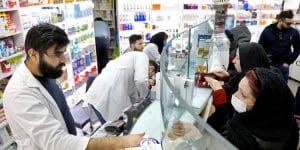
Salman Eshaqi, spokesperson for the Health and Treatment Commission of the Iranian regime’s Majlis (parliament), described the country’s drug shortage as a “serious and critical” issue. At the same time, Jafar Miadfar, head of the Iranian regime’s Emergency Medical Services Organization, said there is no concern about supplying intravenous fluids and medicines needed for Arbaeen pilgrims.
On Monday, July 27, Eshaqi cited “unjust sanctions” and the “war” as the main factors worsening the drug crisis and said difficulties in securing imported raw materials have also driven up medicine prices.
He stressed that domestic production capacity and pharmaceutical technology development centers should be strengthened to reduce the sector’s vulnerability.
The regime lawmaker added: “Damaged infrastructure can be rebuilt, but there is one vital infrastructure whose neglect can cause irreparable damage and even result in patients’ deaths, and that is the sustainable supply of medicines and the public’s easy access to them.”
Iran: Growing Demand for Installment Payment Plans for Medical Services

Amid rising prices and the deepening cost-of-living crisis in Iran, Eghtesad News website reported that installment payments are becoming increasingly common in the country’s healthcare market, with services such as dental care and even medications now being offered through installment plans. The trend reflects the further deterioration of households’ financial capacity.
On Monday, July 27, Eghtesad News reported that some patients, due to financial hardship, negotiate with doctors for discounts on consultation fees and, in some cases, receive treatment through installment payments.
According to the report, dental services are currently the “most prominent showcase” of installment-based healthcare, with many clinics and platforms offering services such as implants, orthodontics, root canal treatment, and dental veneers through installment payments, loans, or multi-month repayment plans.
The outlet added: “A toothache does not wait until next month’s paycheck. Someone with an infected tooth or in need of a root canal cannot always postpone treatment. Therefore, installment payments are both an opportunity and a warning; an opportunity because they make treatment possible, and a warning because an essential living expense has been shifted into debt for future months.”
How the War Has Affected Iran’s Economy
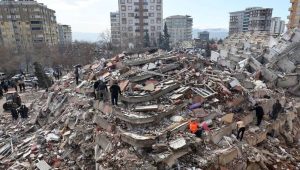
TEHRAN — The first official labour market data released in Iran since the war paints a markedly different picture from the apparent stability suggested by the unemployment rate. Around 450,000 people lost their jobs during the spring of 2026, while the industrial sector alone shed more than 600,000 positions. At the same time, labour force participation has declined, annual inflation has continued to rise, and reports from businesses point to short-term employment contracts, stagnant wages and growing difficulty in retaining skilled workers.
These figures suggest that Iran’s economic challenge is not simply one of rebuilding the direct damage caused by the war. In an economy that was already under pressure from sanctions, budget deficits, currency instability and declining investment before the conflict, the war has become more than an isolated shock. It has increased uncertainty, further weakened productive sectors and shifted the cost of the crisis from factories and the labour market to the government’s budget and household livelihoods.
Manchester Exhibition Highlights Iran’s Escalating Executions and Calls for International Action
Manchester, UK – July 30, 2026: Members of the Academics in Exile Association in the UK, supporters of the People’s Mojahedin Organization of Iran (PMOI/MEK), organized a book table and photo exhibition in Manchester to raise public awareness of the Iranian regime’s escalating executions and systematic human rights abuses.

The event highlighted the regime’s intensifying wave of executions, particularly those targeting political prisoners and protesters arrested during the January 2026 uprising. Through photographs, publications, and testimonies, the organizers shed light on the Iranian people’s suffering and their unwavering determination to reject all forms of dictatorship, whether monarchical or theocratic, in pursuit of freedom, democracy, and a secular democratic republic.
MEK Supporters Rally in The Hague, London, and Brussels to Condemn Executions in Iran
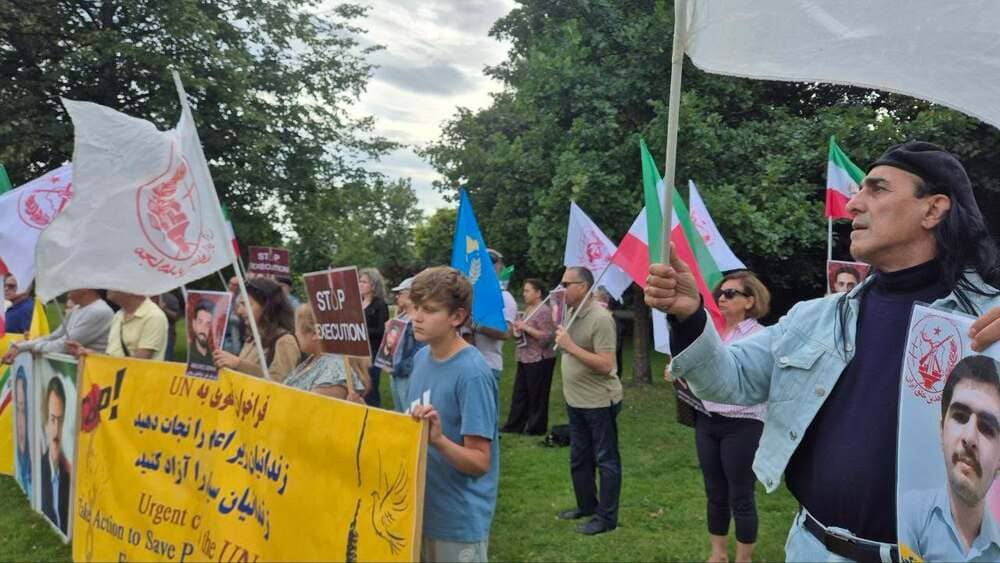
The Hague, Netherlands / London, United Kingdom / Brussels, Belgium – July 28, 2026 – Supporters of the People’s Mojahedin Organization of Iran (PMOI/MEK) held rallies in The Hague, London, and Brussels to condemn the executions of political prisoners and protesters in Iran, including PMOI member Mehdi Khanaki.

The demonstrators also denounced the public execution of two protesters in Isfahan, Abolfazl Sepahi, and Amirhossein Safari, who had been arrested during the January uprising. They urged the Dutch, British, and Belgian governments to adopt a firm stance against the Iranian regime’s escalating wave of executions and repression, stressing that executions are continuing across the country and increasingly targeting protesters and political prisoners.
Oslo Rally Condemns Executions, Demands Firm Action Against Iran’s Regime
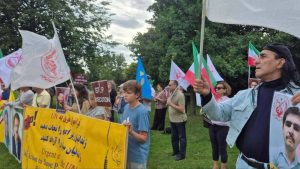
Oslo, Norway – July 29, 2026 – Supporters of the Iranian Resistance gathered outside the Iranian regime’s embassy in Oslo to condemn the executions of political prisoners and protesters in Iran, including PMOI member Mehdi Khanaki.
The demonstrators also denounced the public execution of two protesters in Isfahan, Abolfazl Sepahi, and Amirhossein Safari, who had been arrested during the January uprising. They urged the Norwegian government to take a firm stance against the Iranian regime’s escalating wave of executions and repression, stressing that executions are continuing across the country and increasingly targeting protesters and political prisoners.
Participants paid tribute to the victims by holding their photographs and reaffirmed their commitment to continue their struggle until the overthrow of the regime and the establishment of peace, freedom, and justice in a democratic republic. They also called for regime change and urged the Norwegian government to adopt a firm policy against the regime’s ongoing human rights violations.
The participants further rejected all forms of dictatorship, whether monarchical or theocratic, and voiced their support for the NCRI as a democratic alternative to the current regime.
PMOI Supporters Hold Copenhagen Rally Condemning Executions of Political Prisoners and Protesters in Iran
Copenhagen, Denmark – July 30, 2026 – Supporters of the People’s Mojahedin Organization of Iran (PMOI/MEK) held a rally and photo exhibition to protest the execution of political prisoners and protesters in Iran, including PMOI member Mehdi Khanaki.

The demonstrators also denounced the public execution of two protesters in Isfahan (Abolfazl Sepahi, and Amirhossein Safari) who had been arrested during the January uprising, and urged the German government to take a firm stance against the Iranian regime’s escalating wave of executions and repression. They said that executions are continuing across the country and are targeting protesters and political prisoners.