

THIS PAGE WILL BE UPDATED WITH THE LATEST NEWS
UPDATE: 1:30 PM CEST
Al-Zindani to Asharq Al-Awsat: Iran is Pushing the Houthis to Prolong the War and Reject Peace

Yemeni Foreign Minister Dr. Shaea al-Zandani accused the Houthi group of seeking to obstruct the efforts of the UN Envoy to Yemen, Hans Grundberg, and to drag the country into a cycle of chaos. He stressed that the peace process has become almost frozen due to Iran pushing the group to reject peace and insist on prolonging the war.
In an interview with Asharq Al-Awsat, al-Zandani revealed that recent moves at the UN Security Council to discuss new resolutions on Yemen come amid a conviction among some countries that Resolution 2216 is no longer applicable. He suggested that any new resolutions are likely to be complementary to 2216 and will focus on taking unified measures against the Houthis.
The Yemeni Foreign Minister linked the recent improvement in the exchange rate of the local currency to greater harmony among state institutions and strict measures taken by the Central Bank against speculators, affirming that additional reform steps will be implemented soon.
Aoun Tells Iran: No Interference in Our Affairs, Hezbollah Arms A Lebanese Decision

Lebanese President Joseph Aoun has told Al Arabiya in an interview that Beirut’s message is clear: Iran should not interfere in Lebanon’s internal affairs.
Aoun said that he conveyed this directly to Iran’s National Security Council Secretary Ali Larijani, who visited Beirut last week. He said Lebanon’s relationship with Iran “is based on respect,” adding: “Iran is a friendly state, but on the basis of preserving our sovereignty … our message is clear: Iran will not interfere in our affairs.”
The president also stressed that the question of Hezbollah’s weapons “is a Lebanese decision and does not concern Iran.”
Aoun said the US proposal delivered by envoy Tom Barrack included “Israeli withdrawal and the revival of Lebanon’s economy.” He explained that Lebanon had two choices: either accept the American paper or face isolation. “But we did not receive any threats to implement the proposal’s terms,” he added. “We are waiting for Washington to secure Israel’s approval of Tom Barrack’s plan.”
UPDATE: 7:30 AM CEST
Appreciation to Friends and Distinguished Supporters of the Iranian Resistance
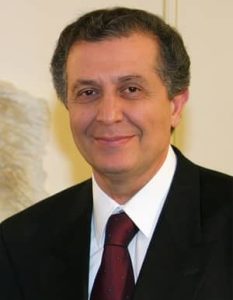
Your kind messages following the passing of my brother, Mohsen, have touched me deeply. The generosity of spirit and warmth you have shown only strengthens my own sense of duty and responsibility in the struggle for the freedom of our people and our homeland. Mohsen was not only my brother, but also a dedicated and unwavering member of the Iranian Resistance, standing firm against both dictatorships of the Shah’s dictatorship and the clerical regime. He was also a compassionate and kind friend to all who knew him. With deepest appreciation, I extend my heartfelt thanks to each of you, friends and supporters of the Iranian people and Resistance.
Amidst Regime-Made Blackouts and Despair, Iran’s Resistance Units in Zahedan Light the Path to Freedom
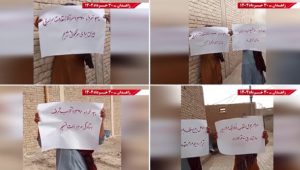
As the Iranian regime’s systemic corruption plunges the nation into a state of total paralysis, a powerful message of defiance is emerging from the streets. While President Masoud Pezeshkian admits his government has lost control and widespread blackouts forced 16 of 31 provinces into a complete shutdown on August 13, the activities of PMOI Resistance Units in Zahedan on August 15 prove that the Iranian people are not passive victims. They are channeling their rage into an organized movement with a clear vision: the only solution to their suffering is regime change and the establishment of a democratic republic.
The crisis paralyzing Iran is not an accident but a manufactured catastrophe. While the regime blames an “energy imbalance,” its own officials have exposed a more sinister reality. A regime-connected “mafia” operates vast, illegal cryptocurrency mining farms, consuming massive amounts of “free and cheap energy” with total impunity, while the nation’s vital industries are starved of power. The steel sector alone has lost over 110 days of production this year, costing the economy billions of dollars.
Nationwide Protests in Iran Target Regime’s Corruption and Failure to Provide Basic Services

In the second week of August 2025, a powerful wave of protests swept across Iran, as citizens from diverse sectors of society voiced their outrage over the regime’s systemic corruption, economic mismanagement, and catastrophic failure to provide basic utilities. From the strategic oil and gas fields to the sweltering streets of Khuzestan, workers, retirees, and ordinary citizens staged coordinated rallies, demanding their fundamental rights and an end to the government’s plunder of national wealth.
Deadly Summer in Qarchak Prison: Lives of Female Political Prisoners in Peril

Verified reports from inside the facility paint a harrowing picture of a humanitarian crisis: prolonged power outages during extreme heat, lack of medical care, and inhumane living conditions have pushed the health and lives of dozens of incarcerated women to the brink of collapse. In recent days, the electricity in the women’s political prisoners’ ward—referred to euphemistically as the “Club”—has been cut for up to five hours daily during the hottest part of the day. With no air conditioning or even basic fans, this windowless, enclosed space becomes a suffocating inferno, filled with stench and humidity—conditions so extreme that a single day of exposure can pose a serious threat to health. The ward, which houses women exiled from Evin Prison, bears no resemblance to a space fit for human life.
MEK Supporters in Copenhagen Promote ‘Free Iran’ Rally in Brussels on September 6, 2025

Copenhagen, Denmark – August 16, 2025: Supporters of the People’s Mojahedin Organization of Iran (PMOI/MEK) rallied in Copenhagen, urging freedom-loving Iranians to take part in the upcoming “Free Iran” demonstration in Brussels on September 6, 2025. The gathering highlighted the importance of uniting voices across Europe to demand justice, human rights, and a democratic future for Iran.
MEK Supporters Rally in Stuttgart to Commemorate PMOI Anniversary and Advocate for a Free Iran

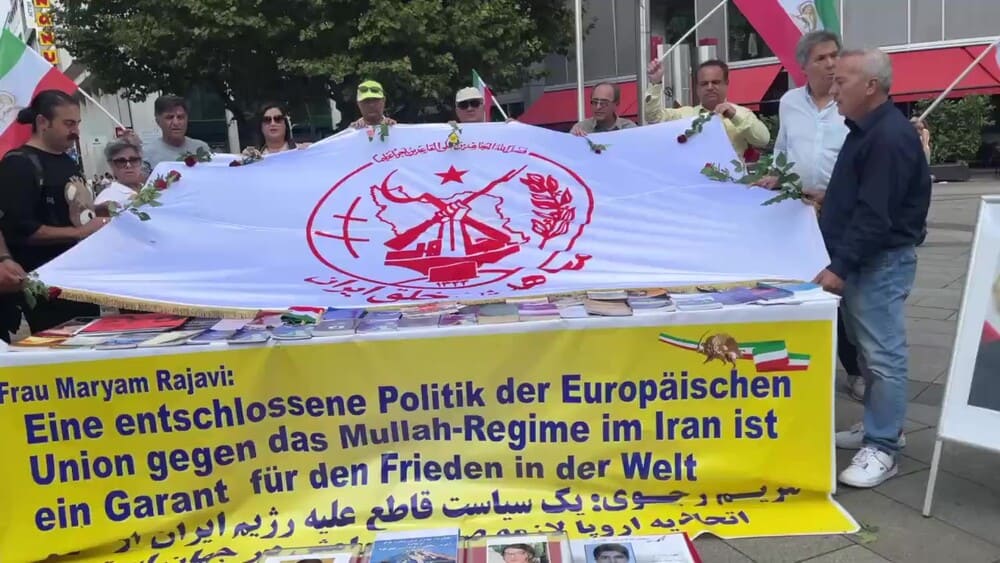
On August 16, 2025, supporters of the People’s Mojahedin Organization of Iran (PMOI/MEK) gathered in Stuttgart to celebrate the PMOI’s 60th anniversary, pay tribute to the martyrs of the 1988 massacre, and endorse Maryam Rajavi’s 10-point plan for a democratic republic in Iran.
Forced Transfer of the Political Prisoner Zolfaqar Yazdandoust
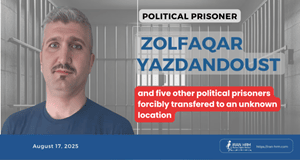
Informed sources report that on June 9, Zolfaghar Yazdandoust, along with five other political prisoners, was transferred to an unknown location following their protest against the inhumane conditions in Gonbad-e Kavus Prison. The families of these prisoners have had no information about the whereabouts or condition of their loved ones in recent days, and judicial authorities as well as prison officials have so far failed to provide any clear response.
The six prisoners, all members of the “No to Execution Tuesdays” campaign, had previously been exiled from Shahrud Prison to Gonbad-e Kavus Prison. They repeatedly protested the dire conditions there, including the poor quality and shortage of food, overcrowding that forced many inmates to sleep on the floor, infestations of bedbugs, and the lack of proper hygiene.
Twelve Major Dams in Iran Supplying Drinking and Agricultural Water at Less Than 10% Capacity

The latest data from Iran’s Water Resources Management Company shows that twelve major dams that supply drinking and agricultural water currently hold less than 10% of their capacity. According to these statistics, Lar Dam is at less than 5%, Latian Dam at 16%, Doosti Dam in Khorasan Razavi at 5%, and Sefidrud Dam in Gilan province at 4%. The state-run ISNA news agency, citing these figures on Sunday, August 17, reported that water reserves in Shamil and Niyan dams in Hormozgan province, Rudbal Dam in Darab (Fars province), as well as Voshmgir and Boustan dams in Golestan province, have completely dried up.
The data shows that from the beginning of the current water year (September 23, 2024) until August 16, inflows into all reservoirs across Iran totaled 23.81 billion cubic meters—representing a 42% decrease compared to last year.
Iranians Blame Secret Cryptocurrency Farms for Power Outages
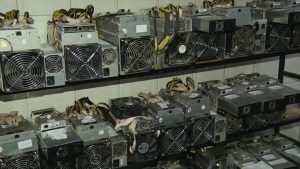
The specialized website Bitcoin News, in a detailed report on Iran’s growing energy crisis, identified secret cryptocurrency mining farms as the main cause of the widespread blackouts. This report, based on local sources and energy experts, claims that massive and hidden cryptocurrency mining facilities—believed to be run under the supervision of the Islamic Revolutionary Guard Corps (IRGC)—have placed unprecedented pressure on Iran’s already worn-out electricity infrastructure. According to the report, large-scale, round-the-clock cryptocurrency mining operations, particularly Bitcoin, have led to excessive and uncontrolled electricity consumption on an industrial scale.
Iran’s Internet Filtering: A Betrayal of Development and Human Rights

In the 21st century, access to information is not only a basic human right but also the foundation of sustainable development. Yet in Iran, systematic internet filtering and restrictions on access to global networks have eroded this foundation, betraying the very idea of progress. The regime’s authorities often justify these measures with vague claims of “security” or “cultural protection.” In practice, however, filtering has become a massive barrier to economic, educational, and social advancement. By cutting citizens off from the global information economy, the regime is reinforcing a cycle of backwardness that threatens not just the present but also future generations.