

THIS PAGE WILL BE UPDATED WITH THE LATEST NEWS
UPDATE: 9:00 PM CEST
Scope of Hacks on U.S. Water Supply Widens as Evidence Points to Iran

The scope of cyberattacks on U.S. water systems has grown to include at least seven states and may be far wider, officials and experts warned, as the authorities raced to safeguard the nation’s water supply against an assault that increasingly appeared to be the work of Iran.
While there were no indications that any water supply had been altered or made unsafe to drink, state and local officials throughout the country were on high alert for potential problems in vulnerable computers that are commonly used to monitor and adjust water quality, including chemical-treatment levels and water pressure. Minnesota first publicly reported the attacks, and now Michigan says its systems have also been targeted.
The attack has little precedent, experts said, but has long been the stuff of nightmares and sensationalized Hollywood thrillers: an apparent cyberattack by a foreign power during a time of war that could, at least in theory, jeopardize the health and safety of Americans.
UPDATE: 9:30 AM CEST
Echoes Of 1988 In Zahedan: How Iran’s Resistance Units Keep the Martyrs’ Legacy Alive Against All Dictatorships
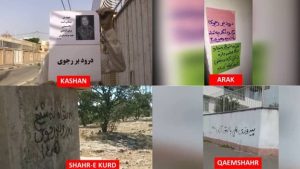
On July 31, PMOI/MEK Resistance Units in the southeastern city of Zahedan resumed their weekly public activities, defying the Iranian regime’s pervasive apparatus of execution and suppression.
Marking the anniversary of the 1988 massacre of more than 30,000 political prisoners, the activists took to public spaces despite intense threats from state security forces. They held placards spreading a message of steadfast resistance, declaring: “The 1988 massacre, despite all its agony, marked the beginning of an ongoing struggle—one that will ultimately intertwine the destiny of Iranian society with freedom.”
The overarching message from the streets of Zahedan is clear: the regime of massacre will ultimately be overthrown by the Iranian people and their organized Resistance Units to establish a democratic republic.
To truly grasp the significance of these courageous acts, one must look back to the bloody summer of July 1988. At that time, then-regime supreme leader Ruhollah Khomeini issued a fatwa ordering the purge of all prisons of political prisoners who supported the PMOI.
When Healthcare Becomes a Loan: Iran’s Growing Medical Poverty Crisis

For decades, the Iranian regime has claimed that healthcare is one of its greatest achievements. Yet a new and troubling trend reveals a different reality. Across Iran, clinics, dental offices, physiotherapy centers, and even mental health providers are increasingly advertising “treatment today, pay later.”
What might appear at first glance to be a modern financial service is, in fact, a symptom of deepening economic distress. When families must borrow against next month’s income simply to visit a doctor or buy medicine, healthcare has ceased to be a public service and become another casualty of economic collapse.
The rise of installment medicine says less about innovation than it does about the growing medical poverty facing millions of Iranians.
Installment financing has long been associated with expensive consumer goods such as automobiles, smartphones, and household appliances. Today, the same marketing language is appearing in healthcare.
When a Regime Disconnects a Nation, Its Universities Disappear Too
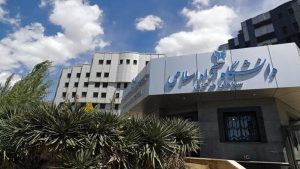
For years, the Iranian regime has portrayed its universities as symbols of scientific progress and national achievement. Yet the complete absence of every Iranian university from the 2026 Times Higher Education Impact Rankings tells a very different story. This unprecedented omission is far more than a technical mishap—it is a warning that a higher education system cannot remain globally relevant while trapped behind digital walls and subjected to ideological control.
The regime may insist that the exclusion resulted from technical barriers rather than academic weakness. Even if that explanation is accepted, it only reinforces a deeper reality: a government that cuts itself off from the world inevitably cuts off its scientists, researchers, and students as well.
Times Higher Education (THE) evaluated 1,646 universities from 116 countries in its 2026 Impact Rankings, measuring institutions according to their contributions to the United Nations Sustainable Development Goals (SDGs). These include quality education, health, gender equality, innovation, environmental protection, reduced inequality, and accountable institutions.
Iran’s Regime Criminalizes Opposition to Executions as Anti-Death Penalty Campaign Gains Momentum
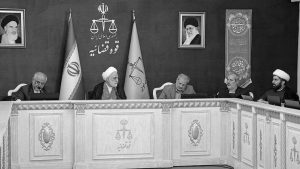
The Iranian regime has expanded its crackdown beyond political activists by threatening legal action against individuals who publicly oppose executions, a move that reflects mounting concern over the growing anti-death penalty movement inside the country.
According to the regime’s judiciary-affiliated Mizan News Agency, the Tehran Prosecutor’s Office announced criminal proceedings against individuals who condemned the recent executions of prisoners accused of involvement in the January 2026 nationwide protests and the subsequent conflict earlier this year.
The statement accused critics of showing direct or indirect support for what it described as “rioters” and warned that those expressing opposition to the executions would face decisive legal action without leniency.
The announcement comes as public opposition to executions has become increasingly visible across Iran. Families of death-row prisoners, human rights activists, and civil society groups have repeatedly protested outside prisons, demanding that executions be halted.
Regime Factions Turn on Each Other as Fear of Renewed Uprising Shapes Political Infighting
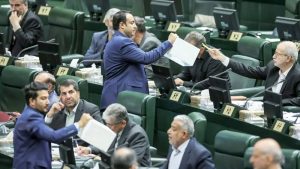
Public disputes among Iran’s ruling factions intensified this week, extending from state television to parliament and once again exposing the regime’s growing internal instability. Although rival camps continue blaming one another for political failures, their increasingly public confrontations reveal a shared concern: the fear that worsening economic conditions could trigger another nationwide uprising.
The latest episode centered on state television’s censorship of remarks by President Masoud Pezeshkian, reportedly followed by efforts to formalize tighter control over public references to the regime’s supreme leader. The controversy has further highlighted divisions within the ruling establishment over negotiations, media control, and political messaging.
According to reports circulating within regime-affiliated media, portions of Pezeshkian’s recent speech were removed because he described receiving approval from the regime’s leadership to pursue negotiations after previously declaring that talks with the United States would not continue.
Iran’s Regime Uses War to Legitimize the Gallows

As the world’s attention remains fixed on the drums of war echoing across the Middle East, the Iranian regime has found, in the shadow of war and escalating external conflicts, a strategic opportunity and a key pillar for its survival to reinforce its weakened and fragile domestic front.
Under the cover of escalating regional tensions, Iran’s prisons have become open arenas for systematic purges and organized intimidation aimed at deterring a protesting society. This continues as urgent warnings from international human rights organizations, along with increasingly alarmed calls—even from state-run newspapers—for a temporary halt to executions out of fear of an imminent social explosion, continue to grow.
While the regime’s primary domestic security priority is expanding the use of the gallows and deepening the atmosphere of fear, Iranian regime president Masoud Pezeshkian has been tasked with implementing a policy of deception and deflecting responsibility in an effort to contain society.
Rising Inflation in Iran and Uncertainty Over Workers’ Livelihoods

The livelihoods of workers and retirees have faced unprecedented challenges in recent months. Point-to-point inflation has reached 96%, and it is projected to approach three digits for the first time in the country’s history. In this environment, implementing a wage increase for workers during the second half of the Iranian year faces serious obstacles. At the same time, employers are struggling with what is described as an economic war, including damage to production units and workforce reductions, while delays by the Social Security Organization in paying retirees’ pensions have added to the pressure. The value of the 10 million-rial government shopping voucher has also fallen to one-third of its original purchasing power because of runaway inflation, and its proposed increase has not yet been implemented. Meanwhile, the latest estimate of the workers’ minimum livelihood basket stands at 429 million rials (approximately $227), while the base monthly wage for a worker with two children is around 250 million rials (approximately $132).
Legal Report on the Violation of Prisoners’ Rights in Evin and Lakan (Rasht) Prisons

Under international human rights standards—including the International Covenant on Civil and Political Rights (ICCPR), the International Covenant on Economic, Social and Cultural Rights (ICESCR), the Universal Declaration of Human Rights (UDHR), and the United Nations Standard Minimum Rules for the Treatment of Prisoners (The Nelson Mandela Rules)—states and prison administrations are obligated to preserve human dignity, security, physical and mental health, as well as the right to a fair trial and standard living conditions for all persons deprived of their liberty. Furthermore, under domestic laws of Iran, including Articles 22, 29, and 39 of the Constitution and the Executive Regulations of the Prisons Organization, protecting the life, health, and dignity of prisoners and adhering to the principle of separation of offenses are explicitly mandatory.
An examination of field reports received from Evin Prison (specifically Ward 7 and Hall 5) and Lakan Prison in Rasht demonstrates a structural, systematic, and widespread violation of these regulations.
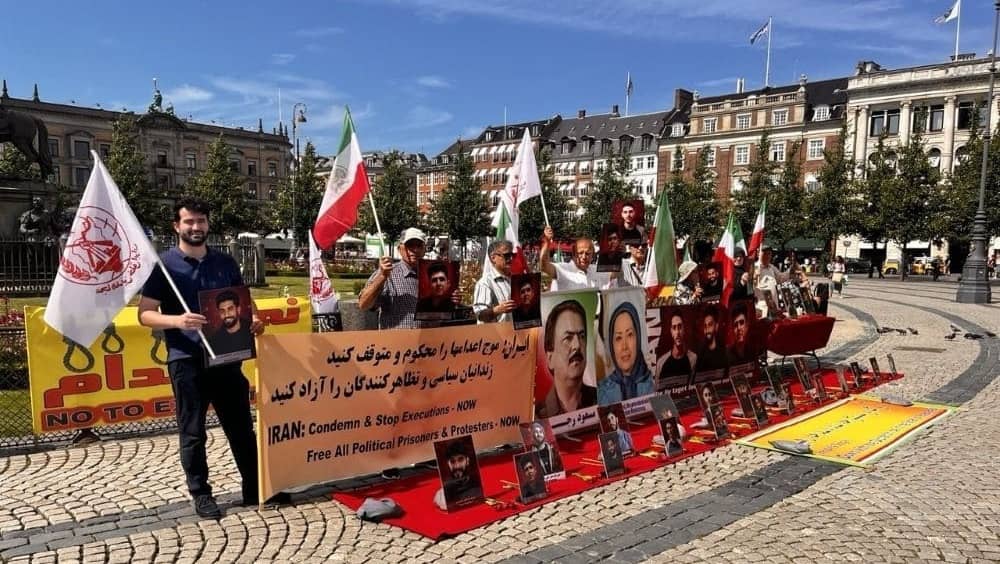
Berlin: 147th Day Protest Condemns Executions, Calls for Democratic Republic in Iran
Berlin, Germany – July 30, 2026: For the 147th consecutive day, supporters of the People’s Mojahedin Organization of Iran (PMOI/MEK) have continued their sit-in protest outside the Iranian regime’s embassy in Berlin, which the protesters denounce as a hub of espionage and terrorism. The demonstrators are demanding an end to the executions of PMOI political prisoners and other activists detained during the January 2026 uprising.

The protesters reaffirm their opposition to executions, war, and the policy of appeasement toward the clerical regime, emphasizing that the only viable solution is the establishment of a democratic republic based on Maryam Rajavi’s Ten-Point Plan.
MEK Supporters Hold Rally in Frankfurt to Condemn Executions in Iran
Frankfurt, Germany – July 30, 2026 – Supporters of the People’s Mojahedin Organization of Iran (PMOI/MEK) held a rally in Frankfurt to condemn the executions of political prisoners and protesters in Iran, including PMOI member Mehdi Khanaki.

The demonstrators also denounced the public execution of two protesters in Isfahan, Abolfazl Sepahi, and Amirhossein Safari, who had been arrested during the January uprising. They urged the German government to adopt a firm stance against the Iranian regime’s escalating wave of executions and repression, stressing that executions are continuing across the country and increasingly targeting protesters and political prisoners.