

THIS PAGE WILL BE UPDATED WITH THE LATEST NEWS
UPDATE: 2:00 PM CEST
Sanctioning Facilitators of Iran’s Illicit Oil Sales

Today, the United States is stemming the flow of revenue the Iranian regime uses to fund its destabilizing activities, including its support for terrorism abroad and the oppression of its own people.
The Department of State is imposing sanctions on two China-based crude oil and petroleum products terminal and storage operators that have facilitated the import of millions of barrels of illicit Iranian oil onboard multiple U.S.-designated tankers. This action is the Department’s fourth round of sanctions targeting China-based terminal operators, which play a vital role in the trade network for Iranian crude oil that funds Iran’s terrorism abroad and destabilizes the region.
Concurrently, the Department of the Treasury is sanctioning Antonios Margaritis and his network of companies for exploiting his status in the oil industry to illicitly trade in Iranian petroleum. The Treasury action also targets other entities and vessels involved in shipping Iranian oil.
Iran’s Freeze on Nuclear Inspections Prompts UN-US Crisis Talks

International Atomic Energy Agency officials will travel to Washington next week to confer with the US as concerns grow about their inability to account for Iran’s stockpile of near-bomb grade uranium, according to diplomats with knowledge of the situation. The trip has been planned after IAEA Director General Rafael Mariano Grossi’s top inspector failed in a recent attempt to win Iranian approval to resume monitoring after Israel and Iran’s 12-day war in June, said three diplomats, who asked not to be identified discussing sensitive information.
UPDATE: 9:00 AM CEST
Bulldozing A Genocide: Tehran’s Desperate War on the Dead Reveals Its Fear of Justice
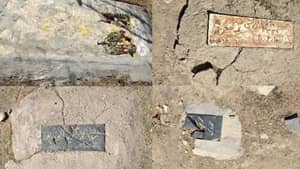
In a brazen act of criminal cover-up, the Iranian regime has dispatched heavy machinery to Tehran’s Behesht-e Zahra cemetery to erase a painful chapter of its bloody history. Since August 11, 2025, bulldozers have been working to completely level Section 41, the final resting place of thousands of members of the People’s Mojahedin Organization of Iran (PMOI/MEK) who were systematically executed in 1981. This is not urban development; it is the frantic work of a criminal regime terrified of its past and desperate to destroy the evidence of its crimes against humanity before its inevitable day of reckoning.
The regime has made no secret of its intentions. In a shameless admission on August 19, Tehran’s Deputy Mayor, Davoud Goodarzi, stated, “Section 41 was just left there, and we needed a parking lot, so we got permission from the officials and turned it into a parking lot.”
Qarchak Prison Crisis: Female Political Prisoners Face Disease and Abuse

Qarchak Prison in Varamin has once again drawn public and international attention, as more than 60 female political prisoners endure inhumane conditions far removed from international human rights standards. Over the past three weeks, an unidentified virus has spread among inmates, causing severe bone pain, voice loss, acute respiratory infections, physical weakness, and oxygen deprivation—further deteriorating their already dire situation.
These women, abruptly transferred from Evin Prison to Qarchak prison in the summer of 2025, are now held in a section known as the “Club.” This ward lacks ventilation and basic hygiene, and is infested with rodents and insects. More than 60 inmates are crammed into seven small rooms and a narrow corridor, with insufficient beds forcing many to sleep on the floor. Only three bathrooms and three toilets serve the entire group—a clear example of degrading treatment, even by the Iranian regime’s own legal standards.
Iranian Regime Denies Oil Stockpiles Amid Revelations of Sanctions-Evading Network

While Tehran denies having millions of barrels stranded at sea, new evidence exposes the regime’s reliance on ghost fleets and shadowy networks to smuggle sanctioned oil to China.
Mohsen Paknejad, the Iranian regime’s oil minister, dismissed reports on Wednesday that 120 million barrels of Iranian oil were floating unsold in East Asian waters. “They were joking, don’t take it seriously,” he told reporters. Paknejad insisted that “all these barrels have been planned and not a single barrel of Iranian oil will go to sea without a customer.”
His denial comes as international reports indicate a decline in purchases of “discounted Iranian oil” by small Chinese refineries, traditionally among Tehran’s most reliable customers.
Iran’s Regime Staggers Under Trigger Mechanism Threat and Nuclear Warnings
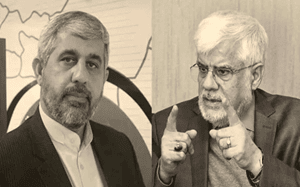
Contradictory statements by Tehran’s leaders expose confusion, desperation, and the regime’s crumbling political scaffolding.
The threat by the European Troika — Britain, France, and Germany — to activate the nuclear deal’s trigger mechanism, coupled with recent warnings from the International Atomic Energy Agency (IAEA), has pushed Iran’s regime into one of its most critical diplomatic and political crossroads.
The regime’s leaders are sending out mixed, contradictory messages that expose both their fear and their lack of strategy. From Mohammad Reza Aref, the regime’s First Vice President, to Behnam Saeedi, Secretary of the National Security Commission in parliament, their words reveal a system adrift, paralyzed by confusion, and edging closer to collapse.
Tehran’s War Rhetoric: A Desperate Regime Plotting Survival at the People’s Expense
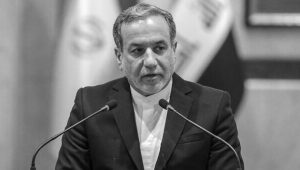
Araghchi’s claim that “war can be cheaper than negotiation” exposes the clerical regime’s willingness to sacrifice Iranian lives to cling to power
For decades, the Iranian people have been forced into a war of survival—not against a foreign enemy, but against the regime itself. They have endured poverty, sanctions, medicine shortages, polluted water, blackouts, food insecurity, and above all, the suffocating despair imposed by the ruling clerics.
Now, the regime’s foreign minister Abbas Araghchi has unveiled another battlefront. He declared: “Sometimes war is inevitable; negotiations and diplomacy are cheaper and less risky ways, but sometimes their cost is even greater than war.”
Decline In Caspian Sea Water Levels and the Risk of Desertification Along Its Coasts
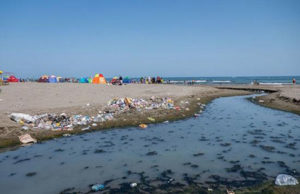
As reports emerge that the Caspian Sea has reached its lowest water level in 50 years, a climatologist has warned that if the retreat continues, northern Iran will soon face a desert-like area filled with sand and salt.
Farid Mojtahedi, a climatologist, told the state-run ISNA news agency on Wednesday, August 20, that the sea’s retreat has reached about 300 meters along the Caspian coasts. He warned that if it extends to 500 or 600 meters, it will leave behind a desert-like zone of sand and salt. He added: “At present, we are facing wind erosion along the Caspian coasts.”
According to Mojtahedi, desertification in the southern Caspian region will generate dust storms that affect the settlements along the southern shores of the sea.
Crashed Drone in Lublin Likely an Iranian Shahed

Polish media have reported that the unidentified object that crashed in Lublin province in eastern Poland was most likely an Iranian-made Shahed drone. Poland’s state television announced that initial investigations suggest the object could be a Shahed-136. The daily Rzeczpospolita also published unconfirmed reports suggesting that the drone may have been either a Shahed-131 or a Shahed-136, both of which Russia uses extensively in the Ukraine war under the names Geran-1 and Geran-2. The paper noted that since 2023, Russia has started producing Shahed-136 drones using some domestically sourced components.
Polish officials said the object crashed yesterday in the village of Ośiny, where it exploded and damaged the roofs of several houses, though no other damages or casualties were reported. Poland’s defense minister, Władysław Kosiniak-Kamysz, stated that the explosion was most likely caused by a drone crash, although it remains unclear whether the incident had a military origin, sabotage, or even was the result of a smuggling flight.
Iranian Regime FM: Snapback Sanctions Will Cost Heavily
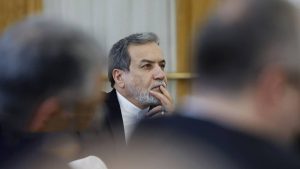
Abbas Araghchi, the foreign minister of Iran’s regime, stressed that activating the snapback sanctions would have heavy costs but “is not the end of everything.” He added that Tehran cannot completely cut off cooperation with the International Atomic Energy Agency (IAEA). In a video interview with the state-run IRNA news agency, parts of which were published on Wednesday, August 20, Araghchi emphasized: “The activation of the snapback will not be economically more impactful than the current situation.” He added: “For years we have been in talks with China and Russia on what solutions might ultimately prevent snapback and have considered certain measures, though we may not succeed.”
Araghchi described the consequences of snapback as “truly serious and heavy,” adding: “We must try to prevent it, but at the same time, we should not exaggerate it.”
Terrorism: The Official and Systematic State Policy of Iran’s Regime
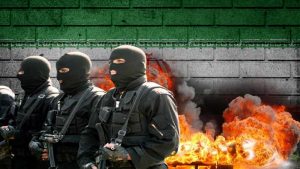
21 August, “The International Day of Remembrance and Tribute to the Victims of Terrorism,” is an occasion to honor the victims and survivors of this inhumane phenomenon. While terrorism has appeared in various forms worldwide, the ruling regime in Iran has institutionalized it as an official state terrorism policy since its very first days in power. Over the past four decades, this policy has taken thousands of lives inside Iran and endangered international security through extraterritorial terrorism and political assassinations abroad.
Multiple judicial cases have proven that the Iran regime terrorism is not random, but an organized state policy:
- Mykonos Trial – Germany (1997): The Berlin court explicitly identified regime leaders, including Ali Khamenei, Akbar Hashemi Rafsanjani, Ali Akbar Velayati, and Ali Fallahian, as those who ordered the assassination of Iranian opposition leaders.
- AMIA Bombing – Argentina (1994): Argentine courts confirmed the involvement of the Iranian regime and Hezbollah in the attack that killed 85 people and injured more than 300.
MEK Supporters in Copenhagen Rally Against Imminent Executions of Iranian Political Prisoners

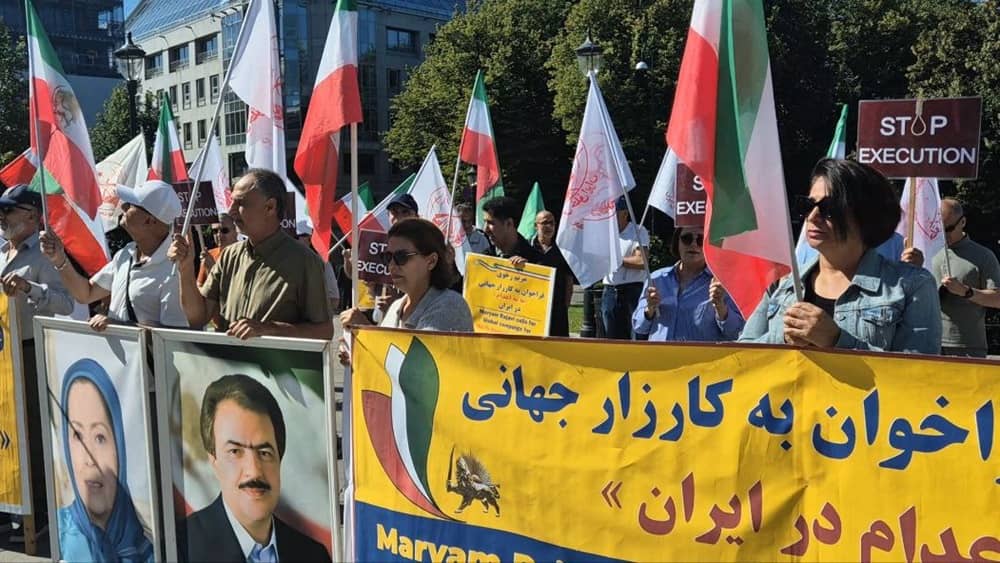
Copenhagen, Denmark – August 16, 2025 – Supporters of the People’s Mojahedin Organization of Iran (PMOI/MEK) gathered in Copenhagen to warn about the imminent execution of five political prisoners in Iran: Vahid Bani-Amerian, Pouya Ghobadi, Shahrokh Daneshvarkar, Mohammad Taghavi, and Babak Alipour. The Iranian regime has transferred them to Ghezel Hesar Prison, a facility notorious for mass executions, placing their lives in grave danger.
Brussels Free Iran Rally – Iran’s Third Option for Regime Change and a Democratic Republic | September 6, 2025
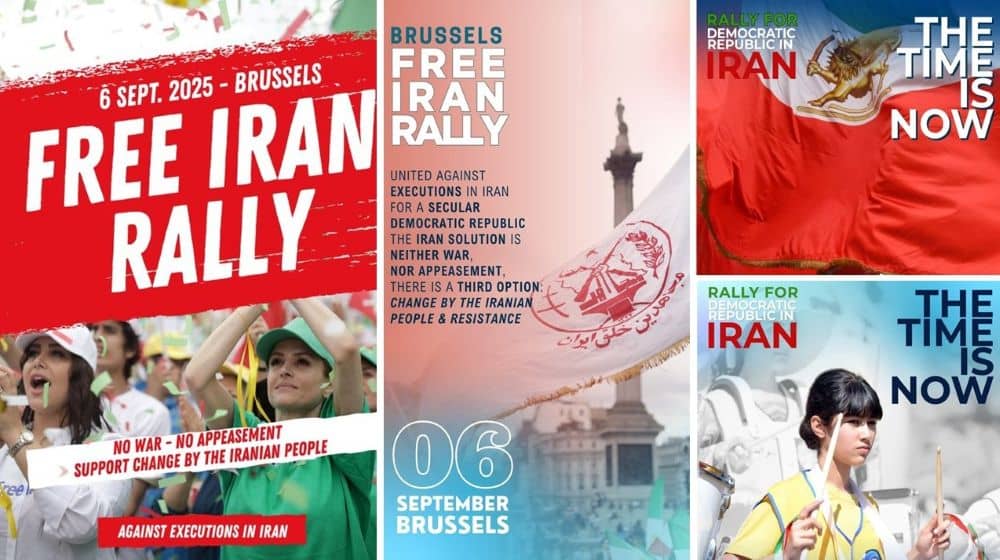
For over forty years, Iranians have faced relentless repression. Executions, imprisonment, and torture are the main tools of a regime desperate to stay in power. In recent weeks alone, dozens have been executed, and thousands of political prisoners remain under constant threat. This violence aims to crush the call for freedom—but history shows no regime can silence the people’s demand for justice.