


THIS PAGE WILL BE UPDATED WITH THE LATEST NEWS
UPDATE: 10:30 AM CET
U.S. Envoy: Iran Must End Enrichment, Faces Continued Pressure

U.S. Representative to the United Nations Ambassador Mike Waltz reaffirmed Washington’s hardline stance on Tehran, stating that “Iran cannot have a nuclear weapon” and “cannot have an enrichment.” He said the United States is pressing Iran to “engage in direct talks” while maintaining maximum pressure on the regime.
Waltz noted signs of strain on Tehran’s regional network, saying, “We’re hearing and seeing Iran’s proxies around the region complain and whine about running out of cash, and I think that’s a good thing and moving in the right direction.” He framed this as evidence that U.S. policy is constraining the regime’s ability to project power.
His remarks underscored continued U.S. opposition to the regime’s nuclear ambitions and a commitment to sustained pressure on the regime and its proxy forces.
UPDATE: 09:30 AM CET
Ypres, Human Rights Day, and Iran’s Martyrs: Why Memory Is a Moral Duty

On 11 December, beneath the great stone arches of the Menin Gate in Ypres, we gathered to mark International Human Rights Day. The setting was not incidental; it was essential. Few places on earth speak so powerfully about the price of freedom, the scale of human sacrifice, and the cost of indifference as this small Flemish town in Belgium, whose very name is etched into the conscience of humanity.
Ypres was a focal point of the First World War, a crossroads where empires collided and where industrialized warfare reached a terrifying crescendo. The Third Battle of Ypres, around the village of Passchendaele, fought from 31 July to 10 November 1917, remains one of the most harrowing chapters in military history. British, Canadian, ANZAC and French forces fought for months across a landscape reduced to a hellish swamp by unrelenting rain and incessant artillery fire. Men drowned in mud. Horses vanished into shell holes. Nearly half a million soldiers on all sides were killed or wounded for the sake of a few miles of devastated ground.
UPDATE: 08:00 AM CET
Resistance Units in Zahedan Defy Repression as Iran’s Regime Increases Executions

On December 12, in the southeastern city of Zahedan, PMOI Resistance Units launched a new wave of anti-regime activities. These actions featured the distribution of revolutionary messages and slogans that underscored a singular political reality: the Iranian people’s unwavering determination to overthrow the ruling dictatorship and establish a free, democratic Iran. These activities are not merely symbolic; they reflect a continuation of organized resistance and steadfastness in the face of a regime that relies almost exclusively on executions and repression to maintain its grip on power. The slogans displayed in Zahedan articulated a clear political vision for Iran’s future that rejects both the current theocracy and the monarchical past. The Resistance Units emphasized that Iranian society is at an exceptional moment where it will neither return to the past nor remain stagnant in the present.
Sediqeh Ghorbani Hanged in Urmia Central Prison; 59th Execution of a Woman in 2025
The Chief Justice of Urmia announced the execution without disclosing the woman’s identity. Sediqeh Ghorbani had been arrested two years earlier on charges of the premeditated murder of her four-year-old stepdaughter, Ava Ghahremani, and had been held in custody since then. Social tragedies are rooted in deeper political causes. In the final analysis, they must be laid at the door of the anti-human, misogynistic clerical regime, which has been the breeding ground for the deep-seated pathologies of this period in Iran’s history. At the core of this dehumanizing ideology and policy lies the systematic victimization of women and girls.
Bern Exhibition in Switzerland Condemns Iran’s Executions, Calls for Release of Political Prisoners

Bern, Switzerland – December 11, 2025 – Supporters of the People’s Mojahedin Organization of Iran (PMOI/MEK) held an exhibition to protest the Iranian regime’s increasing use of the death penalty, particularly against political prisoners. The event also expressed solidarity with the “No to Execution” campaign.
Iranian Resistance Supporters Rally in Brussels on Human Rights Day to Condemn Executions in Iran

Brussels, Belgium – December 10, 2025 – Supporters of the Iranian Resistance staged a rally and an exhibition on Human Rights Day outside the European Parliament to condemn the Iranian regime’s escalating wave of executions. The event was held in solidarity with the “No to Execution Tuesdays” campaign, expressing outrage over the regime’s brutal killing spree and systematic human rights violations.
The Network of Corruption in the Mullahs’ Regime – Part 4

Corruption in Iran’s governing structure is not confined to particular individuals or periods. It is a consolidated and interlinked system connecting political, security, economic, and judicial institutions. Rather than upholding its legal duty to protect citizens’ rights and ensure justice, the judiciary of the ruling regime in Iran has, in recent years, become a security shield for power networks and an instrument for killing, executing dissidents, suppressing society, and generating fear. Official indications and available data show that this institution plays a decisive role in safeguarding corrupt officials and structuring political repression. By 2025 alone, at the time of drafting this report more than 1,800 executions had taken place in Iranian prisons, placing Iran at the top global position in the use of the death penalty.
Sevenfold Increase in Medicine Prices in Iran

The head of the Association of Producers, Suppliers, Distributors, and Exporters of Medical and Pharmaceutical Equipment of Tehran Province reported a “sevenfold surge” in medicine prices in Iran since the removal of preferential foreign exchange for medicines. Alireza Chizari told the state-run ILNA news agency on Saturday, November 13: “We are currently witnessing a surge in the foreign exchange rate for medicines and medical equipment. In some cases, [the price of a medicine] has risen from four thousand and 200 tomans to 28 thousand and 500 tomans, which shows a sevenfold increase in medicine prices.”
Inside Iran’s Prisons: How the Regime Uses Political Prisoners as Instruments of Terror
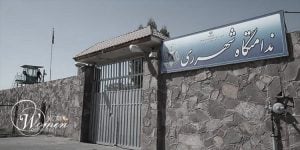
The Iranian regime does not treat political prisoners as dissenters within any legal or judicial framework. Instead, it treats them as hostages in a full-scale war against Iranian society. From Evin and Qezel Hesar to Fashafuyeh and Lakan Prison in Rasht, prisons have been transformed into laboratories of repression where methods of physical and psychological destruction are systematically tested—not only to break prisoners, but to terrorize their families and the wider public. In this system, prisons are not merely punitive institutions. They are integral components of state power and key instruments for maintaining political fear. Detention facilities function as extensions of the regime’s security apparatus, designed to enforce silence, deter protest, and crush organized resistance.