

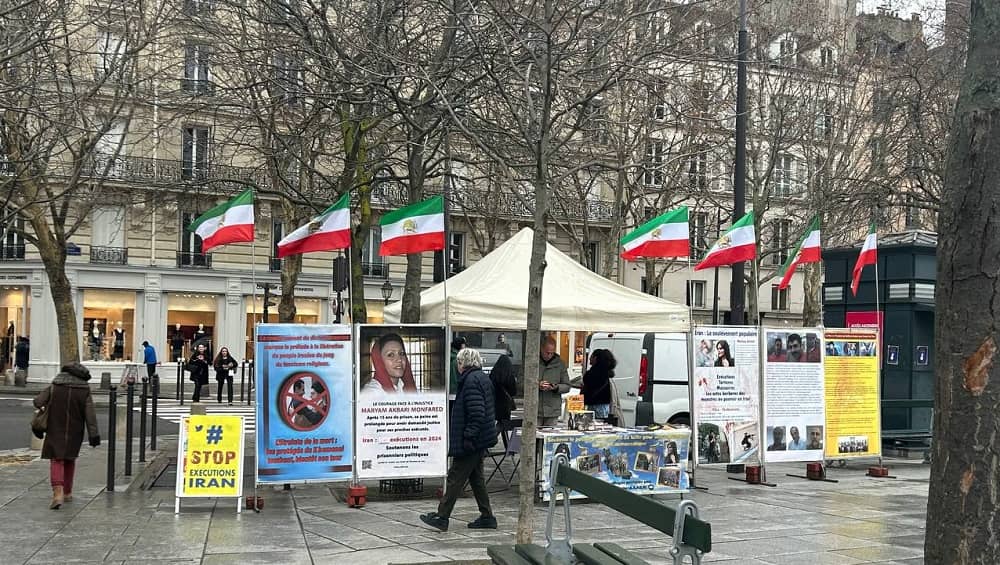
THIS PAGE WILL BE UPDATED WITH THE LATEST NEWS
UPDATE: 9:00 PM CET
Treasury Maintains Pressure on Iranian Shadow Fleet

WASHINGTON — Today, the United States Department of the Treasury is imposing sanctions on four entities and three vessels involved in the trade of Iranian petroleum and petrochemicals, which generate billions of dollars worth of revenue for the Iranian regime. This revenue supports Iran’s nuclear program, its development and proliferation of provocative ballistic missiles, and financing of terrorist proxy groups such as Hizballah, Hamas, and the Houthis. Vessels transporting Iranian petroleum and petrochemicals frequently use methods of obfuscation and deception to mask this trade, posing a significant danger to the maritime industry.
Concurrently, the U.S. Department of State is taking action against four entities in multiple jurisdictions involved in the movement of Iranian petroleum.
Iranian Resistance Warns Regime Is Developing Detonators for Nuclear Weapons

An Iranian resistance group said Thursday it has confirmed that the Islamic regime in Tehran has increased efforts to research and manufacture detonators for nuclear weapons after U.S. intelligence earlier this year indicated Iran had resumed nuclear weapons development. The National Council of Resistance of Iran-U.S. Representative Office (NCRI-US) told a news conference in Washington that the expanded testing of the detonator technology is taking place at a facility located in the regime’s Sanjarian site.
In recent years, Iran has also sped up its enrichment of uranium, a key building block of a nuclear bomb.
“While the international community and the IAEA have mainly focused on the amount and the enrichment level of uranium Tehran possesses, which would provide fissile material for the Bomb, the central part, namely the weaponization, has continued with little scrutiny,” NCRI said in a report reviewed by Just the News.
UPDATE: 2:30 PM CET
Syria Rescuers Say Bodies Found in Warehouse

DAMASCUS: A Syrian civil defense official said Wednesday that White Helmets rescuers discovered unidentified bodies and remains in a medicine warehouse in a Damascus suburb, 10 days after Bashar Assad’s ouster. An AFP video journalist at the scene said the warehouse strewn with medicine boxes was located just around 50 meters (yards) from the Sayyida Zeinab shrine, a revered site for Shiite Muslims.
“We received a report about the presence of bodies, bones and a foul smell at the site,” White Helmets official Ammar Al-Salmo told AFP.
South Damascus’s Sayyida Zeinab suburb was a stronghold of pro-Iran fighters including Lebanon’s Hezbollah militant group before militants took the capital on December 8 in a lightning offensive.
UPDATE: 9:30 AM CET
Activists Urge EU to Act Against Iran and Stop “Reconciliation Politics”

A dozen activists from the Iranian community of Belgium held a meeting on Wednesday afternoon at the Schuman Square in Brussels. The group of concerned citizens, allies of the National Council of Resistance of Iran (NCRI), demand that the European Union act more forcefully against the Iranian regime, including by condemning the Revolutionary Guards as a terrorist organization and ending the “policy of reconciliation” with the country.
The demonstration took place around 1:30 p.m. at the Berlaymont building in the European Quarter in Brussels, where the European Commission is located. “We urge European leaders to adopt a stronger policy towards the Iranian regime. This is especially in light of the “ongoing domestic repression, the rampant executions, the nuclear threats and the regional warmongering,” according to the activists.
UPDATE: 7:00 AM CET
Over 100 Belgian MPs Support “No to Executions” Campaign

In a powerful joint statement, over 100 Belgian Members of Parliament, representing the country’s major political parties and regions, have expressed deep concern over the rising number of executions in Iran. They have spoken out against the systematic human rights abuses by the Iranian regime and endorsed the international “No to Executions” campaign, which calls for an end to daily executions and arbitrary death sentences in Iran.
The campaign highlights the horrifying reality of executions in Iran: young people being hanged daily, women unjustly sentenced to death, and a regime instilling terror through the gallows as a symbol. According to Amnesty International, Iran was responsible for a staggering 74% of all recorded executions worldwide in 2023. This alarming trend has escalated since Iran’s new president took office. In August 2024 alone, more than 600 prisoners, including 20 women, were executed.
PMOI Resistance Units Stress That the Mullahs’ Regime in Iran Will Share the Fate Bashar Al-Assad in Syria
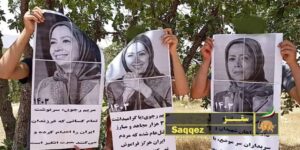
As Bashar al-Assad’s regime falls in Syria, numerous Iranian cities have observed a significant increase in activities against the clerical regime. The PMOI Resistance Units inside Iran have intensified their efforts, with the message that the fall of the Syrian dictator is a precursor to the possible collapse of Iran’s theocratic regime. In their activities, they reflected the prevailing sentiment among the opposition: “Woman, Resistance, Freedom – Death to Khamenei.”
In Tehran, images of Maryam Rajavi, the President-elect of the National Council of Resistance of Iran (NCRI), were prominently displayed with captions advocating for women’s freedom in Iran, including the right to independently choose their clothing, religion, and lifestyle. Slogans such as “No to compulsory hijab, no to compulsory religion, and no to compulsory government” were also repeated across various venues, resonating with the broader message of resistance.
Prominent Figures Call on France to Break the Silence on Executions in Iran

In a powerful article published in Ouest France, ten prominent French personalities, including philosopher Élisabeth Badinter, lawyer Dominique Attias, and former senator Ingrid Betancourt, have issued a plea to President Emmanuel Macron to take decisive action against the escalating wave of executions in Iran. With 850 executions recorded since the beginning of the year, the article highlights the urgency of ending the silent international complicity surrounding these human rights violations.
The authors write, “Iran continues to stain the pages of contemporary history by spilling the blood of its people, in a deafening international silence.” They emphasize that the scale of executions places Iran at the forefront of global capital punishment per capita. “This chilling figure is not a mere statistic,” the article states. “It reflects shattered lives, erased stories, but also the names of heroes who will forever be remembered.”
UN Security Council Criticizes Iran’s Nuclear Program Amid Heightened Concerns

On Tuesday, December 17, 2024, during a review of Iran’s nuclear program and the United Nations Secretary-General’s report on Resolution 2231, the UN Security Council voiced sharp criticism of Tehran’s nuclear activities. Resolution 2231, which underpins the Joint Comprehensive Plan of Action (JCPOA), is set to expire in ten months, adding urgency to diplomatic efforts to address Iran’s non-compliance.
Rosemary A. DiCarlo, Under-Secretary-General for Political and Peacebuilding Affairs, underscored the need for revitalizing the JCPOA through multilateral diplomacy. She lamented the ongoing deadlock in the JCPOA revival process and noted that the International Atomic Energy Agency (IAEA) has been unable to verify the peaceful nature of Iran’s nuclear program due to disrupted monitoring and verification activities. According to DiCarlo, Iran’s enriched uranium stockpile is now 32 times the JCPOA’s permissible limit, with enrichment levels reaching 20% and 60%, far exceeding civilian requirements.
Iran’s Energy Crisis Deepens Amid Severe Weather and Pollution

On Tuesday, December 17, Iranian state-run media announced the continued closure of schools and offices across most provinces, including some universities. Reports cite the “persistence of cold air masses, snowfall, and cold weather as well as increased pollution in some provinces” as the primary reasons behind this widespread shutdown, which has paralyzed daily life. Saeed Tavakoli, CEO of Iran’s National Gas Company, previously warned that “gas reserves are at their minimum level.” With temperatures plummeting, he predicted that “the situation of gas shortages will worsen.” Now, on the third consecutive day of closures, the government’s decision to shut down schools and offices—a measure purportedly taken to “manage” energy consumption—remains indefinite.
Iranian Regime-Approved Messengers: A Security and Privacy Risk

The Open Technology Fund (OTF), in its latest report, has raised serious concerns about the safety and privacy of messengers approved by the Iranian regime. The report highlights that these platforms not only violate user privacy but also enable government surveillance through state-controlled servers. OTF, supported by the U.S. government, conducted a ten-month investigation through its security laboratory to examine three Iranian messengers: Bale, Ita, and Rubika. The study aimed to assess potential security and privacy risks for users and evaluate the functionality and efficiency of these platforms.
The Iranian regime claims that Bale, Ita, and Rubika are the top three messengers in the country, with millions of users. Official data indicates that 89 million citizens have registered accounts on at least one of these platforms. Despite their popularity, OTF’s findings suggest that these messengers are deeply embedded within the regime’s surveillance framework.
Iranian Regime’s Retreat on Mandatory Hijab Law: A Crisis of Authority
 Comments made by Shahram Dabiri, Deputy for Parliamentary Affairs to Massoud Pezeshkian, regarding the suspension of the mandatory hijab law, made headlines again. Meanwhile, the regime’s Supreme Leader, Ali Khamenei, addressed a group of women, avoiding any direct mention of the controversial law, and instead reiterated that a woman’s primary role is to “increase childbirth.”
On Wednesday morning, December 18, 2024, Dabiri told reporters: “We’ve requested that the Chastity and Hijab Law not be implemented and that a revised version be submitted to Parliament as a new proposal. This was also the Speaker’s request.” He added, “Our current request is for the National Security Council to intervene and halt the implementation of this law.” (ISNA, December 18, 2024)
Iranian Student Activist Leila Hosseinzadeh Expelled from University and Barred from Education

Leila Hosseinzadeh, a prominent Iranian student activist and anthropology graduate at the University of Tehran, has been expelled from the university and denied access to her academic records. Her expulsion comes amidst a series of legal battles and ongoing persecution by the Iranian regime, highlighting the crackdown on academic freedom and dissent in Iran.
Hosseinzadeh announced on social media that she had been unexpectedly barred from continuing her graduate studies despite defending her thesis. Additionally, she revealed that she was retroactively expelled from her undergraduate program, five years after completing it. The University of Tehran, located in the capital city, has blocked her access to its educational portal and all her academic documents, leaving her in a state of limbo. She described the university’s actions as inconsistent and lacking transparency.
Political Prisoner Zeinab Jalalian Deprived of Medical Care and Family Visits

During and after her arrest, political prisoner Zeinab Jalalian suffered severe physical torture, which caused vision impairment. Since then, she has developed visual disorders, asthma, kidney, and gastrointestinal problems, and for years she has suffered due to the lack of medical care from prison authorities. On Saturday, December 14, political prisoner Zeinab Jalalian was denied medical treatment upon the orders of Yazd Prison authorities. Additionally, since September 22, she has also been barred from family visits by the same prison officials. Jalalian, who was exiled to Yazd Prison four years ago, has not been able to see her family since her transfer.
Zeinab Jalalian also suffers from severe pain on her right side. During a CT scan at a hospital, prison guards refused to remove her handcuffs and leg shackles, forcing her to undergo the procedure in restraints.