


THIS PAGE WILL BE UPDATED WITH THE LATEST NEWS
UPDATE: 10:00 PM CET
Former Commander of Iranian Militias And Former Member Of Military Intelligence Killed By Unidentified Gunmen In Deir Ezzor

Deir Ezzor province: A former commander of Iranian militias was killed by unidentified gunmen in Hatla Village in northern Deir Ezzor countryside.
According to reliable SOHR sources, the commander was known for his connections with “Shiite” groups in the area and he led a local group of armed members. In the same context, a former member of the Military Intelligence was killed after suffering severe injury, when unidentified gunmen directly shot him near Al-Masriya Square in Al-Bokamal City in eastern Deir Ezzor countryside, where the member was known for being involved in corruption cases.
Yesterday, a former member of the Military Intelligence was severely injured after being directly shot by unidentified gunmen in Al-Masriya Square in Al-Bokamal City in eastern Deir Ezzor countryside in an assassination attempt, within areas that the Military Operations Administration controls after the former regime withdrew from these areas.
UPDATE: 7:00 AM CET
The Myth of “Iran Becoming Syria” Dispelled
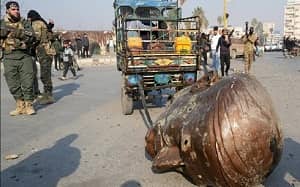
Two weeks have passed since the victory of the Syrian revolution and the overthrow of Bashar al-Assad’s dictatorship. News agencies and media outlets in their daily reports from Damascus and other Syrian cities present a completely different image compared to the frightening dictatorship era. People across Syria continue to celebrate breathing in a free atmosphere. Following the celebrations, what has astonished observers and foreign media is the calm and security prevailing in Syria. Despite the country having been reduced to ruins steeped in poverty, bloodshed, and misery over the past 14 years, there is no sign of chaos. Conditions are improving, and people are optimistic and hopeful about the future.
Economically, bread is available at a lower price for the people. The markets are thriving, and shops are open and active. The value of the Syrian lira against the dollar has increased. A significant point is that during the same period (less than two weeks), the Iranian rial has lost an additional 16% of its value.
Iran’s Energy Crisis in The Shadow Of Billions in Fuel Smuggling

For several days, two news stories about fuel smuggling have unveiled a fraction of one of the largest systematic corruption cases in Iran.
The first report quoted regime president Masoud Pezeshkian as saying: “How is it that 20 million liters of fuel disappear daily while we are the producers and suppliers ourselves? They should hang me for this theft. The same applies to water, electricity, gas, and everything else.” (Source: the state-run Tabnak newspaper, December 17).
Earlier in December, Majlis (Parliament) Speaker Mohammad Bagher Ghalibaf revealed other figures, stating: “Between 25 to 30 million liters of fuel products are smuggled out of the country daily; rest assured, this smuggling is organized, and the main producers and consumers are the primary facilitators of this smuggling” (Source: Tasnim News Agency, November 26).
Iran’s Illiteracy Crisis Hits 18 Million

Despite decades of grandiose claims, the Iranian regime has failed to address a fundamental crisis: illiteracy and educational neglect. According to Abdolreza Fouladvand, head of the Literacy Movement Organization, 18 million Iranians remain illiterate or semi-literate, with 7.5 million classified as completely illiterate. This shocking statistic represents nearly 20% of the population—an indictment of the regime’s chronic mismanagement and neglect of its most basic responsibilities.
Fouladvand’s attempt to frame this crisis as progress rings hollow. He boasts of an increase in literacy from 47.5% in 1976 to 97% today, but these numbers obscure the grim reality on the ground. In border provinces like Sistan and Baluchestan and even in parts of Tehran, illiteracy remains rampant. Economic hardships, exacerbated by the regime’s incompetence, have forced countless families to pull their children from school.
Iran’s Regime Eases Internet Restrictions Amid Mounting Crises

In a surprising move, the Iranian regime has announced plans to relax some of the world’s strictest internet censorship policies. Officials have pledged to lift the ban on WhatsApp and Google Play, signaling a shift in the government’s approach to digital freedoms. This decision comes amid growing public dissatisfaction and a host of internal and external pressures threatening the regime’s stability. On Tuesday, Iran’s Supreme Council of Cyberspace approved the lifting of blocks on “certain widely used foreign platforms,” according to the state-run Islamic Republic News Agency (IRNA). WhatsApp and Google Play were named as the first applications to be unblocked.
The announcement is seen as an effort to appease domestic outrage over deteriorating living conditions, which have the potential to spark widespread unrest. Since the 2009 protests against the reelection of hardliner Mahmoud Ahmadinejad, social media platforms like Facebook, X (formerly Twitter), and YouTube have been banned or heavily restricted. The regime has long blamed these platforms for facilitating dissent and opposition to its rule.
Multiple Prisoners Executed in Iran Within Days

In the span of just a few days, Iranian authorities carried out multiple executions in various prisons across the country. These cases involve individuals convicted of charges related to drug offenses and murder. Below is a summary of the reported incidents: On the morning of Tuesday, December 24, 2024, a prisoner named Asghar Ghaffari was executed in Qom Prison. He had been previously arrested and sentenced to death on charges related to drug offenses.
At dawn on Wednesday, December 25, 2024, two prisoners were executed in Ghezel Hesar Prison, Karaj. The executed individuals were identified as Masoud Jalilian and Hossein Mansouri Nasab, both convicted on drug-related charges.
Khamenei’s Internal and External Dilemmas: Threats from Weakness and Desperation

On December 22, 2024, Ali Khamenei, the Supreme Leader of Iran’s clerical regime, once again took to the stage, delivering harsh and threatening remarks accusing domestic opponents of being agents of the United States. While these statements appear to signal strength, they reveal Khamenei’s government’s underlying weakness and desperation. History has shown that dictators resort to repression and threats when they are at their weakest, and Khamenei is no exception.
As Khamenei’s proxies in the region face defeat after defeat, The regime aims to preserve its hold on power through fear and the use of domestic repression. The collapse of Hezbollah’s regional influence, marked by the deaths of its trained leaders and commanders, alongside the downfall of Bashar al-Assad in Syria, underscores the end of Iran’s regional ambitions. These setbacks have significantly impacted Iran’s domestic policies, lowering societal resilience to unprecedented levels.
Paris Exhibition Highlights Support for Iranian Revolution and Condemns Regime’s Human Rights Violations
#Paris Exhibition Highlights Support for #IranRevolution and Condemns Regime’s #HumanRightsViolations. #Iran #StopExecutionsInIran #FreePoliticalPrisoners #FreeIran10PointPlan https://t.co/s1xhqqr7os
— Iran Freedom (@4FreedominIran) December 25, 2024
Paris, France—December 24, 2024: Supporters of the People’s Mojahedin Organization of Iran (PMOI/MEK) hosted an exhibition of photographs and books to express solidarity with the Iranian Revolution and condemn the Iranian regime’s increasing reliance on executions.
The event highlighted the escalating human rights violations in Iran, including recent death sentences handed down to six political prisoners linked to the PMOI. The exhibition aimed to draw attention to these injustices and mobilize international action against the regime’s oppressive tactics.