


THIS PAGE WILL BE UPDATED WITH THE LATEST NEWS
UPDATE: 12:30 PM CET
Iran Executes Record Number of People After Spy Crackdown

Iran has carried out its most executions for at least 20 years as it cracks down on suspected spies, new data shows. The Iranian regime has killed 1,922 people this year – more than twice as many as last year, the Human Rights Activists News Agency (HRANA) has found.
Executions spiked following the 12-day war in June – when Israel struck various targets inside Iran – rising from just over 100 executions per month to more than 300 in November, the organisation said in its annual report.
Kamran Dalir, a spokesman for the National Council of Resistance of Iran (NCRI), described internal unrest in the country as “a powder keg that could erupt at any point”.
“The 12-day war revealed the Iranian regime’s weaknesses so the government has turned to more repression internally,” he said.
“That is why they keep having to increase the number of people they are executing month after month.”
UPDATE: 08:00 AM CET
Dorien Rookmaker: “The Regime in Iran Is Pure Evil”
On the sidelines of a conference at the European Parliament marking the International Day of Human Rights, Simay Azadi spoke with Dorien Rookmaker, former Member of the European Parliament (Netherlands).

In this interview, Ms. Rookmaker sharply condemned Tehran’s human rights record, called on the European Union to take concrete action, voiced explicit support for Maryam Rajavi’s plan for a secular and democratic Iran, and stressed that economic interests must never take precedence over human rights. She also delivered a message of solidarity and encouragement to the Iranian people, emphasizing that the regime is weak and nearing collapse.
Kumi Naidoo: “The First Step Is to Stop the Killing in Iran”
On the sidelines of an event at the European Parliament marking the International Day of Human Rights, Simay Azadi spoke with Kumi Naidoo, former Secretary-General of Amnesty International.

In the interview, Naidoo underscored the urgency of halting executions in Iran, highlighted the central role of women in the struggle for freedom, and drew a direct line between today’s executions and the 1988 massacre—described as crimes against humanity. He stressed that ending the killing of prisoners must be the immediate priority, while accountability for past and present crimes remains essential.
Iran’s People Drown in Floods and Die of Thirst as the Regime Neglects National Crises

In late December 2025, a tragic contradiction once again exposed the inherent criminality of the mullahs’ regime in Iran. While heavy rainfall should have been a blessing for a nation suffering from chronic drought, it turned into a curse due to decades of systemic mismanagement and plunder. While vast swathes of the country’s south were being swallowed by floodwaters, the regime’s highest officials were simultaneously warning of critical water shortages and rationing. This is not a natural disaster; it is the result of a predatory dictatorship that prioritizes funding its machinery of suppression and terrorism over the most basic infrastructure needs of the Iranian people.
Deteriorating Conditions of Female Political Prisoners in Evin: Severe Unsanitary Conditions, Illness, and Medical Deprivation

Reports received from the women’s ward of Evin Prison indicate a dangerously escalating health and medical crisis affecting female political prisoners. The situation marked by the spread of serious illnesses, systematic denial of medical care, and severely unsanitary living conditions, poses an immediate threat to the lives of detainees, particularly elderly prisoners and those suffering from chronic or serious diseases. Approximately 60 women political prisoners are currently held in the women’s ward of Evin Prison. Inmates report widespread contamination of corridors and rooms, along with the constant presence of rodents and insects. The number of rats alone is estimated at around 100 and continues to increase.
Copenhagen Rally Condemns Executions, Backs the 100th Week of “No to Executions Tuesdays” in Iran

Copenhagen, Denmark – December 23, 2025 – Supporters of the People’s Mojahedin Organization of Iran (PMOI/MEK) gathered in Copenhagen to protest the Iranian regime’s escalating use of the death penalty, particularly against political prisoners. Freedom-loving Iranians and MEK supporters emphasized the urgent need to end all executions in Iran and voiced strong support for the Iranian people’s ongoing struggle against tyranny.
Karim Khojasteh Sentenced to Death for Hanging a Protest Banner
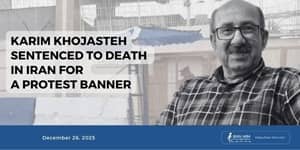
Karim Khojasteh, a 64-year-old political prisoner held in Lakan Prison in Rasht, has been formally sentenced to death under the charge of “baghi”. The sentence was issued not for any violent or armed act, but solely for hanging a protest banner, a peaceful form of expression. The ruling has raised serious concerns about the use of capital punishment against non-violent dissent in Iran. According to statements by his lawyer, Milad Panahipour, the trial process was extremely brief. The court session reportedly lasted only a few minutes, during which the judge merely asked whether the defendant accepted or denied the charges. Without a meaningful examination of the defense and without presenting clear evidence, the death sentence by hanging was issued and formally communicated to Khojasteh on 6 December 2025.
Collapse Of Iran’s Handmade Carpet Industry
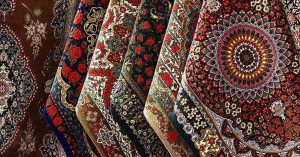
The Financial Times reported that Iran’s handmade carpet industry is facing an unprecedented collapse, with exports falling to their lowest level due to U.S. sanctions and the Iranian regime’s currency regulations. The Financial Times wrote on Friday, December 26, that Iranian carpets, renowned for their artistic delicacy and the skill of their weavers and with a production history spanning thousands of years, are now produced in far smaller quantities than in past decades, and Iran has lost a large part of its former position in the global carpet market. Quoting figures active in Iran’s carpet industry, the newspaper added that regional instability has also contributed to the collapse of this industry, and the current situation has dealt serious damage to local businesses.
The Illusion of Restored Power: Why Tehran’s Show of Force Signals Strategic Collapse
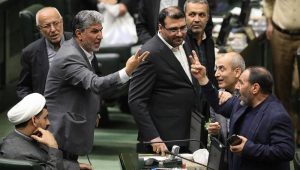
Escalating executions, military theatrics, and repression reveal a regime struggling to conceal internal decay, not one rebuilding authority. Over the past six months, Iran’s regime has launched a coordinated campaign to project what it calls a “restoration of authority.” This effort has unfolded in parallel with severe political, security, and military setbacks. From an unprecedented surge in executions and intensified domestic repression to missile displays, propaganda spectacles, and diplomatic maneuvering abroad, the message is clear: the regime wants to appear strong again. Yet the timing of these measures—coinciding with record-breaking execution figures, a deepening economic collapse, widening social discontent, and open admissions by IRGC commanders of security failures—raises a fundamental question. Is this a genuine reconstruction of power, or a costly and desperate attempt to conceal a profound structural defeat?