


THIS PAGE WILL BE UPDATED WITH THE LATEST NEWS
UPDATE: 01:00 PM CET
US Sanctions Hezbollah Gold Exchange, International Procurement Network

The US Treasury Department on Tuesday imposed sanctions on a Hezbollah-linked gold exchange company and an international procurement network.
“Today, the US Department of the Treasury’s Office of Foreign Assets Control took action to disrupt two key mechanisms Hizballah [Hezbollah] uses to sustain its economic stability: revenue generation in coordination with the Iranian regime and exploitation of Lebanon’s informal financial sector,” the agency said in a statement.
The office sanctioned the gold exchange company Jood SARL, which operates under supervision of Hezbollah’s US-designated Al-Qard Al-Hassan and “converts Hizballah’s gold reserves into usable funds that sustain the terrorist group’s reconstitution,” according to the statement.
UPDATE: 07:30 AM CET
Mahnaz Roshani, a Female Prisoner, Executed in Dastgerd Prison, Isfahan
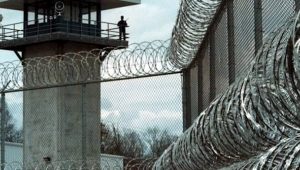
According to newly published reports, Mahnaz Roshani, a resident of Shahin Shahr, was executed at dawn on Saturday, January 31, 2026, in Dastgerd Prison, Isfahan.
So far, no official reports or media outlets have disclosed the charges brought against Mahnaz Roshani. As of the time of writing, the execution has not been formally announced or confirmed by prison authorities or relevant state institutions. With the execution of Mahnaz Roshani, the number of women executed in the 2026 calendar year has risen to seven.
According to data recorded by the Women’s Committee of the National Council of Resistance of Iran, at least 335 women have been executed in Iran since 2007.
Many of the women executed by the Iranian regime are themselves victims of domestic violence and discriminatory family laws. A significant number have acted in self-defense.
When “Normal Life” Becomes Radical: Iran’s Regime and the Collapse of Meaning

In recent weeks, a striking pattern has emerged across Iran’s state-aligned and semi-official media. Words such as deadlock, warning, fear, anxiety, crossroads, and even self-destruction out of fear of death increasingly dominate headlines and commentary. This language is not the vocabulary of stability or control; it is the lexicon of a system trapped in its own contradictions.
Despite differing political affiliations and tones, these outlets share a revealing commonality: they unintentionally expose the regime’s growing inability to understand the society it rules. What appears on the surface as fragmented criticism is, in reality, a collective confession of systemic failure.
At the heart of this failure lies a profound rupture between lived social reality and the regime’s cognitive and political framework—a rupture that no amount of narrative manipulation can now conceal.
Berlin Demonstration Sends a Decisive Message: No Return to Dictatorship in Iran

On February 7, on the eve of the historic anniversary of the fall of the Shah’s dictatorship and the February 11 Revolution, Berlin once again became the stage for a powerful political statement by the Iranian people. Tens of thousands of Iranians, joined by prominent international political, cultural, and social figures, gathered in Germany’s capital in one of the most significant demonstrations of recent years. This was not merely a commemorative event. It was a clear declaration of political will.
The massive turnout reflected a broad national spectrum: supporters of the Iranian Resistance, members and sympathizers of the People’s Mojahedin Organization of Iran (PMOI/MEK), as well as democratic and republican forces united by a shared vision—a free Iran and a democratic republic.
After the IRGC Listing: A Structural Blow to Iran’s Regime, Not a Symbolic Gesture

Nearly two weeks have passed since the Islamic Revolutionary Guard Corps (IRGC) was formally designated as a terrorist organization by the EU. With some distance from the initial political reactions, the true significance of this historic decision is now becoming clearer. What took place was not a symbolic move or a diplomatic gesture—it was a structural strike against the backbone of Iran’s regime. This designation was the culmination of more than three decades of systematic exposure by the Iranian Resistance and a direct international response to the IRGC’s central role in the bloody suppression of the January uprising. For the first time, the regime’s most powerful institution was not merely condemned—but operationally constrained.
U.S.-Based Institute: Iran Fortified Isfahan Nuclear Facility as It Did Before the 12-Day War
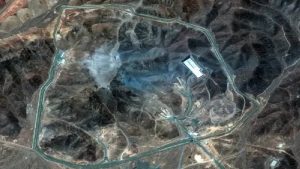
The Institute for Science and International Security, a U.S.-based organization, reported on Monday, based on the latest satellite images, that Iran has taken new measures to fortify the Isfahan nuclear facility against a potential attack by Israel and the United States. The institute said Iran had carried out similar actions prior to the U.S. attacks on Iran’s nuclear facilities in June. According to the Institute for Science and International Security (ISIS), based on high-resolution satellite images recorded on Sunday, Iran has covered the entrances of the Isfahan nuclear facility’s tunnels with soil.
According to the report, the central and southern entrances of the nuclear facility, which were targeted in the U.S. June attacks known as “Operation Midnight Hammer,” have been completely buried under soil to the point that they are no longer identifiable. The northern tunnel entrance, which has more extensive passive defense measures, has also been filled with soil and blocked.
Iranian Regime Judiciary Cancels Pardons for Jailed Protesters

The head of the Iranian regime’s judiciary ordered that the names of individuals arrested in the recent protests be removed from the annual pardon list.
Each year, a number of prisoners in Iran are pardoned on the occasion of February 11, the anniversary of the 1979 revolution. Gholamhossein Mohseni Ejei, head of the Iranian regime’s judiciary, has ordered that the names of all individuals who are in any way linked to recent “security issues” be removed from the pardon list and that this annual measure, which is carried out by order of Ali Khamenei, the regime’s supreme leader, not include them.
On Monday, February 9, referring to the submission of the list of eligible convicts for pardon to Khamenei as in previous years, he stressed: “Given the circumstances that have arisen and the recent violent sedition, I have ordered that the names of all convicts who are in any way connected to security issues be removed from the pardon lists. The defendants and convicts of the recent unrest will also not be included in pardons or leniency.”
A Witness on the Lethal Scale of Repression in the Iran January 2026 Uprising

The events that unfolded in Fardis, Karaj, during the nationwide uprising of January 2026, transcend mere street-level suppression; they constitute a clear instance of “Crimes Against Humanity” and a systematic violation of the right to life. Documented reports and harrowing eyewitness testimonies from the city reveal an “organized massacre” in which state forces, in flagrant violation of international conventions, utilized military-grade weaponry against civilians. By administering “finishing shots” (coups de grâce) to the wounded and abducting the bodies of the deceased, they have committed atrocities that shock the conscience of humanity. This report serves as evidence of a city’s transformation into a war zone and the authorities’ concerted effort to “sanitize” the crime scene through telecommunication blackouts and the intimidation of survivors.
Reformists, Not Protesters: Iran’s New Arrest Target

The post-January crackdown signals a shift inside Iran’s power structure, where longtime political insiders are no longer treated as a stabilizing force—but as a risk.
For years, there was an unwritten rule in Iranian politics: when unrest erupted, the state confronted the street, not its own political insiders. Protesters, activists, and dissidents bore the cost, while reformist politicians—however sidelined—remained part of the system’s internal architecture.
That rule now appears to be under strain.
In the weeks following Iran’s January protests, security forces began arresting and summoning figures associated not with opposition movements abroad, but with the country’s long-established reformist current.
Iranian Community in Dallas Commemorates 1979 Revolution, Backs Nationwide Uprising in Iran

Dallas, Texas — February 8, 2026 — Members of the Iranian American Community of Northern Texas gathered to commemorate the anniversary of the Iranian people’s anti-monarchy revolution of 1979 and to express solidarity with the nationwide uprising of the Iranian people. The event honored the historic struggle for freedom while highlighting ongoing demands for fundamental political change in Iran.