

THIS PAGE WILL BE UPDATED WITH THE LATEST NEWS
UPDATE: 06:00 PM CET
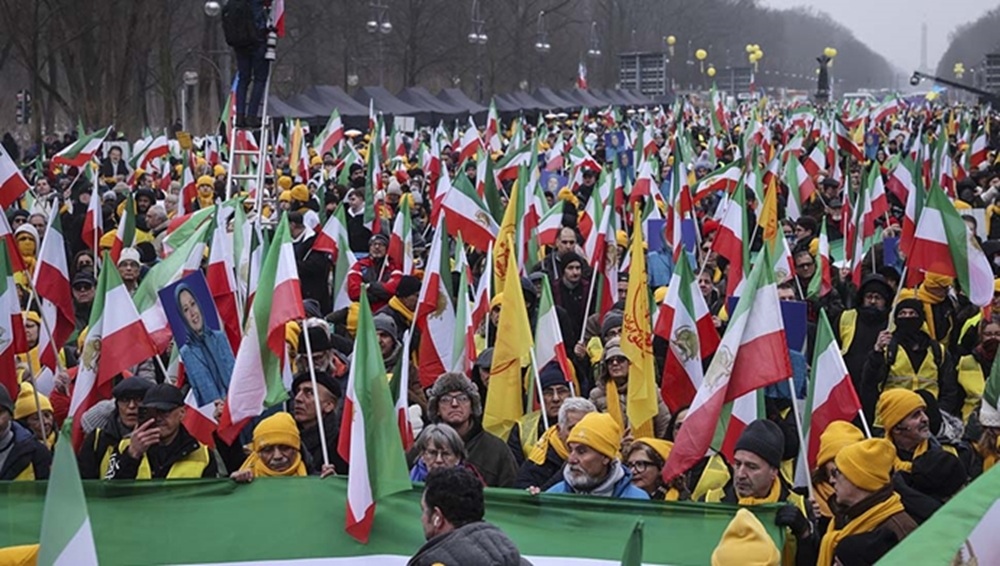
Iranian Opposition Crowds Rally in Munich Alongside Security Conference

Munich – Coinciding with the opening of the Munich Security Conference, Munich’s central Odeonsplatz square turned into an international protest platform as thousands of Iranians and supporters of the National Council of Resistance of Iran gathered in a large demonstration backing the January uprising inside Iran.
UPDATE: 08:00 AM CET
From 1979 to 2026: A revolution hijacked, a revolution reclaimed

As the Iranian regime attempts to mark the 47th anniversary of the 1979 revolution on February 11, the atmosphere in Iran is not one of celebration for the ruling clerics, but of open rebellion. The streets of Iran have once again turned crimson, fueled by the blood of a galaxy of martyrs from the recent January 2026 uprising. While the mullahs try to claim the legacy of the anti-monarchical revolution, the true spirit of that movement—the demand for freedom and the rejection of dictatorship—is alive only in the rebellious youth who are shaking the foundations of the theocracy today.
Medical Staff Face Ongoing Detention for Treating Uprising Injuries

Amid a continuing crackdown following Iran’s nationwide protests, reports indicate that numerous medical staff and members of the medical community have been detained for providing treatment to injured demonstrators. Shaida Riahi Chelvani, a physician at Seyed al-Shohada (Omid) Hospital in Isfahan, was arrested at her home by security forces on Friday, January 9, 2026. On January 11, security forces raided the residence of Dr. Sarvnaz Amiri in Tehran, and took away this 30-year-old physician to an undisclosed location. In a separate case, Fatemeh Afshari, an operating room technician at Atiyeh Hospital in Tehran and mother of an eight-year-old child, was arrested approximately two weeks ago. She has reportedly been denied contact with her family and access to basic information regarding her case.
IRGC: The Iranian Regime’s Pillar of Survival
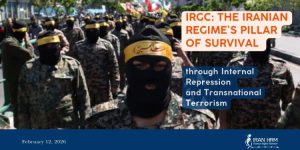
Since its establishment in 1979, the Islamic Revolutionary Guard Corps (IRGC) was not designed as a national defense force; it was deliberately created as an ideological parallel military structure to secure the survival of the ruling clerical regime in Iran. From its inception, the IRGC’s core mandate has been the systematic suppression of society, the elimination of dissent, and the neutralization of any internal challenge to the ruling structure. Over more than four decades, this mandate has been carried out through escalating violence, entrenched institutional impunity, and deep integration with opaque economic networks.
Setayesh Shafiei; She Was Left at 3. Shot Dead at 20
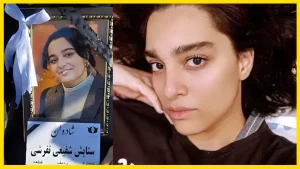
Setayesh Shafiei was born into a troubled family, a home already strained by instability. But the defining fracture came when she was just three years old. Her father left her outside a childcare facility and walked away. At three, a child does not understand abandonment as a concept. But she understands absence. She understands that a familiar hand is no longer holding hers. That the voice she knew has fallen silent. That the air suddenly feels colder. That day, Setayesh lost more than a parent. She lost certainty. She would grow up under the supervision of Iran’s welfare system, one of thousands of children raised in institutional care. But even among them, every child carries a private loneliness. Setayesh carried hers quietly.
Gothenburg Rally Highlights 107 Weeks of “No to Execution Tuesdays” and Support for Iran’s Uprising

Gothenburg, Sweden — February 10, 2025 — Supporters of the People’s Mojahedin Organization of Iran (PMOI/MEK) gathered in Gothenburg to mark the 107th consecutive week of the “No to Execution Tuesdays” campaign, a movement protesting the Iranian regime’s escalating wave of executions and ongoing systematic repression.
Iran’s Youth Are Selling Their Kidneys as the Economy Continues to Plunge
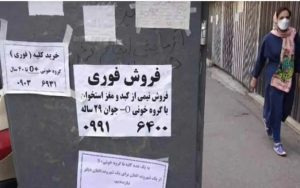
The worsening livelihood crisis in Iran has once again pushed the phenomenon of kidney sales to the top of the news. This time, however, the scope of the tragedy has expanded. Young people who should be building the future are now offering parts of their own bodies in order to survive. The state-run website Didban Iran published a report on February 10 about kidney sales. The report highlighted the spread of this phenomenon among those born in the 2000s. A review of advertisements shows that the sale of organs such as kidneys is no longer limited to traditionally vulnerable groups. The names of young people appear who have not yet entered stable employment. Many of them are under pressure from debt and unemployment. The soaring cost of living has pushed them to the brink of dangerous decisions.
When Power Loses Its Language: Iran’s Theocracy at a Dead End
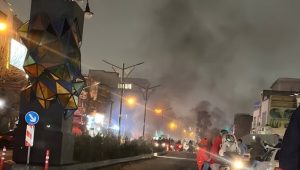
Even state-affiliated newspapers now expose a widening gap between society and a regime incapable of describing—let alone solving—Iran’s deepening crises. There comes a moment in the life cycle of authoritarian systems when repression is no longer sufficient—and rhetoric no longer credible. Iran’s exhausted doctrine of Velayat-e Faqih, sustained for decades through religious fundamentalism and systematic coercion, has now reached precisely that juncture. What makes this moment particularly revealing is not opposition media or foreign analysis, but the language emerging from within the regime’s own tightly controlled press. Newspapers such as Tose’e Irani and Shargh, despite operating under structural censorship, have published assessments that inadvertently expose the historical deadlock confronting Iran’s rulers.