

THIS PAGE WILL BE UPDATED WITH THE LATEST NEWS
UPDATE: 11:00 AM CET
Statement By the High Representative on Behalf of the European Union on the Alignment of Certain Countries Concerning Restrictive Measures Directed Against Certain Persons and Entities in View of the Situation in Iran

On 29 January 2026, the Council adopted Decision (CFSP)2025/2651 implementing Decision 2011/235/CFSP concerning restrictive measures directed against certain persons and entities in view of the situation in Iran. The Council decided that 15 persons and six entities should be included in the list of persons and entities subject to restrictive measures set out in the Annex to Decision 2011/235/CFSP.
Albania, Bosnia and Herzegovina, Iceland, Liechtenstein, Moldova (Republic of), Montenegro, North Macedonia, Norway and Ukraine align themselves with this Council Decision.
UPDATE: 08:00 AM CET
Iranian Students Defy Regime Forces on Third Consecutive Day of Protests, Vowing to End Clerical Tyranny
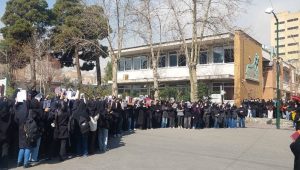
On Monday, February 23, 2026, a massive wave of anti-regime protests swept through Iranian universities for the third consecutive day. Students across the country’s most prominent academic institutions boycotted classes and transformed their campuses into scenes of direct resistance against the ruling theocracy. Demonstrations spanned major universities in the capital, including Tehran University, Al-Zahra, Sharif University of Technology, Amir Kabir, National (Beheshti), Science and Technology, Khajeh Nasir, and Science and Culture, as well as Isfahan University of Technology (IUT) and Ferdowsi and Sajjad universities in Mashhad. The core message of the youth was a categorical rejection of the regime’s tyranny, echoing through chants of “Death to Khamenei” and “Death to the dictator.”
From Indefinite Detentions to Supplementary Judicial Labeling in Iran

The Islamic Republic of Iran not only violated the fundamental principle of the right to life during the January 2026 uprising, shocking the global community, but continues to perpetrate gross violations of universal human rights within its prisons. The authorities are seeking vengeance against detained protesters through torture, forced confessions, and “expedited” summary trials—resulting in severe sentences including the death penalty. They are also abusing judicial power to eliminate the most basic rights of political prisoners, namely the freedom of expression and belief. Forough Taghipour, 31, holding a bachelor’s degree in accounting, has been serving a five-year sentence in Evin Prison since August 2023. She is now facing new judicial proceedings and severe communication restrictions.
Iran Student Protests Erupt Over January Killings and Arrests

Tehran, Iran — Student protests erupted across multiple Iranian universities on Saturday and Sunday, February 21–22, 2026, as students took to campus grounds to commemorate those killed in the mass protests of January 2026 and to protest the ongoing arrests of fellow students and activists. Reports and videos circulating in Iran and on student networks show chants, memorial gatherings, and clashes with security forces at major campuses in Tehran, Mashhad and beyond. In Tehran, students at Sharif University of Technology, Amirkabir University of Technology, the University of Tehran, and Shahid Beheshti University staged coordinated protests on both days. Demonstrators held pictures of classmates killed during the nationwide unrest in early January and lit candles in their memory.
Iranian Resistance Supporters in Oslo Honor Iran’s Uprising Martyrs and Reject All Forms of Dictatorship

Oslo – February 21, 2026: Supporters of the Iranian Resistance gathered outside the Norwegian Foreign Ministry to honor the martyrs of Iran’s nationwide uprising and express strong solidarity with protesters demanding freedom and democracy. The event, held on the 40th day after the killings of protesters, aimed to honor the fallen and demand justice.
Detained Protesters in Iran Facing Serious Security Charges, Risk of Execution

Following the bloody crackdown on the January protests, detainees are now facing severe security-related charges and the danger of being sentenced to death. Mahmood Amiry-Moghaddam, director of Iran Human Rights, an Oslo-based human rights organization, emphasized in an interview with Deutsche Welle, the German international broadcaster, the necessity of raising awareness. The publication of alarming reports about the attribution of security charges to detained protesters and the holding of rushed trials—without due process and without access to independent legal counsel—has raised serious concerns about the fate of those detained.
Iran’s Economic Growth in Freefall as Investment Collapse Signals Structural Breakdown

Economic growth is the foundational condition for prosperity. No country has achieved sustained improvements in living standards without expanding the size of its economic output. Yet official data now confirms that Iran’s growth engine has effectively stalled. The sharp collapse in investment signals not just a cyclical downturn, but a deep structural crisis pushing the economy toward prolonged stagnation. Official estimates show that investment growth has fallen from negative 8 percent to approximately negative 15 percent. This is not merely a statistical fluctuation. It represents a severe contraction in the country’s future productive capacity. When gross fixed capital formation turns sharply negative, it means the economy is consuming its capital stock rather than expanding it. The consequence is clear: the next generation will inherit a smaller and less productive economy. Negative investment today guarantees weaker growth tomorrow.