

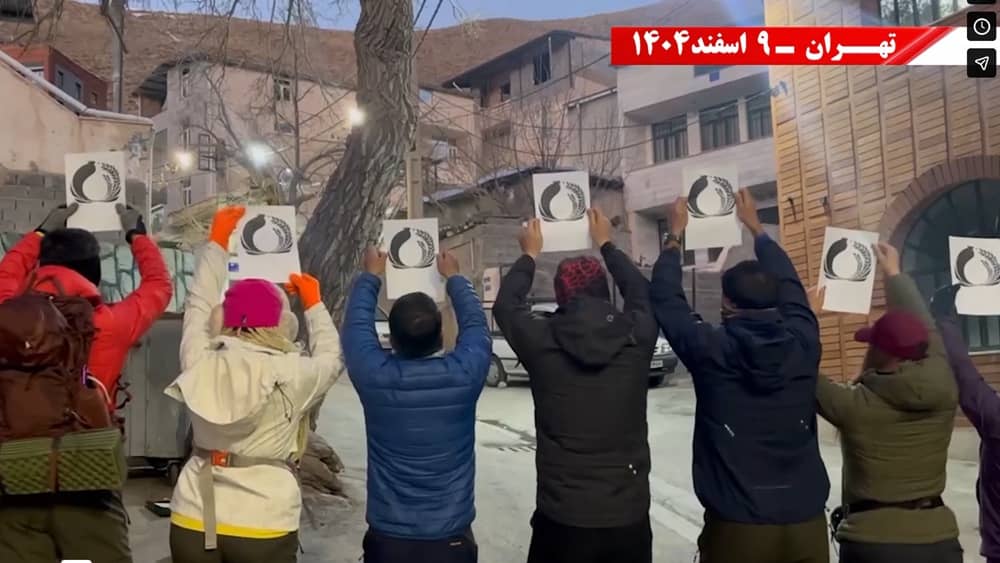
THIS PAGE WILL BE UPDATED WITH THE LATEST NEWS
UPDATE: 11:30 PM CET
Reports of Khamenei’s Death Spark Nationwide Jubilation and Global Reaction
Reports regarding the death of Iranian Supreme Leader Ali Khamenei have surfaced following statements made by Donald Trump on the Truth Social platform. According to these reports, the strikes targeted senior leadership within the Iranian government. NBC News has further cited Trump’s assertions that most of the top officials responsible for the regime’s decision-making are now gone.
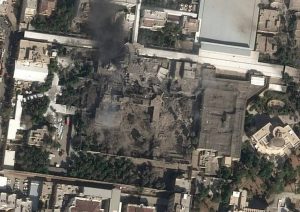
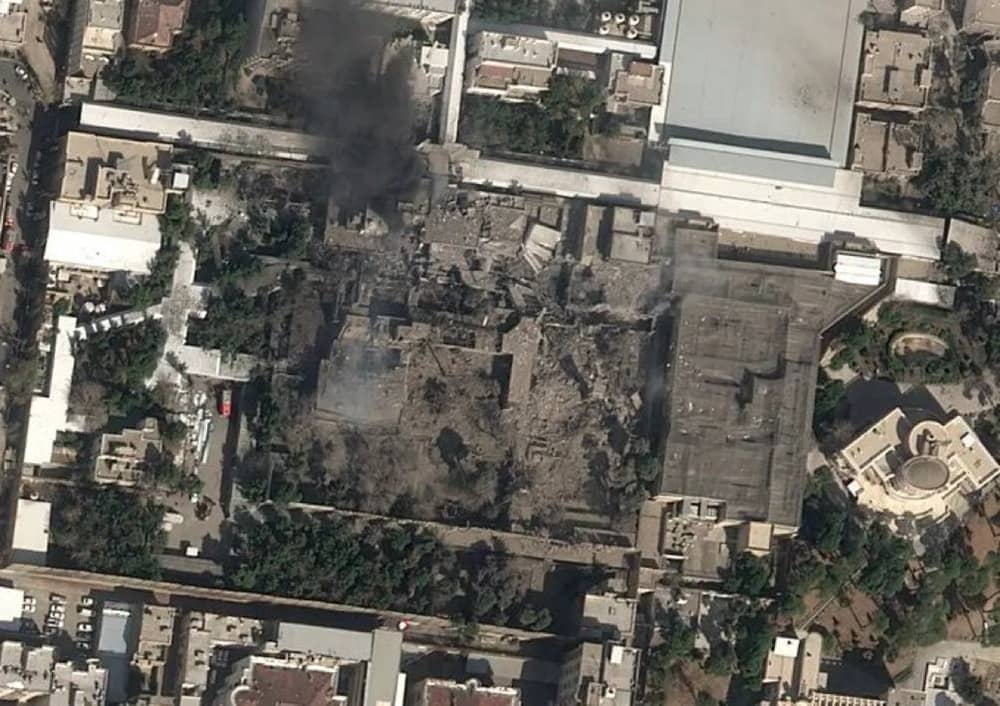
International news agencies have provided additional context surrounding the situation. Reuters had reported that Khamenei was initially moved to a secure location following the start of military strikes by U.S. and Israeli forces. Meanwhile, the New York Times released aerial imagery of the Supreme Leader’s compound, known as “Beit Khamenei,” showing the impact of the air raids.
In Tehran, the news has triggered significant public movement. Large crowds of citizens are reportedly heading toward Azadi Square. Eyewitness accounts and reports shared through opposition networks describe scenes of public celebration and gathering in response to the news of Khamenei’s reported death.
Iranian Opposition Group in Exile Calls for Provisional Government Toward Democracy

Paris, Feb. 28 (EFE). – The president of the exiled opposition group National Council of Resistance of Iran (NCRI), Maryam Rajavi, called on Saturday for the formation of a provisional government to “transfer sovereignty to the people of Iran” and establish a “democratic republic.”
In a statement, the NCRI said that such a government, which would be led by Rajavi, would implement a ten-point plan aimed at achieving “a non-nuclear Iran free of weapons of mass destruction,” living in peace, coexistence, and international and regional cooperation.
The plan rejects religious rule and affirms “the sovereignty of the people in a republic based on universal suffrage and pluralism,” with a separation between clergy and state.
It also underscores a commitment to individual and collective human rights, including freedom of expression, assembly, and political association, as well as to gender equality.
UPDATE: 08:30 PM CET
Key Iranian Command Centers and Nuclear Infrastructure Targeted
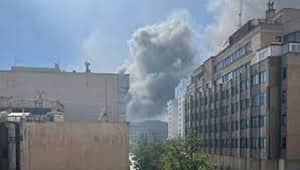
The joint military operation led by the United States and Israel against the Iranian regime has expanded into a massive strategic offensive, resulting in the reported deaths of several high-ranking officials and the destruction of core government institutions. According to latest reports from Reuters and senior intelligence sources, Iranian Minister of Defense Amir Nasirzadeh and IRGC Ground Forces Commander Mohammad Pakpour were killed during a wave of precision strikes that targeted three simultaneous high-level leadership meetings.
In a significant escalation of regional hostilities, the Islamic Revolutionary Guard Corps attempted a massive retaliatory strike by launching approximately 125 missiles toward Israel. U.S. Central Command confirmed that its forces, alongside regional partners, successfully intercepted hundreds of Iranian drones and missiles. The United Arab Emirates Ministry of Defense also reported the successful interception of a new wave of projectiles entering its airspace. In response to the chaos, major international airlines have suspended all operations across the Middle East, effectively isolating the region’s airspace.
Main Iranian Resistance Group Sets Up Provisional Government After US, Israel Strikes

The National Council of Resistance of Iran, an anti-Iranian regime group, announced on Saturday a “provisional government to transfer sovereignty” to the Iranian people and establish a Democratic Republic after the United States and Israel launched strikes against the regime. The organization also publicly outlined a ten-point plan for the country’s future after the U.S. and Israeli military operation launched on Saturday.
“In these difficult circumstances, I call on all of you, especially the courageous youth of our country, to care for civilians and the general public, particularly children and the elderly. Protect them and help one another. Now is the time for solidarity,” said Maryam Rajavi, president-elect of the NCRI.
UPDATE: 01:30 PM CET
US and Israel Launch Joint Military Strikes Inside Iran
On Saturday, February 28, 2026, the United States and Israel launched a series of extensive military strikes across Iran, targeting military infrastructure and leadership. U.S. President Donald Trump described the operation as a “major combat operation” aimed at eliminating “imminent threats” and preventing the Iranian regime from obtaining nuclear weapons.
Explosions have been reported in multiple Iranian cities, including Tehran, Isfahan, Qom, Tabriz, Karaj, and Bushehr. According to Reuters, the strikes specifically targeted Iranian Supreme Leader Ayatollah Ali Khamenei and President Masoud Pezeshkian. Other sources indicated that Khamenei had been moved to a secure location outside of Tehran prior to the attacks.
Leadership and Military Personnel: Sources close to the Iranian establishment and the Saberin News Telegram channel report that several senior Revolutionary Guard (IRGC) commanders and political officials were killed.
Infrastructure: Strikes hit the University Street and Jomhouri areas in central Tehran, as well as Seyed Khandan in the north. Additional targets included missile sites in Tabriz, a “missile city” in Bushehr, and a radar site at Bandar Baher.
Civilian Impact: The governor of Minab reported that at least 24 people were killed in an Israeli strike on a school. In Tehran, citizens faced long lines for gas, and many attempted to flee the capital as airspace was closed.
Communication Disruptions: Internet connectivity in Iran reportedly plummeted to 4%, and mobile phone services were cut in various parts of Tehran.
UPDATE: 08:00 AM CET
Conference, “Iran: A Democratic Republic Guarantees Freedom for Iran and Peace for the Region”
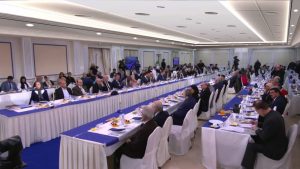
Mrs. Maryam Rajavi’s speech: “Greetings and salutes to you, and Ramadan Mubarak. We are in the month of Ramadan, the month of liberating piety. Ramadan is a month of solidarity for the building of a just and harmonious society. Thus, we call upon followers of all faiths and beliefs, oppressed nationalities, and all our bereaved compatriots who have endured repression and plunder to unite in bringing down religious fascism and in reclaiming freedom and popular sovereignty. This Ramadan is the Ramadan of the unjustly spilled blood of thousands of Iran’s devoted souls. It is a Ramadan in which the cry — “For what sin were they slain?” — has risen to the heavens. For what crime were they killed? Why were those most vibrant of lives cut down by bullets?
“The Holy Qur’an reminds us: ‘Do not think of those who are slain in the path of God as dead. They are alive, sustained in the presence of their Lord.’”
Iranian Students Sustain Anti-Regime Protests as State Media Warns of Organized Resistance
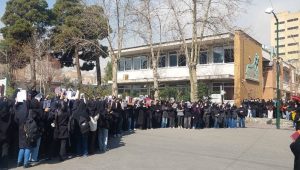
Across Iran, a revitalized wave of protests is openly challenging the ruling theocracy, driven by a student movement that rejects both the current clerical dictatorship and the deposed monarchy. In a collective manifesto issued on February 23, 2026, students from Tabriz University declared their institutions a “bastion of freedom.” Drawing a deep line against opportunists and state forces alike, the students proclaimed: “Neither Shah nor mullahs, long live the democratic republic.” Faced with unwavering nationwide defiance, the regime has resorted to a desperate smear campaign. In a televised speech from the northern city of Sari on February 27, Iranian regime President Masoud Pezeshkian attempted to rebrand the popular uprising as “subversion” and “terrorism.”
The Women-led Resistance the Iranian Regime Fears Most

The Women-led Resistance the Iranian Regime Fears Most is the name of an Op-ed by Ms. Linda Chavez, Chairwoman of the Center for Equal Opportunity and former Director of the White House Office of Public Liaison under President Reagan, where she was the highest-ranking woman in the Reagan White House. The Washington Examiner published this article, on February 26, 2026. The article reads as follows: Women in the political arena can be a very potent transformative force. I know this firsthand from almost 50 years in the challenging field of politics. In this long odyssey, the women who changed me — who changed how I understand leadership, sacrifice, and what it means to fight for freedom — are mostly unsung heroines the world has never heard of. And that silence is not an accident. It is a strategy.
The Economy of Repression in Iran
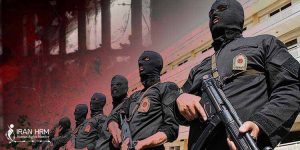
The 2025 national budget of Iran represents more than a fiscal document; it reflects a structural reorientation of state priorities following the nationwide January 2025 uprising. That uprising emerged amid chronic inflation, currency devaluation, rising exchange rates, and widespread economic hardship affecting broad segments of society. In this context, the budget is not merely an economic plan. It serves as a policy instrument that reveals how the Iran regime reallocates public resources in response to social unrest. According to the official Budget Law, the total national budget for 2025 amounts to: 118,966,000,000,000,000 rials (approximately 119 quadrillion rials) Of this total: 64,076,000,000,000,000 rials (approximately 64 quadrillion rials) are allocated to the general government budget and 54,890,000,000,000,000 rials are allocated to state-owned companies.
Iran: Gunshots, Blackouts, and X-Rays — What Really Happened in January 2026?
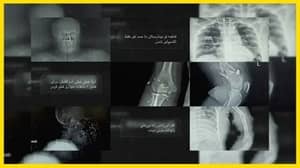
Reports by The New York Times and Deutsche Welle detail how Iranian doctors secretly documented gunshot victims during the January 2026 protest crackdown. When the internet went dark across Iran in January 2026, the streets were not the only battleground. Inside hospital corridors, doctors and nurses found themselves treating a surge of gunshot victims — while quietly preserving evidence they feared might otherwise vanish. Now, investigations by The New York Times and Deutsche Welle shed light on what those medical records reveal about the Iran January 2026 crackdown. The unrest began after a dramatic collapse in Iran’s currency intensified public anger over inflation and living costs. Demonstrations quickly spread across multiple cities, evolving from economic grievances into broader political demands. According to reporting by The New York Times, authorities responded with a sweeping communications blackout and forceful security measures.
Paris Exhibition Shows Solidarity with Iran’s Uprising and Honors Fallen Protesters

Paris, France – February 26, 2026 – A book table and photo exhibition were held at Place de la Bastille in Paris to express solidarity with the nationwide uprising in Iran and to commemorate the victims and fallen heroes of the movement. The event was organized by supporters of the People’s Mojahedin Organization of Iran (PMOI/MEK) and underscored the resilience of the Iranian people and their continued demand for freedom, justice, and democratic governance.
Melbourne Gathering Backs Iran Uprising, Honors January 2026 Martyrs
Melbourne, Australia – February 24, 2026 – Freedom-loving Iranians gathered in Melbourne to express solidarity with the Iran uprising and to commemorate the martyrs of the January 2026 protests. The event honored those who sacrificed their lives in the struggle for freedom and justice.
#Melbourne Gathering Backs Iran Uprising, Honors January 2026 Martyrs #No2ShahNo2Mullahs #FreeIranhttps://t.co/oyqmP0TB3s
— Iran Freedom (@4FreedominIran) February 27, 2026
Participants also called for the establishment of a democratic republic, reaffirming their support for the Iranian people’s pursuit of political rights and fundamental civil liberties.
Iranian Academics in Manchester Back Iran Uprising, Call for February 28 London Rally

UK, Manchester – February 26, 2026: Members of the Academics in Exile Association in the UK, supporters of the People’s Mojahedin Organization of Iran (PMOI/MEK), held a book table and photo exhibition to express solidarity with the nationwide uprising in Iran. The event also invited people from all walks of life to participate in the demonstration on Saturday, February 28, in Trafalgar Square, London.
Iran Regime Claims “Accountability” at UN Despite Decades of Human Rights Condemnations
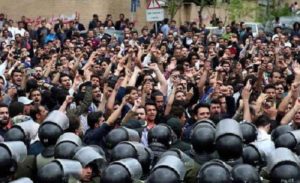
Tehran’s address to the UN Human Rights Council revives official narratives that clash sharply with historical records and documented patterns of repression. On February 24, Iran’s state-run News Network broadcast remarks by Kazem Gharibabadi, Deputy Foreign Minister for International Affairs, delivered at the United Nations Human Rights Council. He opened his speech with a sweeping assertion: “The Islamic Republic of Iran is a responsible and accountable country in the field of human rights.” Diplomatic in tone, the statement was framed as an official defense of Tehran’s record. Yet in substance, it appeared less as a reflection of on-the-ground realities and more as a carefully constructed political narrative. For many Iranians and international observers, the claim stands in stark contrast to both historical memory and extensive documentation of systemic abuses.