


THIS PAGE WILL BE UPDATED WITH THE LATEST NEWS
UPDATE: 08:30 PM CET
Sanctions to Combat Illicit Traders of Iranian Oil and the Shadow Fleet
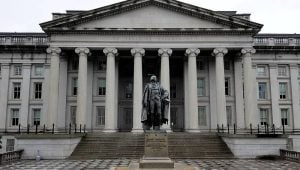
Today, the Department of State is sanctioning multiple entities, individuals, and vessels to stem the flow of revenue that the regime in Tehran uses to support terrorism abroad and repress its citizens.
As part of this action, the Department of State is identifying 14 shadow fleet vessels as property of entities involved in the transportation of Iranian petroleum, petroleum products, and petrochemical products. Furthermore, the Department of State is sanctioning 15 entities that have traded in Iranian-origin crude oil, petroleum products, or petrochemical products, as well as two associated individuals.
Time and time again, the Iranian government has prioritized its destabilizing behavior over the safety and security of its own citizens, as demonstrated by the regime’s mass murder of peaceful protestors. The United States will continue to act against the network of shippers and traders involved in the transport and acquisition of Iranian crude oil, petroleum products, and petrochemical products, which constitutes the regime’s primary source of income.
UPDATE: 01:00 PM CET
Bessent: Iran Leadership Wiring Money Out ’Like Crazy’

Treasury Secretary Scott Bessent told the Senate Banking Committee on Thursday that Iranian leaders are moving money out of the country “like crazy,” which he views as a sign that “the end may be near” for the current regime. During his testimony, Bessent described the situation saying “the rats are leaving the ship” in Iran, suggesting significant capital flight by Iranian leadership.
The Treasury Secretary addressed various other topics during the hearing, including potential credit card rate caps. He noted that President Trump has discussed implementing a one-year cap on credit card rates, adding that the profits of credit card firms “need not be hit” by such measures. Bessent mentioned that Treasury is examining what caps might do to the asset-backed securities market, with impacts depending on duration.
UPDATE: 09:00 AM CET
For the Future of Iran: Change Will Come from the People

Throughout my public involvement, I have supported the struggles against colonial domination and apartheid – notably in Congo, Palestine, and South Africa – defended the right to self-determination of the Sahrawi people, and helped to mobilize Belgian public opinion in support of Chileans fleeing the dictatorship that emerged from the 1973 coup. This same compass – standing with peoples rather than regimes – should guide our view of Iran today.
The Iranian theocracy is not merely an internally authoritarian system. Over the decades, it has become a regional actor whose security apparatus and ideological project fuel instability, militarization, and religious fundamentalism in the Middle East. Through militias, armed groups, and a logic of perpetual confrontation, it exports crisis rather than peace. This serves neither the Palestinian cause nor any other struggle for justice. On the contrary, it traps societies in cycles of violence that weaken genuine democratic movements. A policy based on perpetual war does not liberate people; it exploits them.
UPDATE: 08:00 AM CET
Ahvaz In Flames: Rebellious Youth Defy Live Ammo and Drones in Anti-Regime Protests

Despite the Iranian regime’s desperate attempts to conceal the scale of the nationwide uprising through severe internet blackouts and censorship, reports continue to leak out, revealing a volatile society determined to overthrow the religious dictatorship. New field reports obtained from Ahvaz, the capital of Khuzestan province, detail two weeks of intense confrontations in early January 2026, showing that the rebellious youth are holding their ground against heavily armed suppression forces, burning symbols of the regime, and forcing security units to retreat.
The current wave of protests, which erupted on December 28, 2025, initially began as an economic stoppage by bazaari shopkeepers in central Tehran outraged by the rial’s sharp plunge and price spikes. However, the unrest quickly expanded geographically to hundreds of locations and shifted socially to include universities and wider strike activity.
Join the Berlin Free Iran Demonstration on February 7, 2026 – No to Shah, No to Mullah

Berlin, Germany – February 3, 2026 –In January 2026, Iran rises. 400 cities, 31 provinces, one demand, one voice: regime overthrow by the Iranian people themselves, with a clear rejection of both monarchy and theocracy.
Media Admissions of Systematic Arrests of Doctors, Lawyers, and Artists Following the January 2026 Uprising

The nationwide uprising of January 2026 has propelled the Iranian regime into a new paradigm of repression, which can be defined as the “absolute criminalization of the right to protest.” By employing hostile rhetoric and “security labeling” against citizens, the Iranian regime has effectively transformed the “inherent right to protest” into “action against national security” to pave the way for the physical elimination of dissidents. Based on explicit admissions by domestic media (such as Jahan-e Sanat newspaper), this report reveals that the state, in a “systematic survival strategy,” has extended arbitrary arrests to the heart of civil society—including doctors, lawyers, and artists—to sever the people’s support networks. Simultaneously, the execution of 72 individuals in less than a week and the threat of a “digital siege” through internet shutdowns indicate a state-sponsored campaign of intimidation.
Leaked Plans Reveal Iran’s Crackdown as Detainees Disappear

In the weeks following Iran’s January 2026 protests, a growing body of evidence points to a crackdown that has moved well beyond crowd control. Leaked security documents, combined with findings from Iranian human rights organizations, reveal a coordinated campaign marked by mass arrests, enforced disappearances, pressure on medical professionals, a sharp rise in executions, and the refusal to return the bodies of some protesters—particularly women—to their families. What emerges is not a series of isolated abuses, but a system operating across multiple institutions, from security forces and prisons to hospitals and burial authorities.
Iran Loses 1.56 million Dollars Every Hour Due To Internet Shutdowns

A privacy and internet security analyst says that Iran, due to internet shutdowns imposed by the Iranian regime, loses 1.56 million dollars every hour, further damaging its already stagnant economy and disrupting the lives of more than 90 million people. Simon Migliano, head of research at the privacy company Privacy, told Fox News about Iran’s prolonged internet shutdowns that the losses caused by these disruptions continue even after partial internet connectivity is restored. In this interview, which was published on Wednesday, February 4, he noted: “The current blackout is costing Iran an estimated $37.4 million per day, or $1.56 million every hour.”
Khamenei’s White Flag: Why the Regime’s Call for “Direct Talks” Signals Weakness, Not Peace

After months of regional and international pressure—and particularly following the European Union’s designation of the IRGC as a terrorist organization—Iran regime’s supreme leader Ali Khamenei has been forced into an unmistakable retreat. The regime’s sudden willingness to consider “direct negotiations” is not a diplomatic breakthrough; it is the raising of a white flag by a system under siege. The regime’s president, Masoud Pezeshkian, acting as the executor of the Supreme Leader’s line, attempted to reframe this retreat as prudence and dignity. In a carefully staged statement, he claimed that talks would proceed only if they were “fair,” “non-threatening,” and consistent with so-called “national interests.” This rhetoric is designed less to convince foreign interlocutors than to mask capitulation at home.