

THIS PAGE WILL BE UPDATED WITH THE LATEST NEWS
UPDATE: 7:00 PM CET
The World Must Stand United Against Iran’s Brutal Regime

December 10 marks International Human Rights Day. For the 72nd time, the United Nations has condemned Iran’s clerical regime for serious and systematic human rights violations. The UN resolution points to a dramatic increase in the use of torture and the death penalty — including against women and minors. In November alone, as many as 336 people were executed. This is the highest number of executions in 37 years.
At the same time, the International Atomic Energy Agency (IAEA) has stated that Iran’s regime is not cooperating with the international community regarding its nuclear program and that the agency can no longer confirm that the program is peaceful. This creates a serious security risk, both regionally and globally.
International pressure is mounting. Canada and Australia have blacklisted the Revolutionary Guard for terrorist activities, and France, the United Kingdom, and Germany have reinstated the nuclear sanctions that were in place prior to the 2015 nuclear agreement. The regime is now facing a more unified and resolute international opposition than it has in a long time.
UPDATE: 12:30 PM CET
Iran Executed 2,200+ in 2025: Bloodiest Year Under Khamenei as Regime Faces Unrest

Iran’s clerical regime closed out 2025 with what an Iranian opposition coalition described as an unprecedented surge of state killings — as the group’s president-elect warned the mass hangings amount to “a crime against humanity” and a desperate bid for “survival” by a system that fears an “explosive society.”
The year-end tally, published on Wednesday, December 31, by the National Council of Resistance of Iran (NCRI) — an Iranian opposition group — put the number at more than 2,200 executions nationwide in 2025, including 376 hangings in December alone, which it said capped the bloodiest year recorded under Supreme Leader Ayatollah Ali Khamenei’s 37-year rule.
NCRI president-elect Maryam Rajavi said the mass, collective, and arbitrary executions constitute organized crime and a crime against humanity, describing them as a desperate effort by a regime that fears an enraged population and an explosive society.
Treasury Targets Iran-Venezuela Weapons Trade
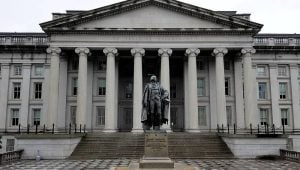
WASHINGTON — Today, the U.S. Department of the Treasury’s Office of Foreign Assets Control (OFAC) is targeting 10 individuals and entities based in Venezuela and Iran, including a Venezuelan company that has contributed to Iran’s unmanned aerial vehicle (UAV) trade with Venezuela.
“Treasury is holding Iran and Venezuela accountable for their aggressive and reckless proliferation of deadly weapons around the world,” said Treasury Under Secretary for Terrorism and Financial Intelligence John K. Hurley. “We will continue to take swift action to deprive those who enable Iran’s military-industrial complex access to the U.S. financial system.”
This action builds on Treasury’s nonproliferation designations in October and November in support of the September 27, 2025 reimposition of United Nations sanctions and other restrictions on Iran. Iran’s UAV and missile programs threaten U.S. and allied personnel in the Middle East and destabilize commercial shipping in the Red Sea. Additionally, Iran’s ongoing provision of conventional weapons to Caracas constitutes a threat to U.S. interests in the Western Hemisphere, including the Homeland, and the United States will use all available measures to prevent this trade.
UPDATE: 08:00 AM CET
Live Report: Iran’s Bazaar Uprising Enters Day Four as Strikes Spread to More Cities
Iran’s nationwide bazaar-led protests—sparked by a sharp economic deterioration, currency instability, and the rial’s collapse—entered their fourth day on December 31, 2025. What began in Tehran on December 28, 2025 as a strike by merchants and shopkeepers in and around the Grand Bazaar has continued to expand, drawing growing attention as a movement originating from a sector long viewed as part of the regime’s traditional social base.

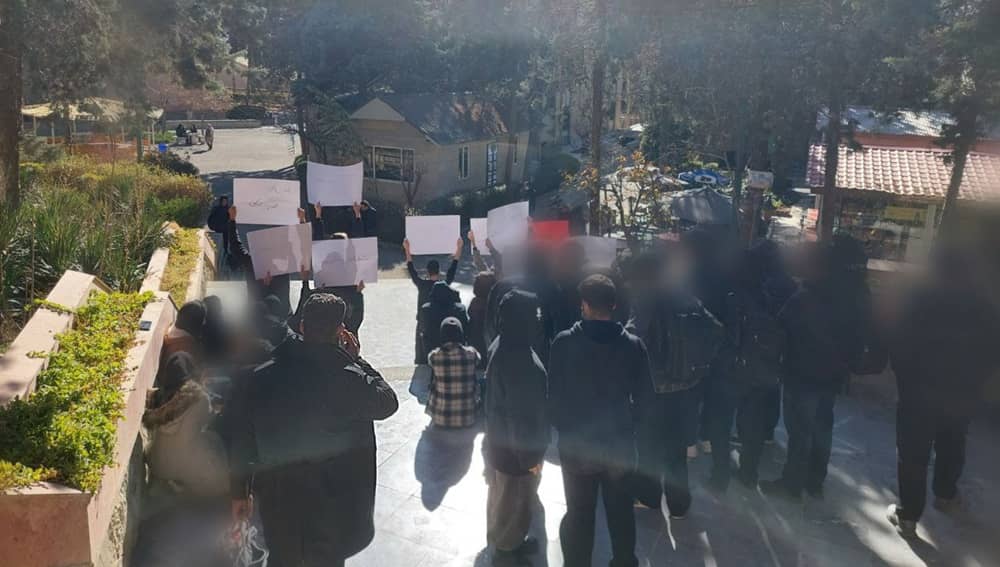
As we reported on day three, the Grand Bazaar in Tehran remained shuttered for a third consecutive day while protests spread to major cities and university campuses. Students joined the bazaar strikes with open anti-regime slogans, while security forces responded with tear gas and force in multiple areas.
Zahra Tabari’s Death Sentence: International Media Spotlight Global Outcry
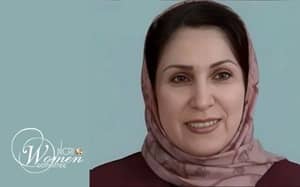
As a 67-year-old Iranian engineer and women’s rights activist faces execution for holding a banner reading “Women, Resistance, Freedom,” an unprecedented wave of international condemnation has emerged. An open letter signed by more than 400 prominent women worldwide, alongside urgent statements from eight UN human rights experts, has triggered extensive global media coverage demanding the immediate halt of Zahra Tabari’s death sentence and exposing the Iranian regime’s escalating use of capital punishment against women. Zahra Shahbaz Tabari, who holds a bachelor’s degree in electrical engineering from Isfahan University of Technology and a master’s degree in Sustainable Energy from Borås University in Sweden, has been detained since April 17, 2025, without a judicial warrant. She is currently held in Lakan Prison in Rasht. A mother of two, Tabari was sentenced to death by the First Branch of the Revolutionary Court of Rasht.
Iranian American Communities Rally at White House in Support of Iran Protests and Democratic Republic

Washington, DC – December 31, 2025 — Members of Iranian American communities, organized by the Organization of Iranian American Communities (OIAC), gathered in front of the White House on Wednesday to express solidarity with the nationwide protests in Iran that began on Sunday, December 28.
Heavy Prison Sentences for 14 Civil Activists
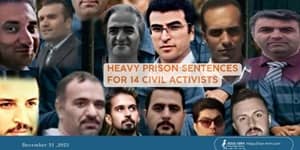
The issuance of heavy prison sentences against 14 civil activists in Tabriz, totaling more than 91 years of imprisonment, has heightened concerns regarding the treatment of civil activism and the application of security-related charges in Iran. Legal observers and human rights advocates consider these verdicts indicative of a broader pattern of pressure on peaceful civic engagement through the use of broadly defined offenses. According to information reported by human rights sources, a branch of the Revolutionary Court in Tabriz, presided over by Judge Reza Abdi, sentenced 14 civil activists to lengthy terms of imprisonment. The charges cited in the verdicts include “forming a group” and “assembly and collusion against national security”; provisions that have been repeatedly applied in recent years to prosecute civil, labor, and social activists.
What Happened on the Fourth Day of Protests in Iran?
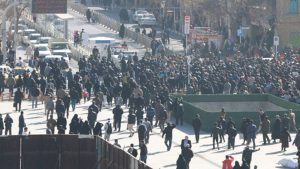
Nationwide protests by citizens continued into their fourth day on Wednesday, December 31. On this day, people gathered in the cities of Kuhdasht in Lorestan province, Isfahan, Kermanshah, and Fasa in Fars province. In some cities, security forces opened fire on citizens. In Fasa, citizens held a protest gathering, stormed the city’s governorate building, and lit fires in the street in front of it. Protesters in this city also chanted slogans such as “Death to the dictator” and “Death to Khamenei.” Videos and reports published on social media indicate that repressive forces directly fired at protesting people in Fasa. At least one person was injured in the shooting. On Wednesday afternoon, similar reports were published of regime forces firing at citizens during a protest gathering in the city of Kuhdasht.
What Iran’s State Media Reveal: A Regime Afraid of the Street
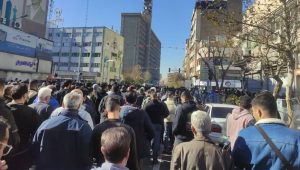
How official narratives around economic protests expose Tehran’s deeper fear of social uprising and loss of control. A close reading of Iran’s media on Wednesday, December 31, offers a revealing snapshot of the regime’s mindset. More than inflation, currency collapse, or widespread poverty, what truly alarms Tehran is the possibility that economic despair may once for all spill decisively into the streets—and stay there. The dominant theme across regime media is not problem-solving but containment. The regime’s propaganda apparatus is working overtime to separate “legitimate” economic complaints from what it repeatedly labels as “riots,” “chaos,” or “foreign plots.” This rhetorical separation is not accidental; it is an admission of fear. The regime knows from experience that once bread-and-butter grievances connect with public space and collective action, repression becomes both costlier and less effective.