


THIS PAGE WILL BE UPDATED WITH THE LATEST NEWS
UPDATE: 10:30 PM CET
Trump’s Ukraine Envoy Says World Must Reinstate ‘Maximum Pressure’ on Iran
PARIS (Reuters) -The world must return to a policy of “maximum pressure” against Iran to turn it into a more democratic country, U.S. President-elect Donald Trump’s incoming Ukraine envoy Keith Kellogg told an Iranian opposition event in Paris on Saturday.
Trump has vowed to return to the policy he pursued in his previous term that sought to wreck Iran’s economy to force the country to negotiate a deal on its nuclear programme, ballistic missile programme and regional activities.
“These pressures are not just kinetic, just not military force, but they must be economic and diplomatic as well”, Retired Lieutenant-General Kellogg, who is set to serve as Trump’s special envoy for Ukraine and Russia, told the audience at Paris-based Iranian opposition group National Council of Resistance of Iran (NCRI).
UPDATE: 10:00 AM CET
Donald Trump to Put ‘Maximum Pressure’ on Iran’s Murderous Regime from Day One

Donald Trump’s Secretary of State Mike Pompeo today warned Iran’s dictatorship that the incoming president would apply a policy of “maximum pressure” to help topple the murderous regime. He accused both Democrat politicians in the US and EU leaders, “sitting in salons in Europe”, of effectively choosing to appease both deposed President Assad in Syria and Ayatollah Khamenei in Iran – and added that this would not be the case when President Trump took office.
Mr Pompeo, who was Trump’s Secretary of State from 2018 to 2021, said: “I am confident that after January 20 that will not happen again.
“Trump will return to office in just a few days. He has talked in detail about bringing back his ‘maximum pressure’ campaign that had proved so successful.”
UPDATE: 8:30 AM CET
Deceased Swiss Citizen in Iran: “Murder Can Easily Be Covered Up”

A Swiss national detained in Iran has died in prison. According to state media, he was previously arrested by security agencies on charges of “espionage.” The Swiss Federal Department of Foreign Affairs (EDA) stated that the individual had not resided in Switzerland for nearly 20 years and had most recently been living in “southern Africa.”
Switzerland is now demanding detailed information regarding his arrest and a thorough investigation into the circumstances of his death.
Shahin Gobadi, a member of the Foreign Affairs Committee of the Iranian opposition party, the National Council of Resistance of Iran (NCRI), expressed doubts about the official account that the 64-year-old took his own life in Semnan Prison.
“The Iranian regime bases its power entirely on torture and mistreatment,” Gobadi told 20 Minuten. “Many of those who have died in prison are said to have committed suicide—but no one should believe this. These are mostly pretexts. Murders can easily be disguised as suicides.”
Lebanon Elects New President in Sign of Hezbollah’s Waning Influence

Lebanon’s Parliament elected a U.S.-trained general as president, ending a two-year vacancy in a sign of Hezbollah’s waning influence following a bruising war with Israel and the weakening of the group’s Iranian patron.
After obstructing the election of any other candidate by withdrawing from a dozen previous sessions and thus depriving Parliament of quorum, Hezbollah and its allies voted in favor of Gen. Joseph Aoun as the country’s next president on Thursday, according to a Hezbollah lawmaker. Ninety-nine out of 128 members of Parliament voted for Aoun in the second round of voting, according to the Parliament speaker. In the first round, Hezbollah didn’t vote for Aoun, which it said was a message that its consent was still needed.
UPDATE: 7:00 AM CET
The Prospect of Protests by Iran’s Workers And Retirees
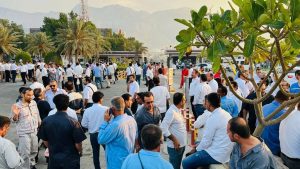
On January 5, retirees from Social Security and Steel sectors took to the streets in various cities across Iran. This protest was neither the first instance of such discontent nor likely the last. Protests and demonstrations by workers and retirees in various cities across Iran are burning embers of social and economic dissatisfaction that now manifest in Iran’s cities and streets. These protests, held in Ahvaz, Isfahan, Kermanshah, Shush, and Rasht, echo the voices of a class that has been grappling for years with livelihood challenges, the neglect of the regime’s mafia-like system, and economic instability.
The recent protests by workers and retirees in Iran highlight several fundamental issues, reflecting the depth of these protests and their increasingly political nature. Retirees and workers have protested low wages and the failure to adjust them in line with inflation. These wages, at best, cover only a small portion of daily living costs. Many protesters demanded attention to their basic rights, including adequate pensions, access to healthcare services, and job security for active workers.
The Growing Poverty Crisis in Iran: A Consequence of Mismanagement and Economic Missteps

Poverty has become one of the most pressing social issues in Iran, exacerbated by tension-inducing policies and the inefficient management of the current regime. The widening poverty gap is not only a sign of economic mismanagement but has led to a range of alarming consequences, such as rising crime rates, increased school dropouts, and a growing underclass that struggles to meet basic needs. While Iranian officials acknowledge the widespread poverty, they have yet to release accurate statistics on its true extent.
In a recent statement, Ebrahim Sadeghifar, head of the Labor and Social Security Institute, revealed that between 22% and 27% of the Iranian population is living in poverty. These individuals are facing significant difficulties in meeting their basic needs. He emphasized that poverty in Iran has transcended marginal concerns and has now become an undeniable reality for many.
Alarming Emigration Trends Among Iranian Doctors

The flawed structure of Iran’s healthcare system, coupled with ongoing economic and social challenges, has plunged the country’s medical community into a deep crisis. This crisis is evident in the alarming rate of emigration among specialist doctors and the growing trend of general practitioners (GPs) leaving the medical profession altogether. Many GPs are either seeking specialized training abroad or turning to alternative careers after years of education.
Mohammad Raiszadeh, head of Iran’s Medical System Organization, revealed in a video interview on Wednesday, January 8, that there are currently 30,000 inactive GPs in Iran. Raiszadeh noted that many GPs are reluctant to pursue specialty training or engage in medical practice due to systemic challenges.
64-Year-Old Swiss Tourist Dies In Iranian Prison

The Swiss Ministry of Foreign Affairs announced in a statement on Friday, January 10, that Iranian authorities had informed the Swiss embassy in Tehran on December 10, 2024, that a 64-year-old Swiss man had been arrested on suspicion of “espionage.”
According to the Swiss Foreign Ministry’s statement, the citizen, who had not resided in Switzerland for the past 20 years and was living in South Africa, had traveled to Iran as a tourist.
The statement added that since being informed of the detention of its citizen, the Swiss embassy in Tehran had been in daily contact with Iranian authorities to obtain more information about his detention conditions and to gain access to him.
30,000 General Practitioners in Iran Reluctant to Practice Due to Low Income

Mohammad Raeeszadeh, head of Iran’s Medical Council, criticized the low consultation fees for doctors, stating that 30,000 general practitioners in the country are unwilling to practice medicine or pursue further education and specialization.
Raeeszadeh highlighted the annual fee-setting process for doctors, noting that one of the main issues is the extremely low and unacceptable consultation fees for general practitioners. For example, a general practitioner in Tehran cannot sustain a private practice with a consultation fee of 1.2 million rials (approximately $1.5).
On December 25, 2023, Raeeszadeh criticized the lack of determination of the actual cost of medical consultations in the country, stating: “If they cannot determine the actual cost of a medical consultation in the country, it means no calculations have been made.”
Mafia-style Loan Distribution in Iran

Iranian regime president Masoud Pezeshkian’s government has recently reduced the previous administration’s approved housing loan from 8 billion rials (approximately $9,877) to 6.5 billion rials (approximately $8,025). However, even this reduced amount is in doubt, as members of the regime’s parliament and economic experts question whether it will be provided at all. Additionally, the recent “devaluation of the rial” and “rising housing prices” have rendered any housing loans ineffective. While the strict conditions for obtaining housing loans have left many applicants waiting, numerous reports on corruption in the banking system and the “misallocation of financial facilities” have further complicated the situation.
Mohammadreza Farzin, the head of the Central Bank of the Iranian regime, had previously stated in a letter to the Minister of Roads and Urban Development that decisions regarding the loan cap and banking facilities fall under the jurisdiction of the “Supreme Board of the Central Bank.”
Nuclear Threats and the Surge in Executions: Iran Under Global Scrutiny

The year 2024 witnessed growing international concerns over Iran, with a significant increase in executions domestically and advancing nuclear capabilities posing serious threats to regional and global security.
The UN High Commissioner for Human Rights reported that over 900 people were executed in Iran in 2024. Volker Türk, the High Commissioner for Human Rights, described this figure as “deeply concerning” and called for an immediate halt to the escalating trend of executions in Iran. According to the report, around 40 executions were carried out in the final week of December alone, marking a noticeable increase compared to 2023, when at least 853 executions were recorded.