

THIS PAGE WILL BE UPDATED WITH THE LATEST NEWS
UPDATE: 11:00 AM CET
Iran Does Not Need a Crown — It Needs a Republic

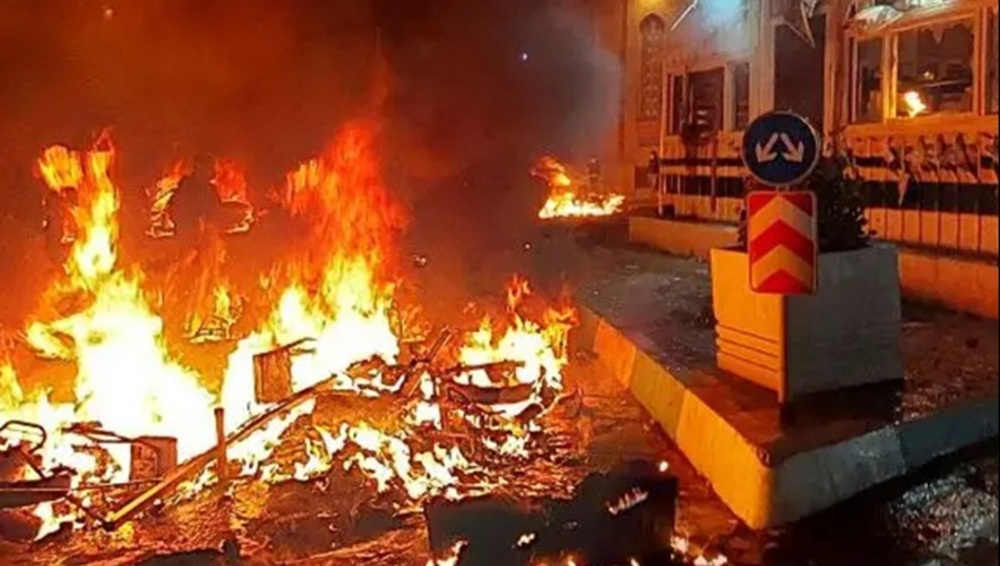
Iran is now in its fifteenth day of nationwide revolt. From Tehran to Tabriz, from Mashhad to the oil towns of Khuzestan and the Kurdish cities of the west, a furious, fearless population has taken to the streets. Hundreds have already been killed. Thousands more have been dragged into prisons and torture chambers. Internet access has been throttled. The regime is shooting into crowds. Yet still the protests grow.
This is not a factional quarrel or a palace coup. It is a revolutionary moment. And yet, as Iranians bleed, Western media and think-tank circles have become transfixed by a grotesque sideshow, the idea that Reza Pahlavi, son of the deposed Shah, might somehow ride back into Tehran as Iran’s savior. This fantasy would be comic if it were not so dangerous.
Pahlavi has done nothing for 47 years except wait. He has no political organization in Iran. No underground network. No resistance units. No trade unions. No youth movement. No women’s movement. No workers’ committees. No student organizations. No strike committees. No revolutionary infrastructure of any kind.
UPDATE: 08:00 AM CET
Live Report, Day 15 Of Iran Uprising: Protests Resume in Tehran, Strikes in Shiraz and Shahrekord

The nationwide uprising against the religious dictatorship in Iran has reached its fifteenth day on Sunday, January 11, 2026. What began as an outcry against economic devastation has solidified into a relentless political movement calling for the downfall of the regime. Following a volatile fourteenth day marked by fierce clashes in different cities, the people have maintained their momentum. On Sunday, the spirit of resistance continued with renewed strikes in the provinces and nightly rallies in the capital. While the regime continues its suffocating internet blackout and brutal crackdown, the release of the names of new martyrs by the Iranian opposition highlights the heavy price the Iranian people are paying for their freedom.
Iranians Rally in Stockholm to Support Nationwide Protests and Call for a Democratic Republic in Iran

Stockholm, Sweden – January 10, 2026 — In freezing sub-zero temperatures, supporters of the People’s Mojahedin Organization of Iran (PMOI/MEK) and members of the Iranian community in Sweden gathered in a major rally in front of the Swedish Ministry of Foreign Affairs to express solidarity with the nationwide protests in Iran that began on Sunday, December 28, 2025. Despite the -7°C cold, participants demonstrated remarkable resilience and resolve, showing unwavering support for the Iran Revolution until the clerical regime is overthrown.
Iranian Americans Rally at the White House in Solidarity with Iran’s Nationwide Uprising

On January 10, 2026, Iranian Americans and freedom-loving Iranians gathered in front of the White House in Washington, D.C., to show solidarity with the ongoing nationwide protests in Iran. Despite the cold and rainy weather, participants—supporters of the People’s Mojahedin Organization of Iran (PMOI/MEK) and the National Council of Resistance of Iran (NCRI)—chanted anti-regime slogans and called for an end to dictatorship in all its forms.
Why Pezeshkian’s Protest Rhetoric Changed— and What It Says About Power in Iran

After initially acknowledging public anger and the right to protest, Iran’s president has shifted to the state’s security narrative as demonstrations stretch into a third week, underscoring the narrow limits of executive power. Iranian President Masoud Pezeshkian has adopted a markedly tougher tone toward protesters in recent days, aligning himself more closely with the Islamic Republic’s long-standing security narrative after initially acknowledging public discontent and the right to protest. The shift comes as demonstrations that began roughly two weeks ago over economic grievances — including rising prices, currency depreciation and unemployment — have spread to multiple cities and taken on broader political overtones, according to state media reports and videos shared on social platforms.
UN Fact-Finding Mission Calls for End to Crackdown in Iran

The United Nations Fact-Finding Mission, expressing grave concern over the escalation of violence against protesters, called on the Iranian regime to immediately end the suppression of protests, fully restore internet and mobile communications, and respect citizens’ fundamental rights, including the right to peaceful protest. In a statement published on Saturday, January 10, the United Nations Fact-Finding Mission said it had received credible reports indicating that security forces had been ordered to confront protesters without restraint and in a “decisive” manner, as nationwide protests entered their third week. According to the statement, on the evening of January 8, internet and mobile communications in Iran were cut off, a move that, alongside rising violence, has severely restricted citizens’ access to information.
Khamenei’s Words Under the Microscope: Fear and Exhaustion in the Face of Organized Resistance

Iran regime supreme leader Ali Khamenei’s speech on January 9, 2026, delivered on the thirteenth day of Iran’s nationwide uprising, stands as a strategic document of regime vulnerability rather than authority. Far from projecting control, the Supreme Leader appeared as a ruler confronting a historic dead end—unable to suppress, redirect, or politically neutralize a revolt that has moved beyond spontaneous protest into organized resistance. The tone and vocabulary of the speech reflected neither stability nor command. Instead, Khamenei spoke from the position of a spectator watching the gradual collapse of his regime’s grip on the streets. A close reading of his remarks exposes a truth the ruling establishment desperately seeks to conceal: the steady victory of organized resistance over a worn-out and ineffective apparatus of repression.