

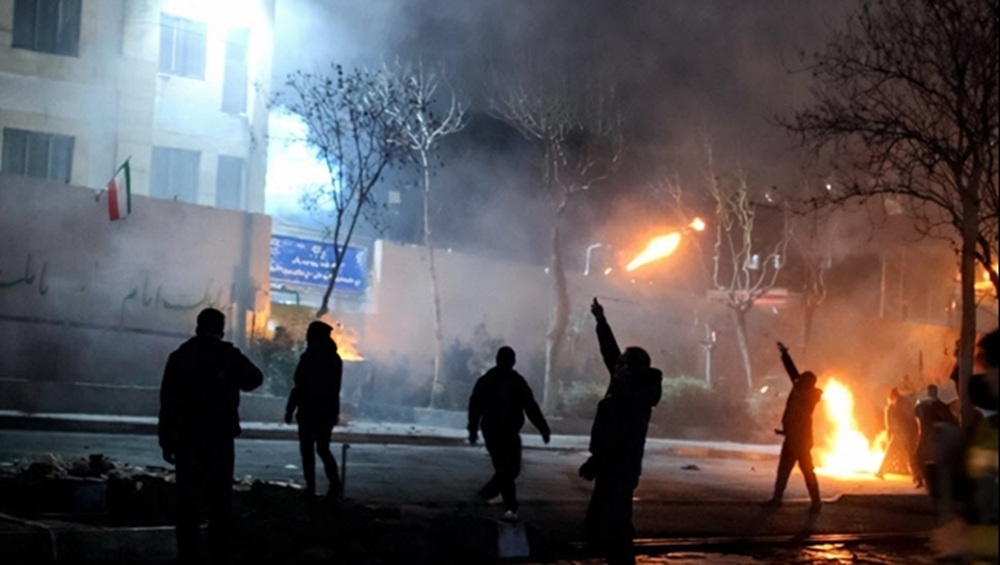
THIS PAGE WILL BE UPDATED WITH THE LATEST NEWS
UPDATE: 01:00 PM CET
Iranian Security Forces Gun Down Amateur Boxer as Father Searches Morgues for Missing Son

An Iranian amateur boxer was shot and killed by Iranian security forces during ongoing anti-regime protests near Tehran, and his father spent a week searching before identifying his body in a black body bag.
Harrowing footage circulating online shows his distraught father desperately searching among piles of bodies covered with black body bags, crying out for his missing son.
Sepehr Ebrahimi, 19, was killed on Jan. 11 in the Andisheh area, approximately 19 miles west of Tehran’s city center, according to Iranian opposition sources.
“Sepehr was shot and killed in Tehran,” Ali Safavi, a senior official with the National Council of Resistance of Iran (NCRI), told Fox News Digital.
UPDATE: 08:00 AM CET
Iran Protests: Regime Officials Admit to Being at ‘War’ with the People and Thousands of Deaths

As the courageous people of Iran continue their protests despite a brutal crackdown and an 18-day internet blackout, top regime officials are openly admitting that they are facing a “terrorist war” and a “coup.” In a shocking admission of the scale of the bloodshed, senior regime figures have cited death tolls in the thousands, confirming the intensity of the confrontation between the people and the repressive forces. Meanwhile, the People’s Mojahedin Organization of Iran (PMOI/MEK) has released the names of 69 additional martyrs, bringing the confirmed number of those killed by the regime to 700.
Iranian Doctor Arrested for Treating Protesters

Dr. Ameneh Soleimani, an Iranian doctor and director of a dermatology and cosmetic clinic in Ardabil, was arrested in recent days by security forces for admitting and treating individuals injured during protests in the city. The arrest of Dr. Ameneh Soleimani is widely viewed as part of a deliberate campaign to pressure the medical community into refusing treatment of protesters. According to reports from Iran, at least four Iranian doctors have so far been detained for assisting the injured, and no information is available regarding their whereabouts or conditions of detention. Additionally, Khosrow Minaei, a 45-year-old volunteer first responder who had turned his private residence into a shelter for treating the wounded, was arrested on January 14 following a raid by security forces.
Iranians in Hamburg Voice Support for Iran Uprising and a Free, Democratic Republic

Hamburg, Germany – January 24, 2026 – Freedom-loving Iranians and supporters of the Iranian Resistance participated in a demonstration in solidarity with the ongoing Iran Uprising. Participants echoed the call of their compatriots inside Iran for a free and democratic republic, rejecting all forms of dictatorship—whether monarchical or theocratic.
Berlin Exhibition – Honoring Iran Uprising Martyrs, Calling for a Free, Democratic Republic in Iran

Berlin, Germany – January 24, 2026 – Supporters of the People’s Mojahedin Organization of Iran (PMOI/MEK) held a photo exhibition and book table to honor the martyrs of Iran’s nationwide uprising to express solidarity with protesters demanding freedom and democracy. At the event, participants displayed placards and portraits of those killed, paying tribute to their sacrifice while reaffirming their unwavering commitment to the struggle for a free and democratic republic.
MEK Supporters in Heidelberg: Backing Iran’s Uprising, Demanding a Democratic Republic

Heidelberg, Germany – January 24, 2026 – Supporters of the People’s Mojahedin Organization of Iran (PMOI/MEK) held a rally and photo exhibition to honor the martyrs of Iran’s nationwide uprising and express strong solidarity with protesters demanding freedom and democracy. Demonstrators carried placards and portraits of those killed, paying tribute to their sacrifice while reaffirming their unwavering commitment to the struggle for a free and democratic republic.
The Revolutionary Guards Targeted the Heads, Faces, and Hearts of Brave Women and Girls of The Uprising

In a video that emerged from the nationwide uprising of January 2026, the moment of firing is captured. Women who stood their ground and confronted armed forces were shot and fell. The firing distance was close. The angle calculated. The impact lethal. These shots were not warnings; they were verdicts. This image is not a story of escape. It is a story of standing. A story of women who did not retreat and did not abandon the streets. These shootings were not meant to disperse the crowd. They were meant to extinguish resistance. What appears in the recorded videos and field testimonies is not a momentary reaction or the result of chaos among armed forces. A clear and identifiable pattern emerges; repeated, consistent, and deliberate: shots aimed at points that ensure death. The head. The face. The heart. This was a technical and conscious choice, carrying only one meaning; the physical elimination of protesters.
The IRGC Affiliate with A 400 million Euro Empire in Europe
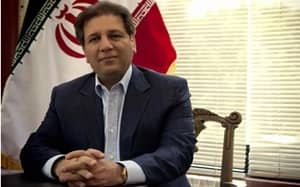
Ali Ansari, an Iranian tycoon accused of financing the Islamic Revolutionary Guard Corps (IRGC), owns a golf club in Mallorca and hotels in Frankfurt through offshore companies. According to corporate registration documents reviewed by the Financial Times, a British newspaper, Ali Ansari—whose family founded the now-bankrupt “Ayandeh” Bank in Iran—controls a collection of luxury properties, ranging from a golf resort on the Spanish island of Mallorca to a ski hotel in Austria. Britain, following the collapse of Ayandeh Bank in October, sanctioned Ansari for financing “hostile activities” by the IRGC, labeled him an “Iranian corrupt banker and businessman,” and froze his London property assets worth more than 150 million pounds.
Iran’s Uprising Seeks New Rules, Not Old Rulers

To understand Iran’s current uprising, especially for those unfamiliar with the country’s history, it is essential to move beyond the idea that Iranians are merely seeking a change of leadership. What is unfolding is a demand to change the rules of governance themselves. After more than a century of repeated authoritarian failures, Iranian society is rejecting both monarchy and theocracy—the two political models that have dominated and damaged the country over the past 120 years. Modern Iranian history begins with the Constitutional Revolution of the early 20th century, when popular movements forced the creation of Iran’s first parliament and introduced the principle that political power should be limited by law. This was a foundational moment: Iranians demanded representation, accountability, and the rule of law. However, these gains were immediately challenged by entrenched power. The reigning monarch, backed by foreign interests, dissolved parliament by force, demonstrating how fragile democratic institutions can be when confronted by unchecked authority.