


THIS PAGE WILL BE UPDATED WITH THE LATEST NEWS
UPDATE: 9:00 PM CET
Nine-Year-Old Iranian Girl’s Horror Sketch Shows Her Watch as Dad Is HANGED During Blood-Soaked Regime’s Deadliest Year

This is the little girl who drew a heart-breaking picture of her dad being hanged in front of her eyes after he was sentenced to death.
The desperately sad crayon sketch was drawn by six-year-old Mahna Ahmadi, from Iran, of her father Hamed being hanged as she and her mother watched on.
She drew the picture whilst waiting to see him for the final time. In the scene, Mahna and her mother hold hands next to a gallows under which her father is standing on a block. The picture, shared with The Sun by the National Council of Resistance of Iran (NCRI), shows the devastating human toll of families torn apart by Iran leader Ali Khmamenei’s killing machine in its bloodiest year yet.
The harrowing picture was referenced in a gut-wrenching letter from a political prisoner called Saeed Masouri who has spent 25 years on Iran’s death row.
Iran Reportedly Executed Over 30 Women Last Year

More than 30 women were executed in Iran last year, according to Iran Human Rights (IHR). The number is the highest the Norwegian-based group has registered. “The execution of women in Iran not only shows the brutal and inhumane nature of the death penalty but also shows the deep-rooted gender discrimination and inequality in the justice system,” says IHR Director Mahmood Amiry-Moghaddam, who is also a professor of medicine at the University of Oslo.
The IHR began documenting the number of executions in Iran in 2008. Last year, the number of executions increased sharply, and in October alone, 166 executions were registered.
UPDATE: 5:30 PM CET
Iran’s Bloodiest Year In 2024 After Regime Carried Out Execution EVERY 150 MINS As It Lashed Out Over Israeli Defeats
IRAN is slaughtering its own people in “unprecedented numbers” with executions taking place every couple of hours as the “paranoid” regime lashes out in the wake of defeats against its proxies in Israel. A swathe of shocking evidence – including official figures and letters from death row prisoners – gathered by The Sun exposes that Iran’s killing machine is responsible for over three-quarters of the entire world’s executions.
Official records show that the number of executions last year reached 1,000 – the highest number in 30 years and 16 percent higher than last year.
Iranian resistance group the National Council of Resistance of Iran (NCRI) warns that the real number is “significantly higher”, however, considering the regime’s use of secret executions.
On New Year’s Day alone, at least 12 people were hanged in prisons across the country.
UPDATE: 10:00 AM CET
Iran’s ‘Reformist’ President Oversees 700 Executions

Iran executed a record 1,000 people in 2024, almost 70 percent of them after its new “reformist” president took office. The killings, the most in Iran in 30 years, took place across 86 prisons and those executed included 34 women and seven juveniles. Some 695 of them came after Masoud Pezeshkian, a wild card candidate who was thought to be more progressive, took over in August.
The total is a significant increase on the 853 recorded in 2023, but the true figure may be even higher, because of Iran’s secretive judicial system. The identities of many executed prisoners often remain unrecorded, meaning some people simply “disappear” following their arrest.
UPDATE: 7:30 AM CET
Resistance Leader Slams Spike in Iran’s Executions of Dissidents: 1,000 Put to Death in 2024

A top Iranian resistance leader is warning there has been an uptick in executions inside the country since President Masoud Pezeshkian took over, undercutting the notion that Tehran’s new leader is a moderate. In all, 1,000 Iranians were put to death in 2024, nearly 70 percent of them since Pezeshkian took over mid-year, according to Ali Safavi, a member of the National Council of Resistance of Ali Safavi, a member of the National Council of Resistance of Iran
“[People] were executed in 86 different prisons,” Safavi told the John Solomon Reports podcast. “There were 34 women [and] seven juveniles who were apprehended at the time that were sentenced to death at the time of their offense.”
Iran’s Economy Spirals into Destruction As Rulers “Succumb to Frostbite”

The Iranian economy under the dominance of the mullahs has faced structural and complex challenges, with consequences visible in economic, political, and social dimensions. In an article titled “The Danger of Frostbite for Rulers”, economist Masoud Nili attempts to caution regime leaders and officials about various crises in foreign relations, economics, and social challenges. He emphasizes that “misdiagnosing the situation can lead to irreversible historical costs.”
On December 28, Jahan-e Sanat news website quoted Nili as saying that this time, warnings and admonitions are no longer sufficient.
Jahan-e Sanat wrote, “In recent months, the number and diversity of major problems have dramatically increased, surpassing the stage of concern. What was previously warned about happening in the future has now occurred, revealing its harmful dimensions.”
Nationwide Protests Highlight Widespread Discontent in Iran

On January 5, 2025, Iran witnessed a surge in protests across multiple cities today as retirees, workers, and other segments of society took to the streets to demand justice, accountability, and better living conditions. The protests, marked by chants denouncing the government’s economic policies and corruption, underscore a growing wave of dissatisfaction amidst an escalating economic crisis.
In Isfahan, central Iran, retirees from the steel industry resumed their protest rallies, demanding that the government adjust their pensions in line with its own regulations. Protesters, chanting “Shout for your rights!” called attention to their plight in a country grappling with severe financial turmoil.
Similar protests erupted in Ahvaz, southwest Iran, where retirees from various sectors, including the steel industry and the Social Security Organization, rallied to demand higher pensions and access to essential services. “High prices and inflation are destroying people’s lives!” protesters chanted, reflecting the nationwide frustration with skyrocketing costs of living.
Dyer: Iran’s Theocracy In Its Dying Days

Six months ago, at the end of Iran’s presidential election, I speculated that the long-lived theocratic dictatorship in Iran may be a lot closer to its end than its beginning: If you can plausibly say “This cannot go on forever,” you are also saying “Some day this will come to an end.”
That observation was triggered by the fact that the reformist presidential candidate, Masoud Pezeshkian, unexpectedly won the July election. The previous president had been killed in a helicopter crash, and the regime fumbled in setting up a snap election to replace him.
Pezeshkian was the only token moderate in a field of four candidates, but he managed to be among the last two for the second round, and then, in the run-off vote, something remarkable happened.
Khamenei’s Struggle in the Aftermath of Assad’s Fall: A Turning Point for Iran’s Regional Strategy
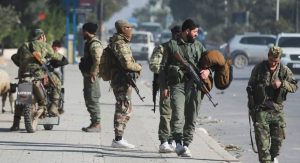
In an unprecedented series of speeches following the fall of Bashar al-Assad’s regime on December 8, the Iran regime’s Supreme Leader, Ali Khamenei, has addressed the future of Syria, his regime, and the Middle East at least four times in less than a month. The audience for these speeches consisted primarily of regime loyalists, including Iranian supporters and members of Iran’s proxy forces, as well as families of those labeled as “martyrs” in the regime’s regional wars, particularly in Syria.
Khamenei’s central challenge lies in convincing these supporters—many of whom are increasingly disillusioned with the regime’s warmongering policies—of the rationale behind their sacrifices in Syria. They question why they defended Bashar al-Assad in the first place and why the regime ultimately failed to prevent his fall. This failure has cast doubt on the future of the so-called “Resistance Axis,” a cornerstone of Iran’s regional strategy.
Iran’s Crackdown on Cryptocurrency Exchanges: A Blow to Digital Economy and Livelihoods
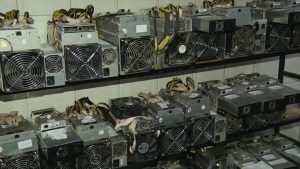
On January 4, the state-run Entekhab website reported that the Central Bank of Iran had abruptly shut down portals for digital currency exchanges without prior notice or preparation. According to the CEO of Iran’s Blockchain Association, this decision threatens to devastate numerous businesses reliant on cryptocurrency trading. Entekhab further warned that shutting off legitimate channels for cryptocurrency transactions could drive activity underground, fostering illegal operations.
Since the late 2010s, cryptocurrency mining in Iran has been monopolized by the regime’s Revolutionary Guards. This latest move to ban cryptocurrency exchanges consolidates their control over digital currency markets. The timing of this decision is revealing, as Iran’s economy faces bankruptcy, severe sanctions, and dwindling resources. Controlling the lucrative cryptocurrency sector appears to be a strategic lifeline for the regime, but it comes at a significant cost to ordinary citizens and businesses.
Iranian Youth Respond to Executions with Nationwide Anti-Regime Actions
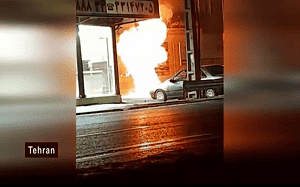
On Saturday, January 4, 2025, Iran’s rebellious youth launched a series of coordinated attacks on 15 regime-affiliated targets across the country. These actions were carried out in response to the regime’s execution of 1,000 individuals in 2024 and 18 additional executions on the first day of the new year. The targets included facilities tied to the Revolutionary Guards (IRGC), Basij paramilitary forces, and the State Security Forces (SSF).
Among the notable actions taken by the rebellious youth were:
- Khuzestan Province: Six explosions rocked the SSF’s provincial headquarters.
- Mashhad: Explosions targeted a center of fundamentalism and the headquarters of the Khomeini Foundation.
- Tehran and Surrounding Areas: Fires were set at multiple IRGC Basij bases in Tehran, Pakdasht, and Karaj.
- Eqlid: The Javad-al-Aimmah Basij Command was set ablaze.
Increased Pressure from Mullahs’ Parliament to Enforce the Hijab Law Despite National Security Council’s Halt

In recent developments, members of the clerical regime’s Parliament have intensified their pressure on the government to implement the controversial Hijab Law, despite the fact that its enforcement had been temporarily halted by the Supreme National Security Council (SNSC). On January 4th, Kamran Ghazanfari, a parliamentary deputy from Tehran, dismissed claims that the Supreme National Security Council had blocked the implementation of the law, calling it “a smear campaign.” He emphasized that the law, once officially enacted by the Parliament and communicated to the government, must be enforced regardless of the government’s stance.
Iran: Dozens of Airports, Railway Stations, and Metro Stations at Risk of Land Subsidence

Media reports on Iran’s land subsidence crisis indicate that 56,000 square kilometers of the country’s landmass is at risk of subsidence. Within this area, eight airports, 54 railway stations, 25 metro stations, and 14 million people are vulnerable to the effects of ground subsidence. The state-affiliated website Didban Iran described the issue in a report, stating: “A monster called subsidence is devouring Iran.”
The author of the report attempts to provide a clear picture of what is happening across Iran’s geography and outlines the dangers. According to an official report provided to Didban Iran by the Iranian Department of Environment, “Currently, 256 out of 429 cities in Iran are affected by land subsidence.”
Iran: 50% Reduction in Industrial Production Due to Power Shortages

While industrial business owners report various negative consequences of power outages on production—such as a 50% reduction in industrial park production capacity, the shutdown of 22 cement factory kilns, the closure of many manufacturing units, and a decline in steel production—the CEO of Tavanir (Iran’s Power Generation, Transmission, and Distribution Management Company) has announced that the electricity supply-demand imbalance will worsen next year.
Reza Shahrestani, a steel producer, highlighted the dire situation of the steel industry due to energy imbalances. Speaking to Tejarat News, he stated that Turkish and Arab traders are the biggest beneficiaries of steel production in Iran. He added: “It is estimated that due to energy shortages, Iran has lost at least eight million tons of production capacity, equivalent to a $5 billion loss.”
Over 8,000 Unsafe Classrooms in Tehran

The Director-General of Renovation, Development, and Equipping of Schools in Tehran Province has announced that 8,532 classrooms in the province require “demolition and reconstruction.” Experts believe this indicates these classrooms are unsafe, raising concerns about the continuation of education in such facilities.
The state-run IRNA news agency reported on this issue, highlighting the shortage of educational facilities in the capital: “In the city of Tehran, 928,659 students are studying with an educational space per student of 16.5 square meters, whereas the national standard is 28.5 square meters per student—a significant gap.”
In an interview with IRNA, Abbas Zare, Director-General of School Renovation in Tehran Province, said, “To reach the standard educational space per student, Tehran Province needs 13,000 new classrooms to be built.”
“No to Execution Tuesdays” Campaign Expands to 30 Prisons in Iran

The “No to Execution Tuesdays” campaign has reached a pivotal milestone, with prisoners from 30 different facilities across Iran now participating in this initiative. The most recent addition is Ramhormoz Prison, where inmates announced weekly hunger strikes starting next Tuesday. Their action is in response to the rising number of executions and the issuance of unjust death sentences, according to informed sources. Previously, on Friday, January 3, 2025, prisoners at Sepidar Prison in Ahvaz had also declared their participation in the campaign.
The campaign began in Qezel-Hesar Prison in Karaj on January 28, 2024. A group of political prisoners in Unit 4 of the prison decided to stage weekly hunger strikes on Tuesdays to protest the intensifying wave of executions in Iran. These prisoners denounce the death penalty as an inhumane and irreversible form of punishment, irrespective of the nature of the charges or the beliefs of those sentenced. They have demanded the abolition of this practice.
Los Angeles Exhibition Condemns Iran’s Human Rights Violations and Death Sentences for Political Prisoners
Californian, Los Angeles — January 4, 2025: Supporters of the People’s Mojahedin Organization of Iran (PMOI/MEK) organized an exhibition to express solidarity with the Iranian Revolution and to condemn the Iranian regime’s increasing reliance on executions.
Los Angeles Exhibition Condemns #Iran’s #HumanRightsViolations and Death Sentences for Political Prisoners #StopExecutionsInIran #FreePoliticalPrisoners #FreeIran2025https://t.co/ZaUBkcSSPW
— Iran Freedom (@4FreedominIran) January 5, 2025
As part of the ‘No to Execution’ campaign, they demanded an end to these human rights violations and called for the immediate release of all political prisoners in Iran. The organizers also condemned the death sentences handed down to six political prisoners associated with the PMOI.
Bucharest, Romania: MEK Supporters Held an Exhibition to Condemn Human Rights Violations in Iran

Bucharest, Romania—January 4, 2025: Freedom-loving Iranians and supporters of the People’s Mojahedin Organization of Iran (PMOI/MEK) organized an exhibition to express solidarity with the Iranian Revolution and to condemn the Iranian regime’s increasing reliance on executions.