

THIS PAGE WILL BE UPDATED WITH THE LATEST NEWS
UPDATE: 7:30 AM CEST
How The Legacy of Operation Eternal Light Lives on In Iran’s Resistance Units Today
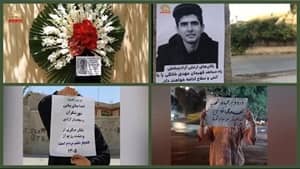
On July 25, 2026, marking the anniversary of the Iranian Resistance’s most formidable military challenge to the clerical regime, PMOI Resistance Units orchestrated a coordinated, nationwide campaign of defiance. Despite the regime’s brutal massacres following the devastating nationwide uprisings of December 2025 and January 2026, the Resistance Units remain unbroken.
Across the country, these brave activists commemorated the anniversary of Operation Eternal Light, proving that the fight for a free Iran continues in every corner of the country and that the sacrifices of the past still fuel today’s revolution.
To understand the bravery of today’s Resistance Units, one must understand the historical magnitude of the 1988 operation. On July 25, 1988, the National Liberation Army (NLA) launched its largest operation, called “Eternal Light,” targeting the entirety of the Iranian regime. Pushing deep into Iranian territory, this large-scale military offensive brought the clerical establishment to the brink of collapse. The Iranian regime suffered 55,000 casualties in the ensuing battles.
It was a brilliant strategic counter-move. The regime had intended to use a supposed peace after the eight-year war to annihilate the opposition, but Operation Eternal Light disrupted this plot, successfully forcing Khomeini to drink the “poison” of the UN ceasefire. During this monumental offensive, 1,304 NLA officers and soldiers laid down their lives for the freedom of their country, cementing a legacy of selfless sacrifice.
Iran: Women Arrested in the January 2026 Uprising Face Prison Terms and Detentions

As Iranian authorities continue to prosecute women arrested during the January 2026 uprising and other detainees, several women have faced prison sentences, prolonged detention, or continued legal uncertainty. Among those affected in recent days are Kowkab Badaghi, Shadi Shadman, Mehregan Namavar, Shakila Ghasemi, Forouzan Ansari, and Astareh Ansari.
Branch 18 of the Khuzestan Province Court of Appeals has upheld the one-year prison sentence imposed on Kowkab Badaghi Pagah, a history teacher and teachers’ union activist from Khuzestan.
Badaghi, a history teacher from Izeh, had previously been summoned before the Preliminary Administrative Violations Board of the Khuzestan Department of Education. In September 2025, the department’s Appeals Board also sentenced her to a three-month suspension from her teaching position.
Iran’s Deepening Economic Crisis Pushes Workers to the Brink as Poverty and Unpaid Wages Soar
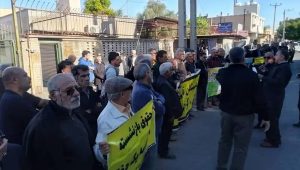
Iran’s worsening economic crisis is placing unprecedented pressure on working-class families as the rapid depreciation of the national currency and relentless inflation erode purchasing power across the country. With the poverty line in major cities now estimated at at least 70 million tomans per month, millions of workers are struggling to meet even their most basic needs.
At the same time, reports from factories and service industries indicate that workers are confronting a new wave of layoffs, delayed wage payments, reduced benefits, and increasing job insecurity. Labor activists warn that a large segment of Iran’s workforce—many of whom already lived below the poverty line before the recent escalation of the country’s economic crisis—may no longer be able to endure these conditions much longer.
If current trends continue through the end of the summer, they caution, labor protests are likely to expand significantly. In recent weeks, several factories that had previously reduced operations or dismissed employees resumed production and asked former workers to return. For many, returning to work meant temporarily escaping unemployment, abandoning informal jobs such as ride-hailing services, and hoping for a stable income once again.
Reza Pahlavi’s Tweet vs History: Rebranding an Authoritarian Legacy
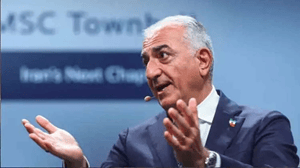
In his recent tweet, Reza Pahlavi attempts a familiar exercise: turning his father, Mohammad Reza Shah, from an authoritarian ruler into a romantic national saint—a man of rain-soaked fields and beating patriotic hearts, rather than of prisons, coups and censorship.
In Reza’s narrative, the Shah is “the most alive political figure in the hearts of Iranians” forty‑six years after his death, and the 1979 revolution is reduced to a mere “disaster” that tragically interrupted Iran’s march to prosperity. The problem is that history stubbornly refuses to cooperate with this storyline.
Let us start with the foundation of this “patriotic” rule: the 1953 coup. The Shah’s restored power did not fall from the sky; it was delivered through Operation Ajax, a joint CIA–MI6 operation that overthrew the democratically elected prime minister Mohammad Mossadegh after he nationalized Iran’s oil industry. Mossadegh was arrested, tried for treason, imprisoned, and then kept under house arrest until his death, while the Shah returned to the throne backed explicitly by foreign intelligence services. Calling this outcome “national sovereignty” requires a very generous imagination.
Migration from Southern Iran in the Shadow of the Iranian Regime’s Warmongering
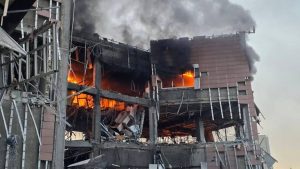
The migration and displacement of people from cities in southern Iran is one of the consequences of the war that has affected the lives of millions of people in recent weeks. Some media outlets have compared the current situation to the mass displacement of people from southern and western Iran during the eight-year Iran-Iraq War.
During that period, thousands of families in Khuzestan Province and other war-affected regions abandoned their homes and moved to safer areas. Now, nearly four decades after the end of that war, the same sense of fear has once again fallen over southern Iran. This time, in addition to the threat of war, people are also struggling with economic hardship, temperatures exceeding 50°C (122°F), and repeated water and electricity outages.
A war that may serve the Iranian regime as a means to further securitize society and intensify repression has a very different meaning for the people of southern Iran: concern for their lives, homes, jobs, and future.
Prospect of Renewed U.S.-Iranian Regime Talks Drives Oil Prices Lower

Esmaeil Baghaei, spokesperson for the Iranian regime’s Ministry of Foreign Affairs, said in an interview with Austria’s state broadcaster that indirect contacts between Tehran and Washington are continuing, with mediators including Pakistan and Qatar facilitating the exchange of messages between the two sides.
Baghaei said, “The Americans are exchanging messages with us, and under the current circumstances, mediators, including Pakistan and Qatar, are active and are conveying messages between the parties.”
He also stressed that the existence of an appropriate framework is essential before any talks can begin, claiming that the United States has undermined such a framework. Baghaei also claimed: “Negotiations aimed at dictating or imposing demands will certainly not be acceptable to us.”
His remarks came after he also stated on Sunday, without providing details, that there had been “progress” in discussions and exchanges between Tehran and Muscat, the capital of Oman.
Judge Mohammad Reza Tavakoli: Judge of Death Sentences & Violations of the Right to Life in Isfahan
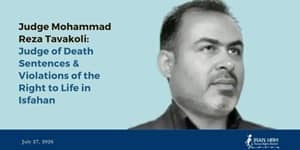
In two cases stemming from the January 2026 nationwide protests in Isfahan — namely the “Alikhani Square Case” and the “Shohada Square Case” — where 12 protesters received death sentences in the former (with two individuals, Erfan Esfandiari and Gol-Mohammad Mohammadi, executed on July 19, 2026 [28 Tir 1405]) and 16 protesters face the grave risk of receiving death sentences in the latter, one judge’s name stands out in the violation of the most fundamental human right — the right to life: Judge Mohammad Reza Tavakoli.
When Judge Tavakoli served as the Head of Branch 5 of the Public Civil Court of Khomeinishahr in Isfahan, he was honored as an “Exemplary Judge of the Islamic Republic” by Ali Ranjbar (Deputy of the Disciplinary Prosecutorial Office for Judicial Evaluation), Rasoul Zargarpour (Governor of Isfahan), Ahmad Khosravi-Vafa (Chief Justice of Isfahan Province), and Mohammad Reza Habibi (Public and Revolutionary Prosecutor of Isfahan Province).
In November 2023 (Azar 1402), Mohammad Reza Tavakoli was appointed Head of the Revolutionary Court of Isfahan by a decree from the Head of the Judiciary.
US And Iran Enter Conditional Pause in Attacks
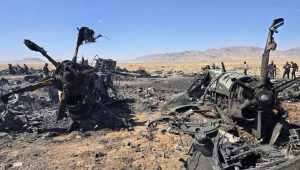
TEHRAN — The suspension of U.S. attacks and the reduction in exchanges of fire are the first tangible signs that Iran and the United States may be returning to diplomacy. The available evidence, however, does not yet indicate that the war is over. While Donald Trump’s administration has ordered a halt to further attacks, it has also threatened to resume military operations if negotiations fail. In Tehran, officials and analysts have spoken of readiness for a ceasefire, but the implementation of commitments under the previous understanding and the status of the Strait of Hormuz remain disputed. Kourosh Ahmadi, a former Iranian diplomat, told Arman Melli that the battlefield had offered neither side a clear path to victory. Iran, he said, cannot destroy U.S. forces or sink American ships, while the United States cannot use military force to compel Tehran to accept its preferred policies.
Ahmadi described the situation as a military “stalemate” and said the best course was to return to the Islamabad understanding—a document that, according to Tehran’s account, has not been revoked, but whose implementation was suspended or interrupted after the fighting resumed. Arman Melli also reported that Pakistan, Oman and Qatar were working to bring the two sides back to the negotiating table.
Brussels Rally Honors PMOI Martyrs and Executed Protesters, Condemns Iran’s Executions
Brussels, July 25, 2026: Supporters of the Iranian Resistance (NCRI and PMOI) gathered outside the Iranian regime’s embassy to protest the execution of political prisoner and PMOI member Mehdi Khanaki, which was carried out over his involvement in Iran’s January uprising.

The rally also honored members of the organization and protesters killed during the uprising, while commemorating the first anniversary of the executions of PMOI members Mehdi Hassani and Behrouz Ehsani, and paying tribute to their sacrifice and resistance against the Iranian regime.
Stockholm Rally Condemns Execution of PMOI Member Mehdi Khanaki, Urges Urgent Action
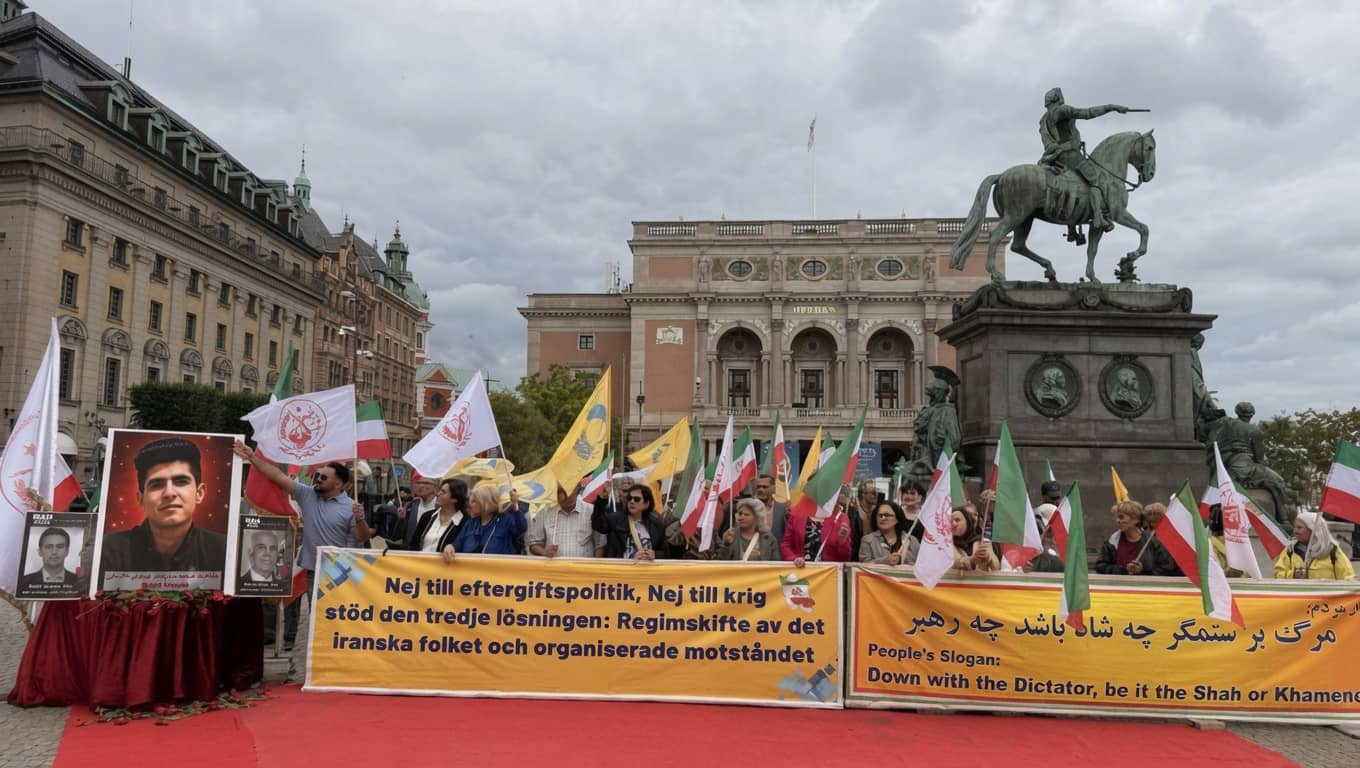
Stockholm, Sweden – July 25, 2026: Supporters of the People’s Mojahedin Organization of Iran (PMOI/MEK) gathered outside Sweden’s Foreign Ministry to protest the execution of political prisoner and PMOI member Mehdi Khanaki, carried out over his involvement in Iran’s January uprising. The rally also honored members of the organization and protesters killed during the uprising, while commemorating the first anniversary of the executions of PMOI members Mehdi Hassani and Behrouz Ehsani, paying tribute to their sacrifice and resistance against the Iranian regime. Participants issued an urgent call to halt the imminent execution of 22-year-old Amirhassan Akbari Monfared.

Protesters called on the Swedish government to take decisive action against the Iranian regime over its criminal executions and terrorist activities, including closing the regime’s embassy in Stockholm, which they described as a hub of espionage and terrorism. They also demanded the immediate and unconditional release of all political prisoners in Iran.
Winchester Exhibition Highlights Iran’s Execution Surge and Calls for Global Action
On July 25, 2026, members of the Academics in Exile Association in the UK, supporters of the National Council of Resistance of Iran (NCRI), organized a book table and photo exhibition in Winchester to expose the Iranian regime’s escalating executions and systematic human rights violations. The event drew significant public attention and highlighted the regime’s intensifying wave of executions, including those targeting political prisoners and protesters detained during the January 2026 uprising.

Through photographs, publications, and testimonies, the organizers shed light on the suffering of the Iranian people and their unwavering determination to reject all forms of dictatorship, whether monarchical or theocratic. The exhibition also served as a tribute to those who have lost their lives in the struggle for justice and democratic change.
Paris Exhibition Marks 1988 Massacre Anniversary and Honors Iran’s Recent Martyrs
On July 25, 2026, an exhibition was held at Place de la République in Paris, France, to commemorate the anniversary of the 1988 massacre of political prisoners in Iran. The Paris exhibition also honored the memory of recently executed PMOI members and protesters who lost their lives during Iran’s January 2026 nationwide uprising. The event was organized by supporters of the People’s Mojahedin Organization of Iran (PMOI/MEK) and the National Council of Resistance of Iran (NCRI).

The Paris exhibition honored Iran’s fallen political prisoners and freedom fighters by displaying their photographs and memorials. The exhibition included photographs of PMOI member Mehdi Khanaki, who was recently executed, as well as memorials to PMOI members Mehdi Hassani and Behrouz Ehsani, who were executed last year and whose anniversaries are being observed this year. Participants paid tribute to those who lost their lives during decades of repression and called for justice and accountability.