

THIS PAGE WILL BE UPDATED WITH THE LATEST NEWS
UPDATE: 12:30 PM CEST
The VVD Must Not Bow to Either the Mullahs or Nostalgia for the Shah
For decades, the Netherlands has enjoyed international respect as a defender of human rights, international justice, and the rule of law. From The Hague, the legal capital of the world, we have consistently taken a stand against tyranny and defended those whose voices have been silenced.
Today, Iran presents us with a moral and political test. While much of the international debate focuses on Iran’s nuclear ambitions, regional instability, and military tensions, a far more urgent reality lies beneath these headlines: the systematic repression of the Iranian people.
Although I am generally not in favor of interference in the internal affairs of sovereign states, I make an exception in the case of Iran.
UPDATE: 7:30 AM CEST
Iran’s Electricity Crisis Is Not an Energy Shortage—It Is a Governance Failure

Few countries illustrate the consequences of poor governance more vividly than Iran. Despite possessing the world’s second-largest proven natural gas reserves and some of the largest oil resources on Earth, the country continues to experience chronic electricity shortages that disrupt daily life, cripple industrial production, and deepen public dissatisfaction.
In theory, a country so richly endowed with fossil fuel resources should have little difficulty supplying reliable electricity to its citizens. Yet millions of Iranians endure rolling blackouts every summer—and increasingly during winter months as well. Factories reduce production, businesses suffer financial losses, hospitals and public services operate under increasing strain, and households are forced to adapt to routine power outages.
This contradiction is no accident. Iran’s electricity crisis is not the result of insufficient natural resources. It is the product of decades of structural corruption, chronic underinvestment, economic isolation, and a political system that has consistently prioritized ideological and military ambitions over national infrastructure.
Iran’s Hidden Unemployment Crisis: Why the Regime’s Labor Statistics Mask a Deepening Economic Failure
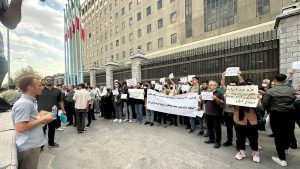
Official unemployment statistics often dominate discussions about the Iranian economy. Yet headline figures alone reveal very little about the true condition of the country’s labor market. A decline in the unemployment rate has little meaning if it is accompanied by falling labor force participation and stagnant employment growth. The latest labor data for 1404 (2025–2026) suggest precisely this troubling reality. Rather than signaling economic recovery, the apparent improvement in unemployment figures reflects a labor market increasingly incapable of absorbing new workers. Hundreds of thousands of Iranians of working age are no longer counted as unemployed simply because they have stopped looking for work or have lost hope of finding meaningful employment. The result is a statistical illusion that obscures the depth of Iran’s employment crisis.
One of the defining characteristics of Iran’s political economy is the expansion of hidden unemployment. Individuals who abandon their search for work disappear from official unemployment calculations despite remaining economically excluded.
This distinction matters because unemployment statistics measure only active job seekers. As more discouraged workers exit the labor force altogether, official unemployment rates may decline even though the economy has created few sustainable jobs.
Concept of Escalating Bread Prices in Chain of Economic and Political Hyper-Crises
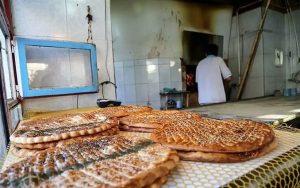
Crises in Iran under the rule of the mullahs are interconnected like links in a chain, forming a comprehensive hyper-crisis engulfing the country. A brief look at the headlines highlighted by state-run media
The heaviest weight of the escalating crisis, which has not stopped for a single day over the past decade, lies within the economic hyper-crisis. One must not overlook a constant reality: the economic crisis is always the legitimate offspring of the political crisis—a policy built on deception, lies, theft, and empty promises that define the current establishment, where its government resorts to raising wages by 60% while increasing bread prices by 140%.
In this context, the state-run Tose’e Irani newspaper published a report on June 30, 2026, exposing the futility of these policies:
“The minimum wage for the current year was set at 16,625,550 tomans (Approximately $91), while the minimum basic subsistence basket for workers was estimated at around 45 million tomans (Approximately $257) during the March 14, 2026, meeting of the Supreme Labor Council. Consequently, the approved minimum wage covers only about 37% of the subsistence basket cost… Many working-class families rely on bread, cheese, eggs, and tomatoes to meet their minimum food needs… The latest central bank data shows that bread recorded an inflation rate exceeding 140% in May 2026, capturing the highest inflation rate among all basic commodities.”
Why Market Uncertainty Persists: Inside Iran Currency Fluctuations

A temporary ceasefire briefly calmed Tehran’s markets, but ongoing geopolitical tensions have kept the rial on an unstable path.
The U.S. dollar’s climb to as high as 189,000 tomans, followed by a sharp drop after diplomatic signals, once again exposed the depth of Iran currency fluctuations during the first four months of the Iranian year 1405. This intense volatility has turned the country’s free currency market into a barometer of political tensions between Tehran and Washington.
As a result, businesses and ordinary citizens alike continue to face persistent uncertainty in economic planning and everyday living.
At the beginning of the Iranian year 1405, the foreign exchange market opened with relative stability. On Farvardin 1, official figures showed the dollar remittance selling rate at the Iran Exchange Center stood at around 137,473 tomans, while the dollar traded in the free market between 144,500 and 148,000 tomans.
MEK Supporters Hold Book Table and Photo Exhibition in Paris to Condemn Iranian Regime Executions
Paris, France – July 1, 2026 – Supporters of the People’s Mojahedin Organization of Iran (PMOI/MEK) set up a book table and photo exhibition in Paris to condemn the Iranian regime’s execution of PMOI political prisoners and protesters from the January 2026 uprising. The event highlighted the Iranian people’s demand for a democratic republic led by the Iranian Resistance as the path to peace and freedom.

Organizers called on the French public and the international community to recognize the suffering of the Iranian people and their firm rejection of all forms of dictatorship — whether monarchical or theocratic. Through powerful images and personal testimonies, the exhibition highlighted the courage and sacrifices of Iranian protesters during the 2026 uprising, while strongly condemning the Iranian regime’s ongoing human rights violations, particularly the execution of political prisoners.
MEK Supporters in Berlin Mark Day 120 at Iran Regime Embassy, Condemn Executions, Back Democratic Republic
Berlin, Germany – July 1, 2026: For the 120th consecutive day, supporters of the People’s Mojahedin Organization of Iran (PMOI/MEK) have continued their sit-in protest outside the Iranian regime’s embassy in Berlin, as a center of espionage and terrorism. Demonstrators are protesting the execution of PMOI political prisoners and other protesters arrested during the January 2026 uprising.

The protesters reaffirm their opposition to executions, war, and the policy of appeasement toward the clerical regime, emphasizing that the only viable solution is the establishment of a democratic republic based on Mrs. Maryam Rajavi’s Ten-Point Plan.
Zurich Exhibition in Solidarity with “No to Execution Tuesdays” Campaign in Iran
Zurich, Switzerland – June 30, 2026 – Freedom-loving Iranians and supporters of the People’s Mojahedin Organization of Iran (PMOI/MEK) held a book table and photo exhibition to protest the execution of PMOI political prisoners, as well as protesters arrested during the January 2026 uprising. The event also expressed solidarity with the “No to Execution” campaign.

Participants displayed banners reading “No to Executions in Iran” and voiced support for the abolition of the death penalty in Iran, calling for an end to executions and the immediate release of all political prisoners.