

THIS PAGE WILL BE UPDATED WITH THE LATEST NEWS
UPDATE: 8:30 PM CEST
Church Leaders Protest Executions in Iran
Three former chairpersons of the Council of the Evangelical Church in Germany (EKD) have endorsed an international statement by thirty church leaders and rabbis opposing the current wave of political executions in Iran.
Heinrich Bedford-Strohm, theologian Wolfgang Huber, and theologian Margot Kässmann signed the appeal, according to the office of the former regional bishop of Hanover. The occasion is an international mass rally of Iranian associations taking place on Saturday in Paris.
The statement was initiated by former Archbishop of Canterbury Rowan Williams. He wrote that there can be no doubt that political executions in Iran are increasing. According to the statement, the Iranian authorities are using the climate of war as a cover to intensify repression, and religious minorities are said to be particularly affected.
UPDATE: 11:30 AM CEST
G7 Leaders Demand Ceasefire in Lebanon, Welcome Iran Deal
EVIAN-LES-BAINS, France/DUBAI, June 17 (Reuters) – Leaders of the G7 countries demanded a ceasefire in Lebanon on Wednesday and said they will diversify energy supply routes to reduce dependence on the Strait of Hormuz in response to the war in Iran, as they welcomed an interim deal to end the conflict.
The leaders met for a summit in the French town of Evian-les-Bains on Lake Geneva, while details of the U.S.-Iran ceasefire agreement trickled out of Washington and Tehran ahead of its formal unveiling, expected on Friday across the nearby Swiss border.
The U.S.-Iran agreement is expected to launch negotiations towards a final settlement to end the war, which has killed more than 7,000 people, mostly in Iran and Lebanon.
“We underline the need for the negotiation … to address the threats posed by Iran in the region and beyond and ensure that they never obtain a nuclear weapon,” the leaders said in a statement.
The summit gave U.S. President Donald Trump a chance to present his deal with Iran to major allies Britain, Canada, France, Germany, Italy and Japan.
UPDATE: 7:30 AM CEST
Water Crisis in Iran: Women Bear the Brunt of Escalating Shortages
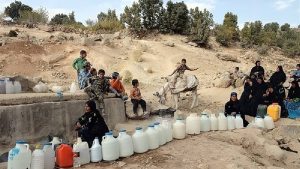
The water crisis in Iran is no longer just an environmental issue; it is a humanitarian, ecological, and economic disaster. While triggered by falling rainfall and drought, its destructive roots lie much deeper in the structural corruption and mismanagement of the ruling establishment. Until these systemic roots are unearthed, the future of the Iranian people will only grow more critical.
A significant number of researchers and international observers emphasize that 70 to 80 percent of the current water crisis in Iran stems from mismanagement, unsustainable policies, lack of transparency, and corruption. As international reports note: “Iran’s water crisis is not a crisis of resources; it is a crisis of decisions—decisions that have made the land thirstier and the future darker. This crisis, alongside the erosion of public trust in governance, is a symptom of structural and managerial failure.” (Newsweek, August 1, 2025; The Times, December 8, 2022; Reuters, April 27, 2021)
The water crisis in Iran is no longer just an environmental warning or a seasonal challenge. It has reached a stage that threatens the social and economic lives of millions. It is now one of the most serious threats facing Iranian society.
Regime Loyalists Turn on Each Other as Iran’s Power Struggle Deepens
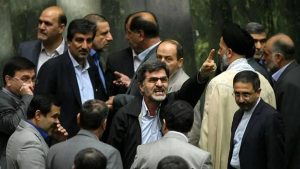
For years, Iran’s regime relied on orchestrated street gatherings and displays of loyalty to project an image of unity and strength. Yet the pro-regime rallies held on June 13, 2026, revealed something very different: a political system increasingly consumed by internal conflict, factional warfare, and a growing crisis of authority at its highest levels.
Rather than demonstrating unwavering support for the ruling clerical establishment, these gatherings exposed the fragile and unstable condition of the entire regime. The finalization of a new understanding between Tehran and Washington has detonated long-simmering tensions among rival factions, bringing to the surface deep disagreements over the future direction of the regime and highlighting the weakness of the regime’s new Supreme Leader, Mojtaba Khamenei.
The hereditary succession that followed Ali Khamenei’s era was intended to preserve continuity and consolidate power. Instead, it appears to have produced the opposite effect. Before Mojtaba Khamenei has even had the opportunity to establish his authority, some of the regime’s most loyal supporters have begun openly questioning and challenging policies associated with the leadership.
New Wave of Arrests and Property Seizures Raises Human Rights Concerns Across Iran

A new wave of arrests and property confiscations across multiple Iranian provinces has intensified concerns about the state of civil liberties and due process in the country. After the nationwide protests of January 2026, the regime’s security and judicial authorities continue to expand pressure on political activists, religious minorities, environmental advocates, and other citizens perceived as critical of the government.
Recent reports indicate that dozens of individuals have been detained, many remain in prolonged legal uncertainty, and authorities have ordered the seizure of assets belonging to numerous citizens. Human rights observers argue that these measures raise serious questions regarding transparency, judicial accountability, and respect for fundamental legal protections.
In an official statement, the regime’s Ministry of Intelligence announced the arrest of at least 131 individuals in the provinces of Tehran, Ilam, and Sistan and Baluchestan. According to the ministry, those detained were allegedly linked to the January 2026 protests, espionage activities, or cooperation with armed groups.
Iran’s Nursing Crisis Deepens as Migration and Workforce Shortages Threaten Healthcare System

Iran’s healthcare sector is facing a growing workforce crisis as increasing numbers of nurses leave their jobs, retire, or emigrate abroad. Newly released official statistics from the Ministry of Health have once again drawn attention to the severe shortage of nursing staff across the country, highlighting a challenge that government officials themselves now acknowledge as a threat to the healthcare system.
The latest figures indicate that the loss of nursing personnel continues despite ongoing recruitment efforts. At a time when hospitals and medical centers are already struggling with staff shortages, the migration of nurses has become one of the most pressing issues facing Iran’s healthcare sector.
According to Abbas Abadi, Deputy Minister of Health for Nursing Affairs, 1,800 nurses left the profession during the past year, while another 800 resigned from their positions. In addition, 380 nurses emigrated from Iran, seeking opportunities abroad. These figures were reported by state-affiliated media outlets on June 13, 2026.
Volker Türk: At Least 40 People Executed on Security-Related Charges in Iran

Recent remarks by Volker Türk, the United Nations High Commissioner for Human Rights, have once again drawn international attention to the human rights situation in Iran. Speaking at a session of the UN Human Rights Council, he stated that authorities ruling Iran have executed at least 40 people on security-related charges since the beginning of the current year, including 18 protesters. The senior UN official also warned about increasing arrests, growing restrictions on civil liberties, and intensified repression of citizens.
In his speech at the UN Human Rights Council on Monday, June 15, Volker Türk presented a troubling picture of the current situation in Iran. He stated that since the beginning of 2026, at least 40 people have been executed on charges related to national security, including 18 protesters.
Referring to the prevailing security environment in the country, Türk said that the ruling authorities have not only failed to halt executions but have also intensified domestic repression amid rising regional tensions.
Inside Iran’s Prison Network: 99 Executions Logged in the Shadow of the Hormuz Deal
As Iran and the United States signed a 60-day memorandum of understanding to reopen the Strait of Hormuz, documented reports from human rights organizations reveal the execution of at least 99 prisoners over the past 30 days.
While international diplomacy celebrates the end of the 106-day Strait of Hormuz crisis, the cost of that de-escalation is being paid inside Iran’s prisons.
According to verified reports from Iran Human Rights (IHR NGO) and HRANA, the Islamic Republic’s judiciary has executed at least 99 people in less than a month. Independent analysts argue that the global focus on energy market stability has created a diplomatic safe zone for Tehran, enabling a sharp escalation in executions in Iran with limited international scrutiny.
The Western media’s complete focus on the free flow of oil prevented one of the most concentrated periods of capital punishment this year from receiving significant attention. Human rights activists emphasize that the figure of 99 recorded executions includes only cases in which the identity of the prisoner, place of detention, and charges were independently verified.
MEK Supporters in Europe, USA, Canada, and Australia Promote June 20 Paris Free Iran Rally
June 16, 2026: In the lead-up to the grand June 20 rally in Paris, supporters of the People’s Mojahedin Organization of Iran (PMOI/MEK) have launched activities in Europe, USA, Canada, and Australia to promote the event. Meanwhile, supporters in Aarhus are urging freedom-loving Iranians to join the June 20 Free Iran Rally, where 100,000 participants are expected to gather at Place Vauban in Paris’s 7th district, calling for an end to executions and expressing support for a democratic republic in Iran.

The June 20 Free Iran rally in Paris, to be held under the slogan “A Democratic Republic for Iran,” will reject both monarchical and theocratic dictatorships, emphasizing a third alternative based on democracy and popular sovereignty.
MEK Supporters Rally in Gothenburg Against Executions, Advocate for a Democratic Republic in Iran
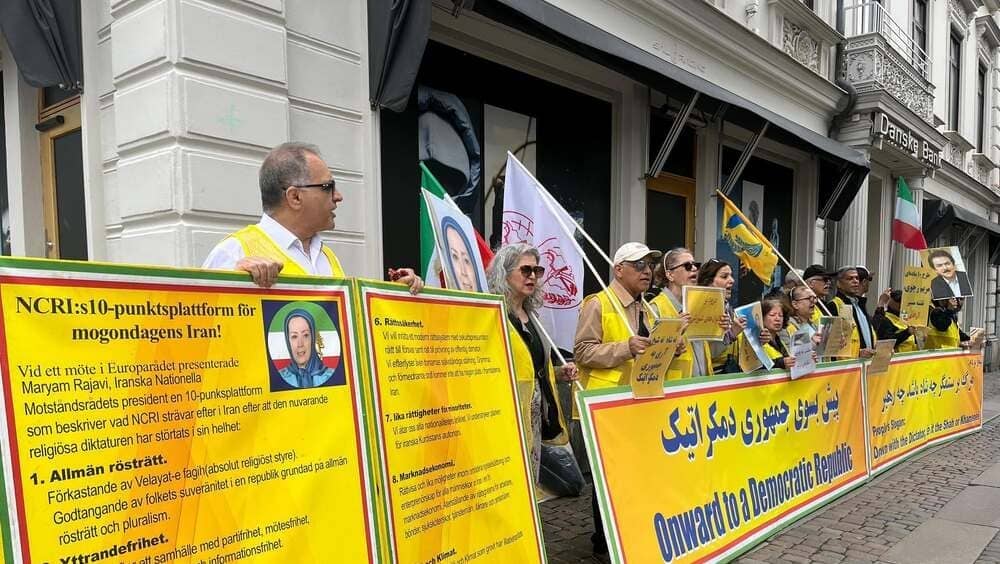
Gothenburg, Sweden — June 13, 2026 — Supporters of the People’s Mojahedin Organization of Iran (PMOI/MEK) held a rally to protest the execution of political prisoners in Iran, including PMOI members and protesters detained during the January 2026 uprising.

Participants rejected both the Shah’s rule and the current clerical regime, while voicing support for the democratic alternative put forward by the National Council of Resistance of Iran (NCRI). The rally also called for an immediate end to executions in Iran and reaffirmed opposition to all forms of dictatorship.