

THIS PAGE WILL BE UPDATED WITH THE LATEST NEWS
UPDATE: 10:00 AM CEST
Resistance Units in Zahedan Defy the Fragile Regime in a Push for A Democratic Republic
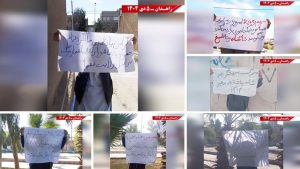
On June 26, the People’s Mojahedin Organization of Iran (PMOI/MEK) Resistance Units in Zahedan resumed their weekly anti-regime activities, spreading the message of the Iranian Resistance across the city. The activists held placards in public places featuring messages of the Iranian Resistance.
These brave acts of defiance occurred despite the regime being in a state of high alert a desperate attempt to prevent a new popular revolt following the death of its supreme leader. A central theme of the Zahedan activities was the total rejection of any form of tyranny, encapsulated in the popular slogan, “Neither Shah nor mullahs.” The activists displayed messages from Iranian Resistance leader Massoud Rajavi, emphasizing that the “fundamental principle of ‘Neither Shah nor mullahs’ means the rejection of any kind of dictatorship and dependency,” and that the “political shops of both the Shah and the mullahs—which sell nothing but dictatorship and dependency—must be permanently shut down and dismantled from their very foundations.”
Furthermore, the Resistance Units highlighted messages from Maryam Rajavi, the president-elect of the National Council of Resistance of Iran, stating that “real change in Iran demands a force of change capable of fighting under maximum oppression, working hand in hand with the popular uprisings to dismantle the IRGC.”
Regime-Linked Telegram Channel Acknowledges PMOI’s Major Operation at Khamenei’s Headquarters

For months, Iran’s ruling establishment tried to bury one of the most consequential security breaches in its modern history: the major operation carried out by the People’s Mojahedin Organization of Iran (PMOI/MEK) against Ali Khamenei’s heavily fortified headquarters in central Tehran on February 23, 2026. Now, a regime-affiliated Telegram channel, Didban-e Enghelab, has effectively broken that silence. But in typical fashion, its admission has come wrapped in conspiracy, factional score-settling, and a desperate attempt to shift responsibility onto rival factions inside the regime.
The significance of this admission lies not in the channel’s fabrications, but in what it was forced to concede. The regime had previously sought to minimize or obscure the scale of the clashes around Khamenei’s compound. Yet Didban-e Enghelab now refers to the events of that night and acknowledges that an operation took place shortly before the outbreak of the 40-day war. In doing so, it confirms the very reality the regime had tried to suppress: that the PMOI was able to strike at the heart of the system’s most protected centre of power.
According to the PMOI/MEK’s own announcements at the time, the operation began in the early hours of Monday, February 23, 2026, around the Motahari Complex, the compound that includes Khamenei’s headquarters and a cluster of strategic institutions of the regime. These include the office and residence of Mojtaba Khamenei, the Guardian Council, the Assembly of Experts, the central office of the judiciary, the Ministry of Intelligence, the Supreme National Security Council, and the Expediency Council. The compound is not an ordinary government site; it is the regime’s inner fortress, both symbolically and operationally.
Iran: Students Hold Protest Rallies in Tehran and 20 Other Cities
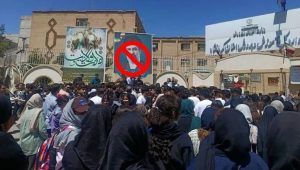
Protest rallies took place in Tehran and twenty other cities on Saturday, June 27, 2026, as groups of school and university students demonstrated over educational grievances and policies.
A group of school students gathered outside the National Educational Assessment Organization building in Tehran, calling on authorities to address their demands. The rally was held near Holy Maryam Metro Station, where protesters chanted, “Students, raise your voices. Demand your rights,” expressing their dissatisfaction with the current situation.
At the same time, master’s and doctoral students at Azad University in Tehran staged a protest against the university’s decision to hold examinations in person.
In Mashhad, another group of school students gathered outside the provincial Department of Education, calling on officials to address their demands.
The high school students’ protest rallies against the policies of the so-called Supreme Council of the Cultural Revolution have expanded to 21 cities across the country including, Karaj, Khorramabad, Shiraz, Ahvaz, Rasht, Kermanshah, Sari, Arak, Qom, Tabriz, Isfahan, Dorud, Bojnourd, Birjand, Hamadan, Qazvin, Kerman, Borujerd, and Yazd. Students chanted, “Students will die, but will not accept humiliation,” demanding justice in the education system.
Iran: Regime Continues Arbitrary Arrests and Imprisonments

Arbitrary arrests, prison sentences, and serious criminal charges against women continue under Iran’s clerical regime.
In the latest cases, Faezeh Salehabadi has been sentenced to prison, Hanieh Sarborzi has remained in legal limbo for more than 40 days, and Kobra Narouei has been arrested along with her one-year-old child and transferred to an undisclosed location. Faezeh Salehabadi, a female prisoner held in Vakilabad Prison in Mashhad, has been sentenced by the Revolutionary Court of Mashhad to one year and three months in prison.
Her release has been made conditional on bail set at four billion tomans. However, her family has so far been unable to secure the required amount.
The judicial case against Salehabadi was initiated over an Instagram story she posted. She was arrested by security forces at her home on February 9, 2026.
Banning the Free Iran Rally Was a Victory for Tehran—Not for Democracy

For decades, the Iranian regime has relied not only on repression inside the country but also on intimidation beyond its borders. Assassination plots, terrorist operations, hostage diplomacy, and pressure on democratic governments have formed part of Tehran’s strategy to suppress dissent wherever it emerges.
The French government’s last-minute cancellation of the planned Free Iran gathering in Paris has therefore raised questions that extend far beyond a single demonstration. Regardless of the security concerns cited by authorities, the outcome represented a political victory for a regime that has consistently sought to prevent the Iranian democratic opposition from mobilizing internationally.
The event was expected to draw nearly 100,000 participants from across Europe and beyond in what organizers described as one of the largest demonstrations by the Iranian diaspora. Its central message was opposition to executions, political repression, and the clerical dictatorship governing Iran.
According to the Daily Express, the rally was prohibited only hours before it was due to begin after French courts were informed of alleged terrorist bombing threats targeting participants. The newspaper criticized the extraordinary security measures deployed across Paris and noted the irony that thousands of peaceful demonstrators advocating democracy were prevented from assembling because of threats originating from violent extremists.
Iran’s Water and Electricity Crisis Is No Longer Seasonal—It Is Structural
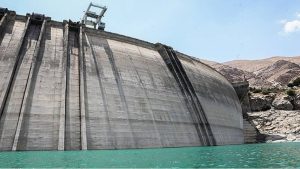
With the arrival of summer and temperatures climbing across much of Iran, millions of citizens are once again confronting a familiar reality: prolonged power outages, water shortages, and growing uncertainty over access to basic public services.
Officials attribute the crisis to declining water reserves, rising temperatures, and increased electricity consumption. While these factors undoubtedly place additional pressure on the country’s utility networks, they do not fully explain why shortages have become an annual feature of life in one of the region’s energy-rich nations.
Increasingly, the crisis is viewed not as the inevitable consequence of weather conditions, but as the product of years of inadequate investment, deteriorating infrastructure, and chronic mismanagement.
Power outages have already been reported across numerous provinces, including Khuzestan, Ilam, Lorestan, East Azerbaijan, Alborz, Tehran, and several other regions.
The situation in Khuzestan is particularly striking. Despite producing roughly twice the electricity consumed within the province and serving as one of Iran’s most important energy hubs, residents have experienced scheduled blackouts as temperatures surpassed 50°C during the first days of summer.
International Day in Support of Victims of Torture: Why Ending Torture in Iran Requires Political Change

June 26 marks the International Day in Support of Victims of Torture, established by the United Nations General Assembly to commemorate the entry into force of the Convention Against Torture in 1987. The observance is intended not merely to condemn torture, but to reinforce the international commitment to eradicate it, restore the dignity of survivors, and hold perpetrators accountable.
Torture is among the gravest violations of human rights. It is designed not simply to inflict physical pain, but to destroy human dignity, identity, and the capacity to resist. Throughout history, authoritarian governments have relied on torture as a political instrument to silence dissent, intimidate society, and preserve their grip on power. Iran under the system of Velayat-e Faqih represents one of the clearest contemporary examples of this dynamic.
In Iran, torture has never been an isolated abuse committed by rogue officials. Rather, decades of documented testimonies, human rights investigations, and survivor accounts point to a systematic practice embedded within the country’s security and judicial institutions.
Political detainees frequently report that violence begins immediately after arrest. Initial beatings often serve as psychological intimidation before more prolonged interrogations commence in detention facilities controlled by intelligence agencies or the judiciary. Inside these facilities, physical and psychological abuse is reportedly used to force confessions, extract information, or compel prisoners to implicate themselves and others.
Khamenei’s Successor Faces His First Political Crisis as Iran’s Internal Divisions Deepen

The death of Ali Khamenei was expected to usher in a delicate transition within the Mullahs’ regime. Instead, the early days of Mojtaba Khamenei’s leadership suggest that the regime has entered a new phase of internal instability, where disputes once confined behind closed doors are increasingly surfacing in public.
Caught between the competing pressures of military confrontation abroad, negotiations with the United States, and mounting domestic crises, the regime’s new Supreme Leader appears to be struggling to consolidate authority. His carefully worded remarks on negotiations—intended to preserve unity across rival factions—have instead triggered criticism from multiple sides and exposed the fragile nature of the succession.
In discussing the decision to authorize negotiations with Washington, Mojtaba Khamenei stated that he had “in principle held a different opinion,” but ultimately approved the talks after receiving assurances from the regime’s president.
The wording was notable not only for what it said, but for what it appeared designed to accomplish. By emphasizing that he had initially opposed the negotiations, Mojtaba sought to distance himself from any political costs should diplomacy fail or force further concessions.
WSJ: A Cryptocurrency Exchange at the Heart of Iran’s Regime’s Financial Transactions

The Wall Street Journal reported in an investigative article that Iran’s regime has used the cryptocurrency exchange CoinEx in recent years as one of its most important channels for connecting to the global cryptocurrency market and circumventing U.S. sanctions.
CoinEx denied the allegations, saying it has never knowingly provided services to entities affiliated with Iran’s regime or to sanctioned individuals.
Citing blockchain data analysis by TRM Labs, the Wall Street Journal reported that entities linked to Iran’s regime have conducted more than $3.84 billion in cryptocurrency transactions through CoinEx since 2019. According to the newspaper, the exchange has become one of the Iranian regime’s primary channels for accessing the global cryptocurrency market and evading U.S. economic sanctions.
According to the report, blockchain experts began their investigation with two wallets attributed to the Central Bank of Iran’s regime. The analysis found that some of the assets in those wallets originated from cryptocurrency stolen from the Bybit exchange in an attack attributed to North Korean hackers, during which approximately $1.5 billion in digital assets was stolen.
Iran’s Statistical Center: Year-on-Year Inflation Reached 88.6% in June

The Statistical Center of the Iranian regime announced that the year-on-year inflation rate in June reached 88.6%. The annual inflation rate for June was also reported at 62%, representing an increase of 4.3% compared with May.
Year-on-year inflation refers to the percentage change in the consumer price index compared with the same month of the previous year. Accordingly, in June 2026, households across the country spent an average of 88.6% more than they did in June 2025 to purchase the same basket of goods and services.
While the nationwide year-on-year inflation rate was reported at 88.6%, the Statistical Center said that year-on-year inflation in rural areas exceeded 108% in June.
For food, beverages, and tobacco products, the nationwide year-on-year inflation rate reached 134.6%.
Iran was involved in a 12-day war with Israel during the summer of last year and, in January 2026, experienced nationwide January protests and a 40-day war with the United States and Israel. These factors, along with severe international sanctions and widespread corruption within the country’s economic system, may be among the reasons for the country’s sharp economic slowdown.
IRGC: We Attacked U.S. Military Positions in the Region

In a statement issued on the morning of Saturday, June 27, the public relations office of the Islamic Revolutionary Guard Corps (IRGC) announced that the IRGC Navy had targeted U.S. military positions in the region in response to what it described as U.S. “aggression and breach of commitments.”
The IRGC did not specify which locations were targeted in the attack.
The statement accuses the United States of violating the ceasefire and claims that after Israel breached the ceasefire in southern Lebanon, the United States also “violated its commitments.”
The IRGC public relations office wrote in its statement: “Under Article Five of the Islamabad Memorandum of Understanding, arrangements for controlling transit through the Strait of Hormuz are the responsibility of the Islamic Republic of Iran; however, the United States sought to violate this commitment through various provocations, and it received the necessary response. The same will occur in the future.”
The IRGC also threatened that it would deliver a broader response if the United States carries out further attacks.
The Agonies of Execution in Iran – Human and Legal Dimensions
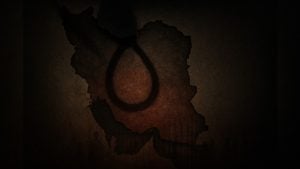
The execution machinery within the judicial system of the Islamic Republic of Iran is not merely a tool for punishment; rather, it functions as a complex mechanism designed to reproduce terror, inflict psychological torture upon survivors, and contain the society’s potential for protest. The agonies of execution in Iran extend far beyond the gallows, unfolding inside solitary confinement cells filled with dread, within the hearts of families deprived of a final farewell, and across unmarked graves whose very physical handover terrifies the ruling establishment. By screening documented facts of egregious violations of due process, secret executions, and silent medical killings, this report uncovers a human catastrophe that challenges the global human conscience.
1. Secret Executions; no right to see your loved ones for the last time
In continuation of the alarming trend of implementing capital sentences without institutional transparency, the inhumane practice of “secret executions” has become a routine tool across the country’s prisons. Under international law, failing to notify the family prior to execution, depriving the prisoner of a final visitation, and concealing the burial site constitute the core components of the crime of secret execution—a lawless pattern executed line by line in the following cases:
The Strait of Hormuz Crisis Raises Questions About Tehran’s Diplomatic and Security Priorities

Following a drone attack on a commercial vessel and retaliatory U.S. airstrikes on Iran’s coastal facilities, military confrontation in the Strait of Hormuz has reached a new peak, while simultaneously triggering an unprecedented dispute in Tehran between advocates of absolute military control and supporters of multilateral diplomacy.
The intersection of global energy supply chains and modern maritime crises has confronted the Persian Gulf with a structural paradox, where the effectiveness of traditional military deterrence in safeguarding international security has become the source of one of the deepest analytical divides within Iran’s foreign policy establishment.
This sudden escalation in the Strait of Hormuz has quickly evolved into a profound internal debate in Tehran, with Iranian analysts and senior officials split into two sharply opposing camps over whether this vital waterway should be managed through “exclusive sovereignty backed by military deterrence” or through “joint legal mechanisms.”