


THIS PAGE WILL BE UPDATED WITH THE LATEST NEWS
UPDATE: 7:30 PM CEST
Treasury Sanctions Iranian Network Laundering Billions for Regime Through Shadow Banking Scheme
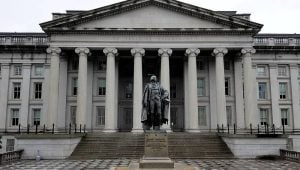
WASHINGTON — Today, the Department of the Treasury’s Office of Foreign Assets Control (OFAC) is designating over 30 individuals and entities tied to Iranian brothers Mansour, Nasser, and Fazlolah Zarringhalam, who have collectively laundered billions of dollars through the international financial system via Iranian exchange houses and foreign front companies under their control as part of Iran’s “shadow banking” network. The regime leverages this network to evade sanctions and move money from its oil and petrochemical sales, which help the regime fund its nuclear and missile programs and support its terrorist proxies. Concurrently, Treasury’s Financial Crimes Enforcement Network (FinCEN) is issuing an updated Advisory to assist financial institutions in identifying, preventing, and reporting suspicious activity connected with Iranian illicit financial activity, including oil smuggling, shadow banking, and weapons procurement.
Pakistani Man Convicted of Smuggling Iranian Missile Parts Headed to Houthi Rebels

A Pakistani man was convicted on Thursday for his role in smuggling Iranian missile components bound for Houthi rebels, after being captured in a military operation last year that resulted in the deaths of two Navy SEALs, the Justice Department said.
The man, Muhammad Pahlawan, 49, was the captain of a small boat that was intercepted by the Navy ship Lewis B. Puller off Somalia in January 2024 and boarded by SEALs and U.S. Coast Guard members, prosecutors said. They found “ballistic missile components, anti-ship cruise missile components and a warhead,” consistent with weapons the Houthis have used against merchant ships and Navy vessels in the Red Sea.
UPDATE: 6:00 PM CEST
Iran’s Unfathomably Cruel Execution Regime Is Laid Bare… By The Man Who’s Seen It Firsthand after 25 Year s on Death Row

ONE of Iran’s longest-serving prisoners has exposed the disturbing mechanisms the regime uses to put inmates to death.
Saeed Masouri, who has spent 25 years behind bars, also revealed how the execution rate has spiralled in the last month in a harrowing letter written behind bars.
The regime’s merciless killing spree has seen at least 176 inmates sent to the gallows in the past month.
Insiders told The Sun the shocking spike in executions comes amid a barbaric attempt from leaders to crush dissent and act as a warning against it.
Tehran’s Nuclear Lies Unraveled by Iran’s Democratic Resistance

When it comes to Iran, all eyes have been on its nuclear program since April 12 when talks with the Trump administration started. While the focus has been on enrichment or no enrichment, a little noticed trend has been taking place inside Iran. There has been a significant uptick in the mullahs’ libelous and demonizing references to the main resistance movement inside of Iran, the People’s Mojahedin Organization of Iran. It is a thinly veiled sign on the Tehran’s nuclear ambitions.
UPDATE: 3:00 PM CEST
Iran-Aligned Bladed Feline Spies on Iraqi and Kurdish Officials, ESET Research Discovers

ESET researchers have revealed that Iran-aligned threat group bladed Feline targeted Kurdish and Iraqi government officials with array of malicious tools discovered within their systems.
• ESET discovered and analyzed two reverse tunnels (Laret and Pinar), a backdoor (Whisper), a malicious IIS module (prime Cache), and various supplementary tools.
• With high-confidence ESET Researchers assess that bladed Feline is a subgroup within Iran-aligned oilrigs, as the initial implants used there can be traced back to oilrig group.
• bladed Feline already compromised Kurdish diplomatic officials with the group’s Shahmaran signature backdoor in 2023.
Iran Steps Up Feud with UN Nuclear Watchdog on Espionage Claim

Iran is escalating its fight with the United Nations nuclear watchdog, accusing its inspectors of slander and presenting sloppy evidence, according to a legal brief compiled by the Islamic Republic and circulated among diplomats days before a key meeting in Vienna. The note shows tensions are rising between Tehran and the International Atomic Energy Agency ahead of a gathering at the body that starts on June 9. Europe and the US are drafting a resolution of censure which would find Iran in non-compliance with its international obligations, according to a senior Western official, who asked not to be identified while discussing confidential information.
UPDATE: 9:00 AM CEST
Executioner Exposes Regime’s Growing Fear of the People and Iranian Resistance
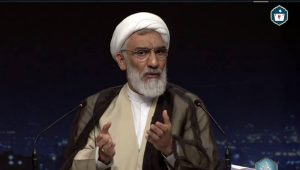
Mostafa Pourmohammadi, a notorious figure in the Iranian regime’s judiciary and intelligence apparatus and a key member of the “Death Committees” responsible for the 1988 massacre of political prisoners, has recently made a series of statements that, far from absolving him or the regime, further expose the deep-seated brutality and current panic within Iran’s ruling clerical establishment.
These remarks offer a chilling glimpse into the mindset that orchestrated one of modern history’s most heinous crimes against humanity, while also highlighting the regime’s increasing desperation in the face of domestic and international pressure.
The 1988 massacre saw the summary execution of an estimated 30,000 political prisoners across Iran. The vast majority of victims were members and supporters of the People’s Mojahedin Organization of Iran (PMOI/MEK).
Youth In Iran Mark Khomeini’s Death with Fiery Attacks on Symbols of Oppression

On the anniversary of the death of Iranian regime founder Ruhollah Khomeini, the issuer of the religious decree (fatwa) for the massacre of political prisoners in 1988, rebellious youth launched 25 operations, carrying out fiery attacks against the centers of oppression and crime and symbols of Khomeini and Ali Khamenei, the current Supreme Leader of the regime.
Young Woman, Elaheh Hossein-Nejad, Abducted and Killed in Iran

The body of Elaheh Hossein-Nejad, a 24-year-old nail artist from Islamshahr, was discovered on the outskirts of Tehran—11 days after she vanished on her way home from work. Her death has sent ripples of outrage across Iranian society. Elaheh Hossein-Nejad was known as a kind and diligent young woman. She had graduated in accounting but worked at a beauty salon in Tehran’s upscale Saadat Abad district; she returned home to Islamshahr, where she helped care for her disabled brother. On the evening of Sunday, May 25, 2025, she called her family from the Islamshahr Prayer Square to say she was almost home. Moments later, her phone went silent. She was never heard from again.
Gothenburg, June 3, 2025: MEK Supporters Rally in Support of the ‘No to Executions Tuesdays’ Campaign

Gothenburg, Sweden – June 3, 2025: Supporters of the People’s Mojahedin Organization of Iran (PMOI/MEK) held a rally in solidarity with the No to Executions Tuesdays Campaign, marking the 37th consecutive week of their solidarity movement. The campaign is a response to the Iranian regime’s continued executions in its prisons.
Alarming Surge in Executions in Iran

The concerning rise in executions in Iran continues, with a wave of executions taking place across various cities. The number of recorded executions in the last 15 days has reached 82, a shocking figure indicating that, on average, nearly six people are executed daily in Iran. Between May 28 and June 4, 2025, at least eight more prisoners were executed in the prisons of Ghezel Hesar, Urmia, Yasuj, Semnan, and Manoojan:
Yasuj Prison (June 3): Behnam Ghaffari, 31, from Jolfa and father of a child, was executed on drug-related charges.
Manoojan Prison (June 3): Majid Behzadi (Bamari), 38, from Zahakloot, was executed on drug-related charges.
Semnan Prison (June 2): Mohammad Amin Rostegari was executed on charges of murder.
Iran Human Rights Monitor – Monthly Report: May 2025

May 2025 marked one of the bloodiest months in recent history under the clerical regime in Iran, with an alarming surge in executions and continued repression of political prisoners. At least 175 individuals were executed during the month, including seven women, two juvenile offenders, and one public execution in Delfan. These developments reflect the regime’s increasing reliance on capital punishment as a tool for suppressing dissent and instilling fear amid growing unrest.
The month of May 2025 witnessed a shocking surge in executions across Iran, marking a continuation of the Islamic Republic’s policy of using the death penalty as a primary tool of political repression, social control, and suppression of dissent.
A significant and alarming development occurred in the final days of the month: Between May 26 and 28 alone, the regime carried out 41 executions, an average of nearly 14 executions per day, or one every two hours.
Nationwide Urban Protests Erupt in Iran: Students, Farmers, Workers, and Sailors Unite
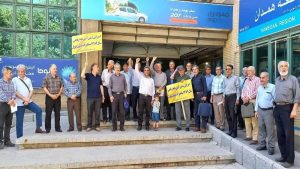
On June 1 and 2, 2025, Iran witnessed a widespread wave of protests involving a diverse range of social groups—from workers and farmers to students and retirees—who took to the streets with a unified voice against injustice, poverty, and state repression. Reports from across the country reflect deep-seated anger among citizens fed up with inflation, government incompetence, and the empty promises of the Khamenei regime.
Steelworkers from the Kavir Steel Plant in Ardestan, which has been closed since March 2025, staged a protest in front of the city’s governorate. The factory, inaugurated with much fanfare in September 2022, has now left 225 workers jobless, without wages or a clear future. The local head of the Labor and Welfare Department acknowledged 160 legal cases filed by workers, but protesters condemned the slow process and the government’s indifference. One worker warned, “If our demands are ignored, the workers’ voices will only grow louder.”
Medicine Shortages in Iranian Pharmacies and Online Sales

The power struggle between online sales platforms and pharmacies over the distribution of medicine online continues, as the “Deregulation and Business Environment Improvement Board” has declared the Food and Drug Administration’s directive banning pharmacies from cooperating with online platforms to be illegal and has demanded its cancellation. On May 21, the Food and Drug Administration banned pharmacies from collaborating with online sales platforms. This reaction came after the Iranian Pharmacists Association accused online platforms of undermining drug distribution security by creating a virtual black market.
The association referred specifically to the sale of narcotic medications and rare or scarce drugs through black market channels.
Khamenei: U.S. Interference in Uranium Enrichment Issue Is Nonsense

On Wednesday, June 4, Iranian regime supreme leader Ali Khamenei rejected the U.S. demand in nuclear negotiations that “Iran will not be allowed to enrich uranium,” during a speech at the 36th anniversary of the death of Ruhollah Khomeini, the founder of the regime.
Khamenei stated that “uranium enrichment is the key to the nuclear issue,” adding, “The enemies have also focused on enrichment.”
He continued with harsh language, saying: “Why are you interfering in whether Iran should have enrichment or not? What’s it to you! Who do you think you are?”
Khamenei was referring to the U.S. proposal for reaching a nuclear agreement, which had been delivered to Iran on May 31 by the foreign minister of Oman.
Iran’s “Neighborhood-Based Management”: A Cloak for Surveillance and Suppression

On June 3, 2025, Iran’s state media announced the formation of a “meeting to review the neighborhood-based management model,” describing it as a step toward “reducing inequality, promoting social capital, and increasing society’s resilience to threats.”
At first glance, this may sound like a social welfare initiative. However, the composition of the meeting’s participants reveals a more ominous agenda. Present at the meeting were Masoud Pezeshkian, the regime’s president; Hossein Salami, Commander-in-Chief of the IRGC; the Minister of Interior; the Minister of Culture and Islamic Guidance; and senior Basij commanders.
This lineup strongly suggests that the plan is less about social services and more about establishing a new security and surveillance infrastructure at the neighborhood level.
Iran-Backed Militias Exploit Iraqi Banking System to Evade Sanctions and Funnel Billions to Tehran

A joint investigation by U.S. and Iraqi authorities has uncovered a sophisticated financial network through which Iranian-backed militias in Iraq exploited international banking systems to transfer billions of dollars out of Iraq and into Iran. The scheme was designed to bypass U.S. sanctions and fund militant operations in the region. According to an exclusive report by The Wall Street Journal, which cited confidential intelligence and financial records, groups such as Kataib Hezbollah, the Badr Brigades, an Asa’ib Ahl al-Haq orchestrated the operation. These militias used prepaid Visa and MasterCard bank cards—originally intended for legitimate personal or business use—to covertly funnel money to Iran.