

THIS PAGE WILL BE UPDATED WITH THE LATEST NEWS
UPDATE: 08:00 PM CET
Iran’s War Enters a New Domestic Phase as Strikes Hit Security Sites, Checkpoints and Cities Across the Country
Iran entered the sixteenth day of war with the battlefield pressing deeper into the country’s urban core and coercive infrastructure. Overnight and into Sunday morning, explosions were reported in Tehran, Isfahan, Dezful, Hamedan, Shiraz, Tabriz, Garmsar, Qom and Sirjan, with repeated strikes reported on military, security and state-linked sites.
In Tehran, residents described blasts across the center, west and south of the capital; in Isfahan, repeated strikes were reported around army aviation facilities, the Jey industrial zone and other military-linked sites; in Dezful, the Fourth Tactical Air Base was reported hit again; and in western Tehran, images showed fire at the Tarasht Space Research Institute. In Hamedan, reports pointed to strikes near Eram, Qasemabad, Beheshti township and a judicial complex, while local reporting from Shiraz described renewed hits around the air base and airport zone.
The attacks also kept zeroing in on the regime’s internal security architecture. Drone strikes on Basij and IRGC-linked checkpoints continued to mount, with funerals and domestic reporting indicating rising losses among forces deployed to control movement in Tehran and other cities. Tasnim, Fars and other state media reports, identified several of the dead, including Basij personnel buried after checkpoint strikes and a Tehran Basij commander reportedly killed in the latest wave. Fars had already acknowledged at least 10 deaths in the first wave of checkpoint attacks in Tehran, while Reuters separately reported that Israeli operations had increasingly focused on checkpoints, using informants and inside intelligence to hit coercive nodes used to police the capital.
Iran News Alert: Prisoners across Iran face bombardment with no shelters while authorities refuse to release them.
Reports from Fashafouyeh, Ahar, and Gonbad-e Kavus prisons describe severe shortages of food, water, and medicine as NOPO forces suppress inmates trying to reach… pic.twitter.com/EkXSDaVkV4
— SIMAY AZADI TV (@en_simayazadi) March 15, 2026
The mood inside that machine of repression appeared increasingly brittle. Across multiple cities, checkpoints multiplied, but footage and field reporting showed Basij and IRGC-linked forces standing at roadblocks and repeatedly scanning the sky for drones. In Tehran, residents also reported anti-IRGC night chants, including “death to the IRGC” in Saadat Abad, even as the regime expanded patrols, motorcycle units and stop-and-search points. At the same time, arrests widened: Detentions were reported in Qazvin, West Azerbaijan and Khorasan Razavi on accusations including sending information on military and security locations, while the judiciary threatened people who film strike sites or send footage to foreign media. Reuters, citing Iranian media including Tasnim, said authorities had arrested dozens nationwide on accusations of “spying for Israel” or inciting unrest.
Blackout, prison hearings and official admissions
The communications clampdown tightened further. Alongside the near-total shutdown of international connectivity, reports suggested that even parts of the regime’s domestic internet ecosystem, including Rubika and Eita, were faltering. NetBlocks said Iran’s wartime blackout had dragged on for more than 300 hours with connectivity still around 1% of ordinary levels, while the U.N. Fact-Finding Mission on Iran called for immediate restoration of access and warned that civilians were trapped between armed conflict and repression at levels that may amount to crimes against humanity. Inside Shiraz, reports said Revolutionary Court chief Seyed Mahmoud Sadati had stopped appearing at the courthouse and was instead handling detainee cases from Adelabad prison, a telling sign of how far even the judicial arm of the state has pulled inward under pressure.
⚠️ Update: #Iran's wartime internet blackout has entered its 14th day with connectivity still at 1% of ordinary levels after 312 hours.
As authentic voices are silenced and civilians are left without vital updates, a steady flow of regime-approved content fills the void. pic.twitter.com/IBtNdPf8yq
— NetBlocks (@netblocks) March 13, 2026
Iranian state and semi-official outlets also offered their own partial admissions of the damage inside the country. Reuters, citing the IRGC-run Fars, reported that at least 15 people were killed in a strike on a factory in Isfahan on Saturday. Fars separately published instructions for compensation claims by residents and businesses in Isfahan province whose homes or commercial units had been damaged in the war, underscoring the civilian spread of the destruction even as official messaging continues to frame events almost entirely in military terms.
Israeli military statements added to the sense that the campaign is still targeting the upper layers of Iran’s command structure as well as its street-level enforcers. Israeli officials said two senior intelligence figures linked to the Khatam al-Anbiya emergency command, Abdollah Jalali-Nasab and Amir Shariat, were killed in a strike in Tehran; state-linked Iranian reporting later confirmed Jalali-Nasab’s death, though with a different institutional description. Sunday’s broader strikes also came as the Israeli military said it had launched a new wave against targets in western Iran.
Iran fired missiles at Israel, targeting residential areas in Bnei Brak and Tel Aviv where two people sustained injuries https://t.co/OqBHthkKaA pic.twitter.com/i5XJQFQTEI
— Reuters (@Reuters) March 15, 2026
Gulf spillover and the region’s growing alarm
Beyond Iran’s borders, the war widened again across the Gulf. Saudi Arabia said it intercepted six missiles and 34 drones launched from Iran early Sunday, while Bahrain said it had brought down more than 125 missiles and over 200 drones since the war began. Kuwait reported fresh drone interceptions, and in the UAE a drone attack and falling debris caused a fire at Fujairah, disrupting some oil-loading operations; AP also reported that Gulf states hosting U.S. bases rejected Iranian claims that their land or airspace had been used to strike Iran.
Tehran’s diplomatic line grew more defensive as the regional fallout worsened. The regime’s Foreign Minister Abbas Araghchi denied Iran had targeted civilian or residential areas in neighboring states and floated a “joint investigative committee” with regional governments, even as Gulf states continued intercepting missiles and drones and civilian infrastructure in the region kept taking damage. Hamas, in a notable public break from Tehran’s wartime posture, urged the clerical regime not to target neighboring Arab countries even while affirming its right to self-defense.
🇮🇷 🇺🇸 Iran has warned countries against getting involved in its war with the United States and Israel, after President Donald Trump urged world powers to escort oil tankers through the Strait of Hormuz chokepoint in the Gulf.
➡️ https://t.co/kyG0jgLLEB pic.twitter.com/T3LNgq08lZ— AFP News Agency (@AFP) March 15, 2026
Hormuz, oil and the global stakes
Globally, the conflict is now being measured as much in shipping, energy and humanitarian shock as in battlefield gains. U.S. President Donald Trump renewed his call for allies to help secure the Strait of Hormuz, and Reuters reported that the waterway’s disruption had helped drive crude above $100 a barrel while the International Energy Agency approved an emergency release of more than 400 million barrels from reserves. Britain has been discussing possible naval and mine-clearing contributions, but the diplomatic picture remains thin and unstable.
The humanitarian fallout is also deepening. The World Health Organization has verified 18 attacks on healthcare sites in Iran since the war began, with eight health workers killed, while AP reported toxic “black rain” near Tehran after strikes on oil facilities sent polluted smoke back to ground level. The result is a war that is no longer only about military degradation or regional deterrence. It is also a struggle over whether the clerical regime can maintain domestic control while its security posts are being hit, its internet blackout is tightening, its prisons are filling, and its own enforcers are beginning to look as frightened as the public they were built to intimidate.
🚨 Iran News Alert
According to BalkanWeb (March 13), Albanian Prime Minister Edi Rama will invite the country’s parliament next week to vote on a resolution concerning Iran.
Rama said the resolution will declare the “Khomeinist Republic of Iran” a state sponsor of terrorism.… pic.twitter.com/nCEa0rF8nc
— SIMAY AZADI TV (@en_simayazadi) March 13, 2026
UPDATE: 09:00 AM CET
Message to the Rallies of Freedom-Loving Iranians in Hamburg and Stockholm
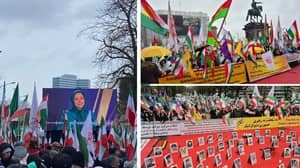
Mrs. Maryam Rajavi’s message: “You are the voice of a defenseless people who are under the pressure of a devastating war and at the same time trapped in the grip of a brutal repression.
“But everyone knows that the day is not far when the volcano of the people’s anger and a sweeping popular uprising, together with the Liberation Army, will bring down the religious dictatorship once and for all.
“It is no coincidence that the shattered ruling factions and the criminal Revolutionary Guards are shamelessly and openly warning that they have issued orders to shoot protesting youth. At the same time, the mullahs’ criminal judiciary declares that it is ready to implement the methods of the 1988 massacre.
“They openly admit that their greatest enemy is the people of Iran.
Yes, the main war is between the people and the Iranian Resistance on one side and religious fascism on the other, and it is impossible for this regime to escape uprising and overthrow.”
Neither Crown nor Turban: Resistance Units Rally for a Democratic Republic of Iran
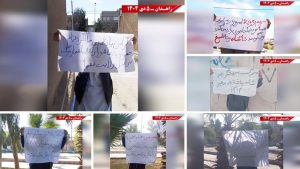
On March 13, 2026, the PMOI Resistance Units in Zahedan resumed their anti-regime activities, braving growing repressive measures and threats by regime security forces amidst wartime conditions. The brave activists took to the streets holding placards that reiterated their unwavering commitment to overthrowing the clerical regime. Their core message emphasized the establishment of a democratic republic that rejects all forms of dictatorship. Sending a clear message that the Iranian people will not accept a return to past tyrannies, activists held up signs reading, “No to mullahs, no to shah, yes to democratic republic,” and “This is the greatest battle and greatest test to put an end to 100 years of tyranny and bring freedom and a democratic republic.”
UN Fact-Finding Mission Warns Iran’s Human Rights Crisis Could Amount to Crimes Against Humanity
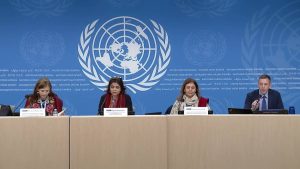
A new report by the United Nations Human Rights Council’s Independent International Fact-Finding Mission on Iran warns that the country’s worsening human rights situation could amount to crimes against humanity, as civilians become increasingly trapped between military conflict and escalating state repression. The warning accompanies the mission’s latest report submitted to the United Nations Human Rights Council, covering the period from April 2025 to February 18, 2026. Investigators say that long-standing patterns of repression in the Iranian regime have intensified amid the ongoing regional tensions following military strikes involving the United States and Israel and retaliatory actions by Iran.
According to the mission, the convergence of armed conflict and systemic state repression has placed Iranian civilians in an unprecedentedly vulnerable position. Investigators warn that the situation could deteriorate further unless all parties involved in the conflict strictly adhere to international humanitarian law, particularly the principles of distinction, proportionality, and precaution.
Iran’s Real Battlefield: The Regime and Its Own People
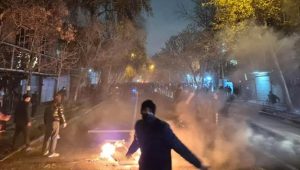
In recent days, Iran’s political landscape has been overshadowed by the dust and anxiety of war across the region. Public discourse is filled with speculation about external threats, military escalation, and the country’s uncertain future. Yet beneath this atmosphere of geopolitical tension, a more fundamental question persists: where is the real conflict unfolding, and between whom? Is the primary confrontation truly external, as official narratives suggest, or does the central battlefield lie somewhere else entirely?
An answer may lie in a recent report broadcast by Iran’s state television, Islamic Republic of Iran Broadcasting (IRIB). The report inadvertently revealed a deeper truth about the regime’s perception of its own society.
According to the broadcast, Ahmadreza Radan, the commander-in-chief of Iran’s national police, delivered a stark warning during an interview on March 10.
European Parliament Condemns Iran’s Regime Amid Escalating Regional Crisis
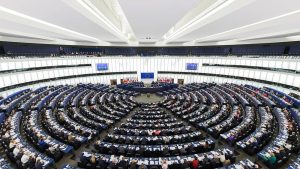
As tensions and conflict intensify across the Middle East, the chamber of the European Parliament became a stage for strong international condemnation of the Iranian regime—long associated with repression at home, terrorism abroad, and regional destabilization. The parliamentary session, held in Strasbourg on Thursday, March 12, took place against the backdrop of mounting regional instability and growing fears that Tehran could further escalate the conflict. Iranian regime officials have continued issuing inflammatory threats, including warnings that the regime could block the Strait of Hormuz and demand “compensation” from neighboring countries while threatening retaliation against them. Such rhetoric has been widely interpreted by observers as an attempt by a crisis-ridden regime to export its internal turmoil through confrontation abroad.
At the same time, speaking at a human rights conference organized by the United Nations in Geneva, Maryam Rajavi, the President-elect of the National Council of Resistance of Iran, warned that the current escalation was the predictable outcome of years of Western appeasement toward Tehran. She argued that accommodating the regime had encouraged aggression and ultimately paved the way for wider conflict, stressing that ordinary Iranians have paid the highest price for these policies.
IRGC Threatens Public with a Harsher Crackdown
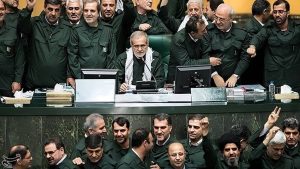
As concerns grow within Iran’s regime about the possibility of a new wave of public protests, the Islamic Revolutionary Guard Corps (IRGC) has announced that if street protests occur, protesters will face a harsher response than in the past.
According to a statement released on March 12 by the IRGC Intelligence Organization, the agency claimed that “the enemies of the Islamic Republic” are attempting to create an atmosphere of fear and encourage street protests in order to produce instability and unrest in the country. The statement also called on forces affiliated with the IRGC and the Basij militia paramilitary organization under the IRGC—to maintain a constant presence on the ground.
Mojtaba Khamenei’s First Message; A Display of Authority or a Sign of a Deep Power Crisis?
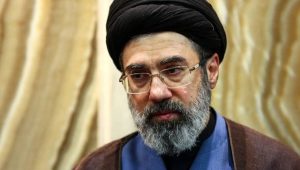
With the introduction of Mojtaba Khamenei as the new leader of Iran’s regime and the release of his first official message, Iran’s political atmosphere has entered a new phase. The message, issued under extremely critical circumstances amid ongoing war and mounting internal and external pressures, has been viewed by many observers as an attempt to consolidate the position of the new leadership.
The message included a range of political and military positions—from emphasizing the continuation of the war and threatening to close the Strait of Hormuz to speaking about opening new fronts and stressing the presence of Basij forces in the streets. However, a closer examination of the message suggests that behind the aggressive rhetoric and authoritarian slogans, signs of concern and crisis within the power structure can also be observed.
Iran: Civilians Trapped Between War, Displacement, and State Repression
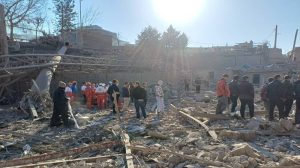
Reports of widespread civilian casualties, mass displacement, and escalating security pressures indicate that civilians in Iran are facing a simultaneous military and human rights crisis. As armed hostilities expand across different regions of the country, many families have been forced to abandon their homes in search of safety. International human rights bodies have recently described the situation of the Iranian population with a stark warning. Civilians in Iran are now trapped “between bombardment and state repression.” The Independent International Fact-Finding Mission on Iran has warned that the population is facing the combined consequences of a large-scale military campaign and a governing structure with a longstanding record of serious human rights violations.
Alongside the direct consequences of the conflict, reports indicate an escalation of internal security pressure. Widespread internet shutdowns, arrests of citizens for sharing images of attacks, and judicial threats against dissenting voices have raised serious concerns regarding the protection of fundamental rights. As a result, many Iranian citizens now face a situation in which the dangers of war intersect with the risks of domestic repression.
Social Revolution: Why Real Change Cannot Be Imposed from Outside

Social revolution is often misunderstood in today’s political debates. Many assume that a major change in a country can be brought about from outside—through foreign pressure, sanctions, or even war.
But if we examine this question from the perspective of sociology and the theory of social evolution, a very different picture emerges.
From a scientific standpoint, societies—like any complex phenomenon—follow certain laws of transformation and development. Deep change within a society is not the result of external imposition. Rather, it is the outcome of an internal process in which crises, dissatisfaction, and the latent capacities within society gradually reach a point where a qualitative leap becomes possible.
Paris Exhibition Shows Solidarity with Iran’s Uprising and Condemns Human Rights Violations

Paris, France – March 13, 2026 – A book fair and photo exhibition were held in Paris to express solidarity with the nationwide uprising in Iran and to honor its victims and fallen heroes. The event also strongly condemned the ongoing human rights violations and the brutal executions carried out in Iran by the ruling clerical regime. Organizers warned about the grave danger facing political prisoners under conditions of war and bombing, and called for their immediate release.