

THIS PAGE WILL BE UPDATED WITH THE LATEST NEWS
UPDATE: 9:30 PM CET
Escalation Across Iran as War Enters 28th Day: Nuclear, Industrial, and Urban Targets Struck
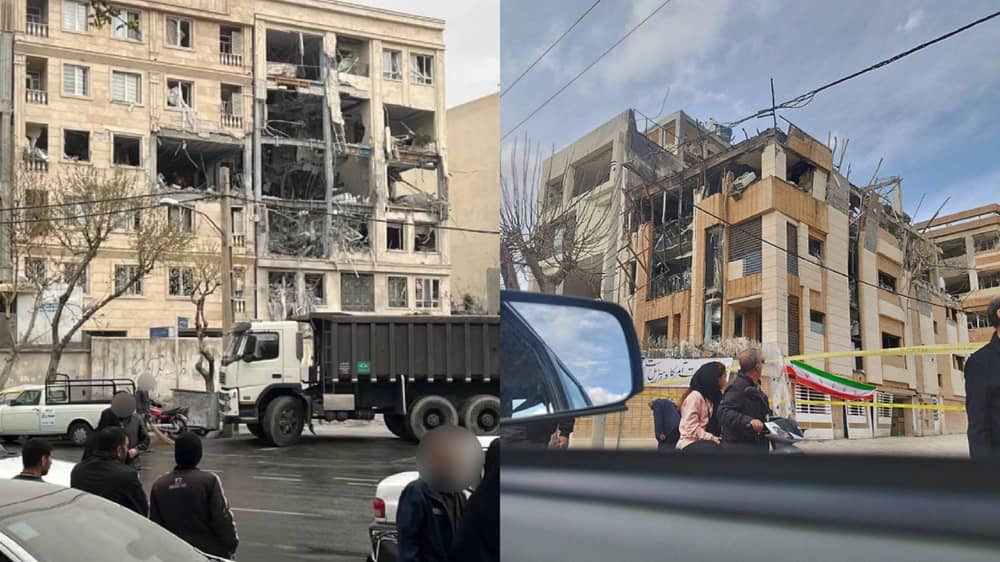
Over the last 24 hours, the conflict involving Iran, the United States, and Israel intensified dramatically, with a broad wave of air and missile strikes across Iran striking nuclear facilities, strategic sites, major industrial complexes, and urban centers. Government statements, independent local reporting, and international analysis collectively indicate a nationwide pattern of attacks coupled with continued Iranian missile and drone retaliation, regional spillover, suppression of domestic dissent, and heightened tensions over shipping in the Strait of Hormuz.
Regime Losses: Targets Hit, Sites Damaged, Personnel Impact
Nuclear and strategic infrastructure saw significant hits in the past day:
- The uranium conversion (yellowcake) plant near Ardakan in Yazd Province was struck; Iran’s atomic energy organization confirmed the facility was hit but reported no radiological release. This facility is a key input to enrichment processes.
- The heavy water complex at Khondab near Arak, critical for heavy water moderation, was also struck in coordinated operations. Iranian officials said there were no civilian casualties or dangers to surrounding communities.
- Military and missile infrastructure throughout the country—including ballistic missile launchers, air defense sites, storage depots, and missile production and logistics nodes—were targeted. Statements from Israeli military sources indicate these attacks aimed to degrade the regime’s long‑range capabilities.
Gulf states tell US ending the war is not enough, Iran’s capabilities must be degraded https://t.co/BCZtJ5mOIw https://t.co/BCZtJ5mOIw
— Reuters (@Reuters) March 27, 2026
Industrial targets also experienced damage:
- Steel production complexes at Foolad Mobarakeh in Isfahan and Foolad Khuzestan in Ahvaz were struck, with reports of structural damage. Local authorities confirmed at least one fatality and multiple injuries at the Isfahan facility.
Urban centers across Iran heard multiple explosions consistent with strike impacts:
- In Tehran and surrounding cities (including Karaj, Shahriar, and Ekbatan), residents reported repeated explosions and low‑flying aircraft from late night through early morning, producing shockwaves that shook buildings. Reports indicate patterns of dozens of explosions in short time spans in many neighborhoods.
- Similar reports of aerial activity and explosions came from Tabriz, Urmia, Isfahan, Abadan, Busher, and Yazd, indicating a broad geographic spread of attacks through the early morning hours.
Personnel losses extended beyond infrastructure:
- The clerical regime confirmed the death of Reza Khazaei, commander of the Quds Force operations in Lebanon, in strikes in neighboring Lebanon in the same 24‑hour window.
- Independent sources also describe additional unverified targeted operations against Iranian commanders and regime figures in multiple cities, although firm confirmation remains pending.
When two Iranian ballistic missiles evaded Israel's defence systems on March 21, AFP's photographers raced to capture the aftermath while realising that the location of one of the strikes, near a sensitive Israeli nuclear site, could add to the danger.
▶️ https://t.co/CIuIk5P1jN pic.twitter.com/VtS1SIkX30— AFP News Agency (@AFP) March 27, 2026
Iranian Retaliation and Defense
The clerical regime in Iran continued to fire missiles and drones toward Israel, with reports of interception over Israeli territory, including the Tel Aviv area. Sirens and air defense alerts were reported in parts of Israel overnight. Iranian forces claimed to have engaged shipping traffic in the Gulf, specifically forcing two Chinese‑flagged container vessels near Larak Island to alter course after warning them away from the Strait of Hormuz—an act described as “unusual” by international reporting.
Regional Spillover and Shipping Developments
Strait of Hormuz and maritime traffic:
- The Islamic Revolutionary Guards announced the Strait is effectively closed to shipping associated with “enemy allied” states, turning back multiple vessels.
- This move prompted warnings from Western naval and diplomatic actors emphasizing free navigation and calling for cessation of attacks on civilian infrastructures.
- Gulf Arab states such as the United Arab Emirates and Bahrain have expressed interest in joining or forming a multinational force to secure shipping lanes, according to regional reports.
Lebanon and Iraq remain active fronts:
- Israeli strikes targeted Iranian‑aligned positions and militia facilities in southern Lebanon, resulting in confirmed deaths among Quds Force commanders and allied fighters.
- Tensions and clashes involving Iraqi militia components and U.S. forces continue in multiple areas, though less prominently reported in the most recent 24‑hour cycle.
Iranian state media says nuclear facilities, including a heavy-water plant and a yellowcake production plant, have been targeted. https://t.co/s6UtLhn2kd
— The Associated Press (@AP) March 27, 2026
Internal Conditions and Domestic Repression
Internet shutdown: Iran’s nationwide internet blackout entered its 28th consecutive day, cutting off millions from international connectivity and communications. Independent monitors report this blackout encompasses public access to global networks and services.
Expanded domestic suppression:
- Iranian security forces conducted widespread arrests across at least five provinces, totaling nearly 150 additional detainees accused of espionage, propaganda, or “cooperation with enemies.” Iranian authorities also reported hundreds of other arrests over the prior month.
- A controversial internal acknowledgment revealed the deployment of children as young as 12 in IRGC‑linked security patrols and checkpoints, underscoring deepening mobilization measures.
⚠️ Update: The internet blackout in #Iran is now in its 28th day after 648 hours, with Iranians having spent more than half the year to date cut off from international networks.
Authorities continue to refine a two-tiered system where only regime apparatchiks are allowed online. pic.twitter.com/aelMfAyQUI
— NetBlocks (@netblocks) March 27, 2026
Diplomatic and Strategic Context
Despite the escalation, diplomatic engagement persists: U.S. officials have floated a 15‑point ceasefire proposal aimed at de‑escalation and reopening key transit routes, including the Strait of Hormuz, while Iranian officials dismiss negotiations under the current military circumstances.
International calls for restraint extend to the G7, which issued joint statements emphasizing the need for safe civilian shipping and the protection of infrastructure from attacks.
Strategically, the past 24 hours reflect an acceleration of multi‑domain operations by U.S. and Israeli forces designed to degrade Iran’s nuclear, missile, and industrial capacity, while the regime continues asymmetric retaliation and asserts regional influence through maritime coercion and allied militia engagements. The widespread nature of the strikes indicates a shift toward a broader, sustained campaign rather than isolated tactical engagements, with significant implications for regional geopolitics and civilian hardship inside Iran.
UPDATE: 7:30 AM CET
Briefing at the US Congress about Democratic Transition and the Announcement of a Provisional Government
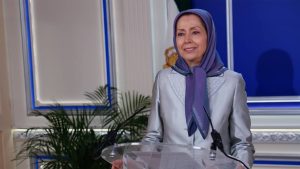
Mrs. Maryam Rajavi’s speech: “Over the past months, two major developments have taken place in Iran: the January uprising and the ongoing war that, in addition to Iran, has had deep and lasting effects on the geopolitics of the Middle East and on international relations, and will continue to do so. However, these events have already begun to answer important assumptions that for many years have shaped the political thinking of governments, major media, and policy institutions in the West, which the Iranian Resistance has warned about them for decades. Among these key lessons, are:
• A policy of appeasement ultimately leads to conflict.
• This regime will never abandon its three pillars strategy that are nuclear weapon, ballistic missile and proxy groups program and by giving power to the Khamenei’s son, they have shown that they intend to continue the policies of the past 47 years without any change.
• The idea that the regime will collapse on its own is unrealistic and this regime will not change with virtual activities or satellite programs
• To survive, the regime is willing to commit any crime, and therefore, resistance against the mullahs’ dictatorship, is the legitimate right of the Iranian people.”
Tehran’s Regional Warmongering and Domestic Suppression Condemned at UNHRC
The United Nations Human Rights Council (UNHRC) convened an urgent session in Geneva on Wednesday, adopting a resolution by consensus that unequivocally condemned the Iranian regime’s missile and drone attacks on Gulf states and Jordan. The resolution comes against the backdrop of a massive regional war that erupted on February 28, 2026.
Following the nationwide uprisings of December 2025 and January 2026, which the regime only survived by massacring thousands of protesters, the newly installed dictator Mojtaba Khamenei is escalating regional terrorism in tandem with the uptick in domestic repression.
The 47-member UNHRC endorsed a motion introduced by Bahrain, Kuwait, Oman, Qatar, Saudi Arabia, the United Arab Emirates, and Jordan. The resolution demanded that the regime “immediately and unconditionally cease all unprovoked attacks” and denounced the strikes as “egregious,” “unprovoked and deliberate.”
Zahra Hojjat Arrested Following Her Refusal to Allow Military Use of Her Center
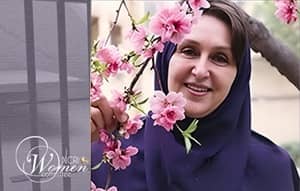
Zahra Hojjat, an advocate for girls with special needs and the director of the Hamdam Rehabilitation Institute in Mashhad, has been arrested by security forces and transferred to an undisclosed location.
Her arrest reportedly followed her refusal to comply with a request from the Revolutionary Guard Corps (IRGC) to use the facility under her management as a site for the deployment or concealment of military personnel. This refusal prompted a response from security authorities, ultimately leading to her detention.
Hojjat was arrested approximately one week ago. Since her transfer to an unknown location, she has been denied contact with her family and access to visitation. The continued lack of information regarding her condition has raised serious concerns about her safety and well-being.
Iran’s Transition Debate: Why a Structured Alternative Matters More Than Power Struggles
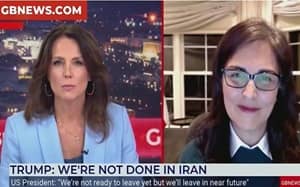
As speculation intensifies over potential shifts within Iran’s ruling establishment, a critical question is being overlooked: does changing figures at the top of the regime alter the system itself? According to Dr. Ramesh Sepehrrad, the answer is a decisive no.
In a recent interview with GB News, Sepehrrad challenged the prevailing narrative that Iran’s future hinges on internal power dynamics. She argued that focusing on leadership reshuffles within the regime misses the broader reality—an increasingly organized opposition movement determined to dismantle the system in its entirety.
Her assessment reframes the debate. The central issue, she contends, is not which faction might consolidate control, but whether the Iranian people and their organized resistance can bring about systemic change. In her view, that process is already underway.
Europe Signals a Harder Line on Iran as Leadership Concerns Intensify
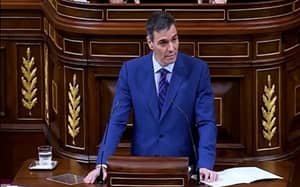
A notable shift appears to be underway in Europe’s political posture toward Iran—one that is less cautious, more explicit, and increasingly shaped by concerns over what comes next in Tehran.
In a forceful address before the Cortes Generales, Pedro Sánchez broke with the traditionally measured tone that has long defined European rhetoric on Iran. His remarks focused not only on the present state of the regime, but on the implications of a potential transition of power at its apex.
Sánchez warned that emerging indications about succession dynamics point not toward moderation, but toward escalation. Referring to Mojtaba Khamenei, he suggested that a leadership transition could result in an even more hardline posture than that of his predecessor, Ali Khamenei.
Urgent Warning: Wave of Executions of January 2026 Protesters Begins as Systematic Deterrence

On March 23, 2026 (3 Farvardin 1405), only three days into the Iranian New Year, Hamzeh Khalili, the First Deputy Chief of the Judiciary of the Islamic Republic (per ILNA news report), unveiled the operational phase of executing protesters’ sentences. He stated: “The cases of the enemy’s terrorist agents and the January rioters have been processed. Some cases have led to final verdicts and are being carried out, and several have been executed over the past few days… No leniency will be granted to those convicted in these cases.” He further threatened that individuals “spreading lies and fake news” to cause public concern would be identified and face severe consequences with no possibility of clemency.
The First Deputy’s remarks refer to three public executions carried out in the city of Qom on March 18, 2026 (28 Esfand 1404). On that day, three detainees from the January 2026 uprising—Saleh Mohammadi, Saeed Davoodi, and Mahdi Ghassemi—were hanged on attributed charges including “Moharebeh” (enmity against God).
The “Strait of Streets” Doctrine in Iran

While regional tensions have reached their peak, internal narratives from Islamic Republic reveal that the “primary enemy” is not at the borders, but in the streets of Iran. Alireza Al-Davoud, a figure close to the regime’s security and media apparatus, stated with unprecedented bluntness: “More important than the Strait of Hormuz is the Strait of the Streets’; Streets are our Strait of Uhud.” (Note for readers: The Strait of Uhud is a historical Islamic military reference to a strategic mountain pass where a lapse in defense led to a near-fatal defeat for early Muslims. By invoking this, the regime identifies the “Streets” as its final, non-negotiable stronghold, the loss of which would mean the total collapse of the system.)
These remarks transcend mere metaphor; they introduce a survival doctrine: a transition from the “rule of law” to a “state of war against citizens,” where the preservation of power justifies the systematic killing of the people.
Zurich Exhibition in Solidarity with “No to Execution Tuesdays” Calls for End to Death Penalty in Iran

Zurich, Switzerland – March 24, 2026 – Freedom-loving Iranians and supporters of the People’s Mojahedin Organization of Iran (PMOI/MEK) held a photo and book exhibition in Zurich to express solidarity with the Iranian people’s struggle for freedom, as well as with the “No to Execution Tuesdays” campaign in Iran’s prisons.
MEK Supporters in Gothenburg Mark 113 Weeks of “No to Execution Tuesdays”

Gothenburg, Sweden — March 24, 2025 — Supporters of the People’s Mojahedin Organization of Iran (PMOI/MEK) held a rally to mark the 113th consecutive week of the “No to Execution Tuesdays” campaign, a movement protesting the Iranian regime’s escalating wave of executions and ongoing systematic repression.