

THIS PAGE WILL BE UPDATED WITH THE LATEST NEWS
UPDATE: 10:00 PM CET
Clerical Regime Closes Ranks behind Mojtaba Khamenei as Strikes Intensify from Isfahan to the Gulf
The Iranian regime’s political and military establishment moved on Monday to project continuity rather than compromise, with Mehr News Agency reporting that the Assembly of Experts had formally appointed Mojtaba Khamenei as the country’s new supreme leader and Press TV saying the latest missile-and-drone attacks under Operation True Promise 4 coincided with his elevation.
At the same time, Israel signaled that it was widening pressure on Iran’s military infrastructure. AP reported that Israel announced a “wide-scale wave of strikes” on Isfahan, Tehran and southern Iran, saying it hit dozens of sites, including the Revolutionary Guard’s drone headquarters. Reuters separately reported explosions near Isfahan even as loyalists gathered there in support of the new regime leader.
NATO defenses have intercepted a ballistic missile that entered Turkey's airspace, the defense ministry says.
Follow live updates. https://t.co/IKBKd3DpGg
— The Associated Press (@AP) March 9, 2026
Isfahan also emerged as the key nuclear concern of the day. Reuters, citing IAEA chief Rafael Grossi, reported that a little over 200 kilograms of uranium enriched to up to 60% purity was probably still stored in tunnel complexes at Isfahan, with no visible sign that the material had been moved. Grossi said the site appeared to have avoided the worst damage seen at other major nuclear facilities, keeping it central to the war’s strategic logic.
On the Iranian side, state media kept emphasizing offensive capacity. Press TV and the IRGC said Iran had now carried out 30 waves of missile and drone strikes against Israeli targets and U.S. regional bases, and said the latest barrage used Khorramshahr, Fattah and Khaybar missiles. Those battlefield claims remain difficult to verify independently in real time, but AP did confirm that Iranian fire continued on Monday, with sirens sounding repeatedly in Israel and one man killed in central Israel while a woman was wounded.
NATO said it shot down a second ballistic missile from Iran in Turkish airspace, prompting a stern warning from Turkey to Tehran, which told its neighbour not to take ‘provocative steps.’ The alliance stressed its readiness ‘to defend all allies against any threat.’… pic.twitter.com/W0ERZsuE3a
— AFP News Agency (@AFP) March 9, 2026
The Gulf front remained one of the most consequential parts of the conflict. AP reported that Bahrain said an Iranian drone caused material damage to a desalination plant over the weekend. Reuters said Bapco Energies later declared force majeure after an attack on its refinery complex, while Kuwait held a military funeral on Monday for two interior ministry officials killed while on duty after strikes near the airport area. The UAE again urged de-escalation, and China called for an immediate ceasefire and respect for Gulf sovereignty.
The parallel Lebanon front also worsened. Reuters reported that nearly 700,000 people have been displaced in Lebanon in a week, with Israeli strikes hitting Beirut’s southern suburbs and southern Lebanon on Monday. The agency said Lebanese authorities now put the death toll there at nearly 500, while Hezbollah responded with deeper strikes into Israel, wounding at least four people near Tel Aviv.
The economic shock deepened alongside the military escalation. Reuters reported that Brent crude briefly reached $119.50 a barrel, that Saudi Arabia and other Gulf producers had begun cutting output, and that hundreds of tankers were sitting idle as traffic through the Gulf and Strait of Hormuz remained severely disrupted. AP separately reported that the Pentagon had identified a seventh U.S. service member killed in the war, highlighting that the conflict’s human and financial costs are still climbing.
🔊 'It signals that there will be little room for compromise.' @PHREUTERS outlines why Iran's choice of Supreme Leader puts it on a deeper collision course with the US, on the Reuters World News podcast https://t.co/tOF0nZ4AVW pic.twitter.com/4fQ5Uuwjx1
— Reuters (@Reuters) March 9, 2026
The clearest conclusion from the last day is that the war is hardening, not narrowing. Tehran is using Mojtaba Khamenei’s succession to project regime continuity and mobilization, while Israel is pressing deeper into strategic targets around Isfahan and Tehran. The result is a conflict that is becoming more centralized politically inside Iran even as it spreads farther across Lebanon and the Gulf.
UPDATE: 02:00 PM CET
Iran Opposition Leader Slams New Ayatollah Khamenei as Medieval Monarchy

Maryam Rajavi has launched a fierce attack on the reported installation of Mojtaba Khamenei as Iran’s new supreme leader, warning the move amounts to the country’s hardline clerical establishment turning itself into a mediaeval-style hereditary monarchy. Rajavi, president of the Paris-based National Council of Resistance of Iran, said the regime had effectively crowned the son of the current supreme leader, Ali Khamenei, in a desperate attempt to preserve its grip on power.
She said: “The absolute clerical rule, known as Velayat-e Faqih, has effectively turned itself into a hereditary monarchy by placing Mojtaba Khamenei on the throne,” adding that the move would not rescue what she called the “shipwrecked vessel of religious fascism.”
UPDATE: 09:30 AM CET
PMOI Resistance Units Rally Behind the NCRI Provisional Government and Reject All Dictatorships
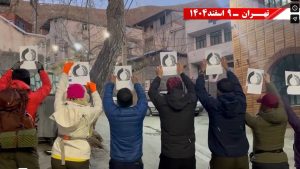
On March 6, 2026, the brave network of the People’s Mojahedin Organization of Iran (PMOI) inside the country, known as the Resistance Units, launched a massive wave of nationwide activities to project a unified message: the Iranian people support the newly announced National Council of Resistance of Iran (NCRI) Provisional Government and desire a democratic republic.
Operating under the constant threat of the clerical regime’s crackdowns and amidst severe wartime conditions, these activists took to the streets to break the wall of silence. From Zahedan in the southeast to Baneh and Ilam in the west, and major cities like Tehran and Mashhad, the youth mobilized to reject all forms of dictatorship, echoing the sentiment that the era of both the Shah and the mullahs is permanently over.
A Report to CSW70: Gender-Based Discrimination Under Iranian Law
Gender-Based Discrimination Under Iranian Law” is the title of the NCRI Women’s Committee’s report to CSW70, as it focuses on “Ensuring and strengthening access to justice for all women and girls, including by promoting inclusive and equitable legal systems, eliminating discriminatory laws, policies, and practices, and addressing structural barriers.”
The religious dictatorship ruling Iran is one of the few political systems in the world to have institutionalized discrimination against women systematically across all levels of its legislative framework.
At a time when the world is moving toward the abolition of the death penalty, and when the number of women executed in other countries remains in the single digits, the religious dictatorship ruling Iran set a new record of brutality in 2025 by executing 65 women.
Iran Regime’s Clerical Establishment Turns to Hereditary Rule as Mojtaba Khamenei Named Successor
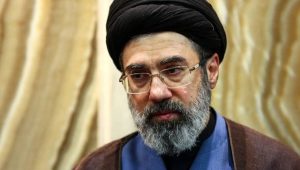
The appointment of Ali Khamenei’s son exposes the Islamic Republic’s shift toward dynastic power—mirroring parallel attempts by monarchist factions to promote Reza Pahlavi as Iran’s next ruler.
In a development that underscores the deepening crisis within Iran’s ruling system, the regime’s Assembly of Experts has reportedly selected Mojtaba Khamenei, the second son of the killed Supreme Leader Ali Khamenei, as the new head of the Iranian regime. The announcement was reported late Sunday night, March 8, by the state-affiliated Tasnim News Agency.
According to the report, the Assembly of Experts had already conducted the vote earlier but delayed publicly announcing the result. With this decision, Mojtaba Khamenei becomes the third Supreme Leader since the establishment of the Iranian regime in 1979.
Reza Pahlavi Declares Himself Leader of Iran’s “Transition” — Without a Transition, a Mandate, or Followers
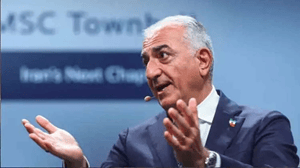
The self-appointed role of the Shah’s son highlights the growing gap between monarchist narratives abroad and the political realities of Iran’s opposition.
Reza Pahlavi, the son of Iran’s last Shah, has recently announced that he has “accepted” the role of leader of Iran’s future transitional period. The declaration has triggered widespread debate among Iranian political observers and opposition circles—largely because the role he claims to have accepted was never formally offered to him, nor has it been endorsed by any credible political coalition.
In essence, the announcement resembles a political paradox: accepting a position that no one proposed and that no political force has agreed to create.
Pahlavi’s remarks have once again drawn attention to the persistent attempts by monarchist networks to portray him as a central political figure for Iran’s future, despite the absence of any institutional mechanism, political consensus, or democratic mandate supporting such a role.
Thousands of Iranians Rally in Europe and the U.S., Supporting NCRI’s Provisional Government Plan
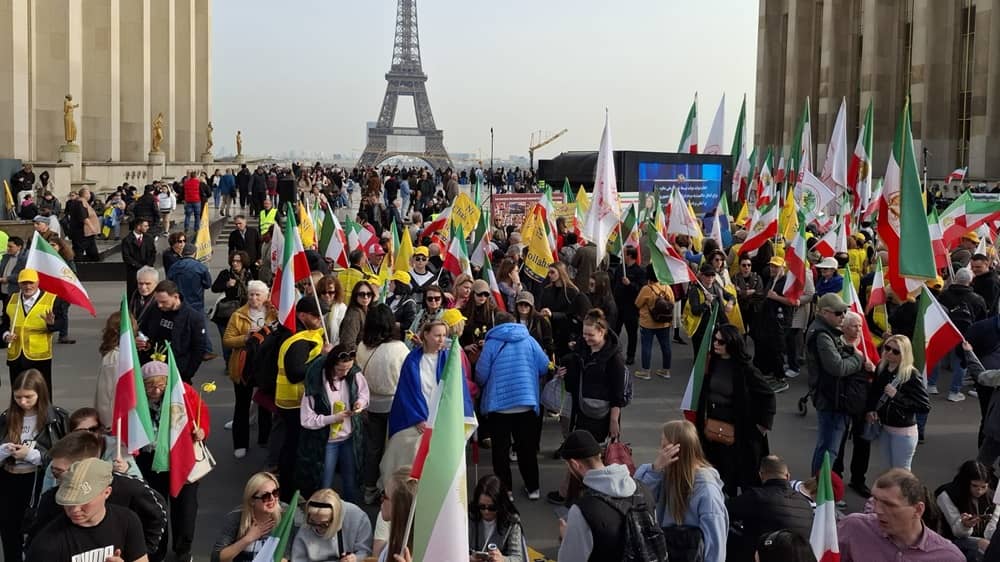
On 7 March 2026, thousands of Iranians took to the streets across Paris, Washington, London, Berlin, Brussels, Rome, Stockholm, and other cities in Europe and the United States to show their support for the National Council of Resistance of Iran (NCRI)’s announcement of a provisional government, aimed at transferring sovereignty to the people of Iran and establishing a democratic republic. (ncr-iran.org)
Thousands of Iranians Rally in Europe and the U.S., Supporting NCRI’s Provisional Government Plan #NCRIAlternative #OurChoiceMaryamRajavi #No2ShahNo2Mullahshttps://t.co/qbUao7rAP6
— Iran Freedom (@4FreedominIran) March 8, 2026
The largest rallies were held at Trocadero Square in Paris and in front of the U.S. Congress in Washington, D.C.. At the Paris rally, speakers included Mrs. Sarvnaz Chitsaz, Chair of the NCRI Women’s Committee; Mr. Abolghasem Rezaee, Deputy of the NCRI Secretariat; and Mrs. Zinat Mirhashemi, NCRI member and Editor-in-Chief of Nabard-e Khalq.
Copenhagen Rally Backs NCRI Provisional Government as Democratic Alternative for Iran

Copenhagen, Denmark – March 6, 2026 — Supporters of the People’s Mojahedin Organization of Iran (PMOI/MEK) gathered once again outside the Iranian regime’s embassy in Copenhagen. During the rally, participants called for the overthrow of the clerical establishment and voiced support for the MEK’s Resistance Units operating inside Iran. Many described the current moment as a turning point in Iran’s political future.