

THIS PAGE WILL BE UPDATED WITH THE LATEST NEWS
UPDATE: 1:30 PM CEST
Houthis Report U.S. and U.K. Airstrikes on Al-Salif in Hodeidah
On October 14, the Houthis announced that U.S. and British forces launched airstrikes on military positions in the Al-Salif region, located in Yemen’s Hodeidah province. These attacks were part of a broader response to Houthi threats and missile strikes against international shipping lanes in the Red Sea and Bab al-Mandeb Strait. Houthi officials claimed responsibility for recent attacks on two commercial vessels, including an American oil tanker, using ballistic missiles and drones, causing significant damage.
In retaliation, airstrikes targeted key Houthi positions, with reports of two major attacks on October 14. The airstrikes aimed at disabling the group’s capacity to disrupt international maritime traffic. The U.S. and British military efforts are part of ongoing operations to safeguard international shipping routes, which have increasingly become targets of the Iran-backed Houthi militia.
In previous weeks, Houthi forces launched similar attacks, including one using ballistic missiles and a cruise missile against commercial vessels, escalating tensions in the region. The airstrikes are viewed as a strategic effort by the West to curb the group’s ability to threaten global shipping and regional security.
UPDATE: 9:00 AM CEST
Targeted Sanctions in Response to Iran’s Destabilising Actions

The Australian Government is imposing targeted financial sanctions and travel bans on five Iranian individuals contributing to Iran’s missile program.
Iran’s missile program poses a material threat to regional and international security.
Iran’s 1 October launch of over 180 ballistic missiles against Israel was a dangerous escalation that increased the risk of a wider regional war.
Iran’s proxies continue to launch daily attacks across the region, using missiles and other military equipment provided by Iran. Iran’s delivery of ballistic missiles to Russia last month to aid its war against Ukraine further demonstrates Iran’s destabilising role.
Today’s sanctions target two Directors and a senior official in Iran’s Aerospace Industries Organization, the Director of the Shahid Bagheri Industrial Group, and the Commercial Director of the Shahid Hemmat Industrial Group.
UPDATE: 8:00 AM CEST
Biden Warned Iran That Killing Trump Would Be an Act of War: Report

President Biden reportedly instructed his National Security Council to make clear to Iran that any attempt on former President Trump’s life would be viewed as an act of war.
The stark warning comes as the Trump team has been briefed on specific attempts on Trump’s life, and they’ve made an unusual request for military aircraft in the waning days of the campaign.
The U.S. has gone to unprecedented lengths to protect the former president from retaliation from Iran for the 2020 killing of Gen. Qassem Soleimani. Some $150 million a year has gone to protecting officials like former Secretary of State Mike Pompeo and Gen. Kenneth McKenzie, former head of U.S. Central Command, according to Politico.
The Trump campaign recently requested military aircraft capable of shooting down missiles to tote the former president around in the weeks before the election.
Iranian Regime Experts Warn of Strategic Setbacks and Blows

One year after the Iranian regime instigated conflict in the region, the deceptive smokescreen is clearing, and the regime’s precarious position in the quagmire it has created is becoming increasingly evident. This situation is being highlighted by the regime’s own figures and media. Mehdi Mohammadi, an advisor to Majlis (parliament) speaker Mohammad Bagher Ghalibaf, discussed the risk of the regime’s complete defeat and the “painful and strategic blows” it has suffered. On October 12, in an interview with state television, he said: “Realism demands that we acknowledge the severity and pain of the blows the system has endured. We have suffered strategic setbacks. What happened to Hezbollah’s leader, Hassan Nasrallah, is no minor issue!”
The Vicious Cycle of Corruption and Misery in Iran’s Economy

For over 40 years, the mullahs’ regime has plundered Iran’s oil and underground and surface resources, but the looting has not ceased, and they continue to plunge the Iranian people into deeper darkness and misery. Even now, instead of abandoning this path, they are asking economic experts to find a way to sustain this misguided course. The lack of foresight and planning in Iran’s economy is so obvious that experts and analysts speak of it frequently. They admit that for years, the regime has been wandering between contradictory economic schools without scientifically committing to any of them. Perhaps this is why conflicting voices emerge from the regime’s economic leaders. According to the head of the parliamentary Economic Committee, “The economic imbalance stems from governance imbalance, and until this is resolved, we cannot address the issues in sectors such as energy, pension funds, and the budget through technical fixes” (Source: Asia news website, October 6).
The Alarming Surge of Executions in Iran: A Call to Action
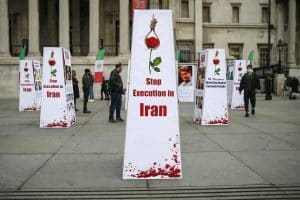
The recent surge in executions in Iran has drawn significant attention, particularly following the sentencing of three political prisoners: Behrouz Ehsani, Mehdi Hassani, and Javad Vafaï. These individuals are among many who have faced the death penalty under a regime that has intensified its crackdown on dissent since the protests that erupted after the tragic death of Mahsa Jina Amini in 2022. Reports indicate that at least 300 executions occurred in the first half of 2024 alone, with a notable increase in July, where 49 individuals were executed in a single month.
This alarming trend is part of a broader pattern where Iranian authorities have systematically targeted activists, particularly those associated with ethnic minorities and political opposition groups. The United Nations has highlighted these ongoing human rights violations, calling for accountability and urging nations to exercise universal jurisdiction over these crimes. The UN’s July 2024 report described decades of “atrocities,” including extrajudicial killings and torture, particularly against members of the People’s Mojahedin Organization of Iran (PMOI), who are labeled as “apostates” by the regime.
Strategic Failures and Mounting Pressures: The Iranian Regime Faces the Fallout of its Foreign Policy

In recent weeks, the Iranian regime has been grappling with the consequences of the Gaza war, a conflict that stems in part from its long-standing policies of war-mongering and international terrorism. These policies, which serve as crucial pillars for both domestic repression and economic exploitation of the Iranian people, have now created a volatile situation within Iran, heightening the risk of societal unrest—a prospect the regime views as a nightmare.
At the core of the Iranian regime’s foreign policy lie two principles: international terrorism and regional conflict, paired with leveraging the West’s appeasement policies. However, the strategic impacts of the Gaza war are placing unprecedented pressure on the regime, revealing the cost of these long-held policies.
The Battle Over Internet Censorship in Iran: Politics, Power, and the VPN Mafia

As the Iranian public eagerly awaits the lifting of internet censorship, hopes were recently dashed when the Minister of Communications, in a conversation with reporters on Wednesday, delayed any concrete action. He vaguely promised changes in the “near future” but offered no specific timeline, leaving many disappointed. The regime’s stance on internet censorship has been staunchly defended by Kayhan newspaper, the official mouthpiece of Supreme Leader Ali Khamenei. In a recent editorial, the newspaper labeled those calling for the removal of censorship as “Western sympathizers” aiming to “open the door to corruption.” This reflects the government’s hardline position, one that has drawn both domestic and international criticism.