

THIS PAGE WILL BE UPDATED WITH THE LATEST NEWS
UPDATE: 9:00 PM CEST
Replace Europe’s Failed Iran Policy with Full Support for The Democratic Opposition

In 2008, with two other former Members of the European Parliament, I formed the In Search of Justice International Committee (ISJ) to bring greater attention to historical and ongoing human rights abuses and acts of terrorism perpetrated by the Iranian regime. Since then, we have been working closely with the pro-democracy Iranian opposition movement to increase awareness of its plan for the country’s future and to urge Western governments to adopt new policies toward the Islamic Republic which may aid in the implementation of that plan.
Toward that end, ISJ released a white paper last month entitled “Europe’s failed policy toward Iran”, providing concrete recommendations for how to end the clerical regime’s longstanding impunity. As conflict continues to expand across the Middle East and beyond, we believe it is increasingly imperative to act upon those recommendations and to recognize the potential consequences of failing to do so.
UPDATE: 7:00 AM CEST
How to Support Iranian Women
The daily face of Iran remains bloodstained with executions, massacres, and the misogyny of the clerics. To maintain this medieval regime and establish an atmosphere of repression, the brunt of repression continues to strike down women.
Through deception and the disgraceful claim of combating “improper hijab,” they target women for oppression. Their goal is to subjugate women, strip them of their space and opportunities for social life, and trample their humanity with daily humiliation and insult. Misogyny and the objectification of women are the dark forces driving these oppressive actions.
The bitter tragedy of women’s oppression under the clerical regime is vast and cannot be fully captured in this brief article. Yet, the other side of the story shines brightly: Iranian women stand tall, embodying a remarkable resistance against one of the most misogynistic regimes in history.
Iran Witnessed More Than 412 Protest Rallies in September
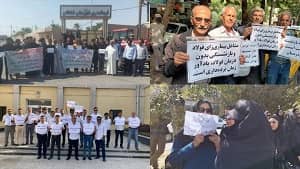
As the political and economic crises at the top of Iran’s regime continue to deepen, the Iranian public has increasingly taken to the streets in protest. The culmination of the recent farcical election and the subsequent inauguration of a new government has only further highlighted the regime’s inability to resolve its mounting challenges. The new administration, handpicked by Supreme Leader Ali Khamenei, has yet to provide any meaningful solutions to the systemic issues plaguing the country.
In September 2024, at least 412 protest rallies were documented throughout the country.
– Workers: 159 protests
– Pensioners: 112 protests
– Business Owners: 11 protests
– Nurses: 10 protests
– Farmers: 6 protests
– Educators: 6 protests
– Taxi Drivers: 3 protests
– Truck Drivers: 2 protests
– Cattle Farmers: 1 protest
– Other Sectors: 102 protests
The Root Cause of Iran’s School Dropout Crisis

Iran has become a class-based country with class-based provinces, class-based cities, class-based neighborhoods, class-based schools, and class-based students—all under the control of a regime that promotes and perpetuates class divisions.
Students are among the prime victims of the corrupt rule of the mullahs. children who once played and befriended each other are separated into distinct groups when confronted with class differences. Some of them will eventually attend expensive private schools, while others are pushed into the child labor market, and sometimes even into scavenging.
On October 2, the state-run Etemad newspaper, recited the words of a few drop-out children: “We sort trash as long as there is daylight, meaning until five or six o’clock. We have carts, and sometimes we pick up clothes, shoes, bags, and things that people leave by the roadside.
Iran’s Regime Faces a Strategic Deadlock Amid Security and Existential Threats
In an interview with Shargh, a state-run Iranian newspaper, Mohsen Jalilvand, an international affairs analyst, shared his views on the regime’s position amid the current critical situation. His comments reflect growing concern over the regime’s strategic deadlock, which he categorizes as both a “security threat” and an “existence threat.”
Jalilvand emphasized a crucial shift between these two forms of threats. He explained, “The key issue is the change from a security threat to an existential threat. Countries must perform optimally when dealing with these challenges. When facing a security threat, a nation can redefine and rebuild its security through strategic planning. However, no decision-making system will risk its very existence.”
Iran’s Economic Crisis Deepens as Inequality and Poverty Spread

A recent report from the Research Center of the Iranian Parliament has highlighted significant issues surrounding the country’s budgeting process, the growing budget deficit, and rising inflation. The report paints a grim picture, pointing out that Iran is now witnessing widespread social inequality, which has culminated in what the center refers to as the “fair distribution of poverty.”
The research arm of the Iranian Parliament criticized the government’s approach, stating that its actions contradict the fundamental purpose of governance: to ensure public welfare and promote fair income distribution. Instead, the trend has been towards greater disparity.
According to the report, the Iranian population has grown poorer over the past decade. The average per capita income has plummeted, dropping from 4.7 million tomans in 2011 to just 2.5 million tomans in 2022. This significant reduction in income levels reflects a worsening economic situation for the majority of the population.
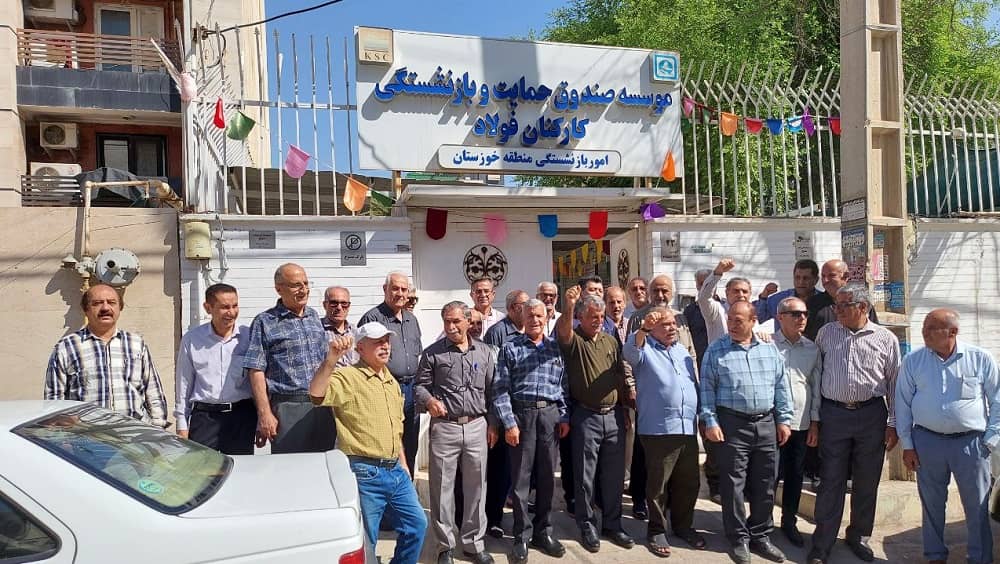
Iranian Regime Security Forces Attack Protesting Steel Industry Retirees
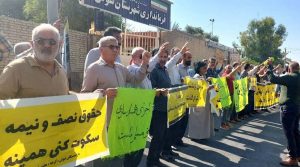
Reports indicate that Iranian regime security forces attacked a protest gathering of steel industry retirees in Tehran. On Sunday, October 6, steel retirees held a protest in front of the presidential office near Pasteur Square.
Published videos show that the protest turned violent after the intervention of security forces, who not only beat the protesters but also arrested some of them. On the same day, a number of steel industry retirees in Ahvaz also gathered in front of the Khuzestan Steel Pension Fund building, demanding that their concerns be addressed.
The state-run ILNA news agency also reported that labor retirees held protests in various cities in Iran on Sunday, including Shush, Ahvaz, and Mashhad.
5 to 10-Year Window to Save Iran’s Major Cities from the Threat of Subsidence
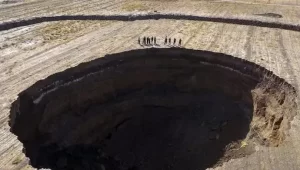
Ali Beitollahi, director of the earthquake and risk management division at Iran’s Road, Housing, and Urban Development Research Center, warned about the increasing severity of land subsidence, stating that all provinces in the country are facing this threat and “we only have 5 to 10 years to save our cities and villages, starting now.”
Beitollahi told Etemad newspaper that subsidence is also occurring in unexpected areas, such as Golestan province, eastern Mazandaran province, and the provinces of Ardabil, East Azerbaijan, and West Azerbaijan, which have better rainfall compared to the central plateau.
According to this Ministry of Roads official, “if there is serious determination” to confront the threat of subsidence, “this threat is controllable.”