

THIS PAGE WILL BE UPDATED WITH THE LATEST NEWS
UPDATE: 9:30 PM CEST
“I Was Subjected to Torture and Systematic Repression.”

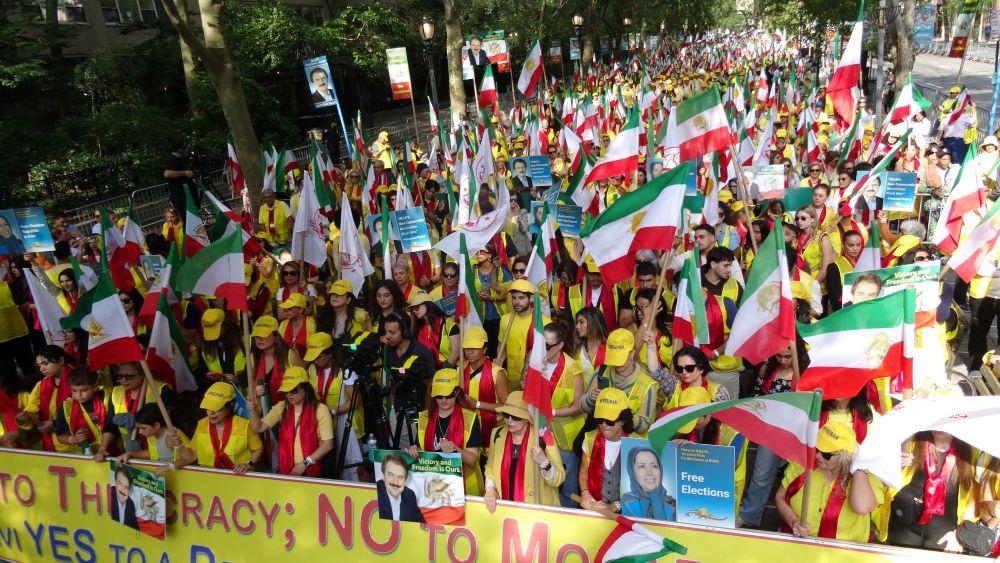
On September 22, thousands of Iranians gathered in front of the UN headquarters in New York: a united voice for freedom and regime change. Coinciding with the UN General Assembly in New York, thousands of Iranians and their supporters assembled outside the UN headquarters. The message was clear: neither mullah nor shah – Iran must have a democratic republic, based on Maryam Rajavi’s Ten-Point Plan.
The gathering, organized by the Organization of Iranian American Communities (OIAC), became the largest Iranian demonstration ever held in the United States. Participants from more than 40 states had previously arranged memorials, street exhibitions, and actions to draw attention to the more than 1,800 executions carried out under President Masoud Pezeshkian alone.
Iranian-Americans and Dissidents Rallied Against ‘Murderous Regime Agents’ As Iran’s President Addressed UNGA

As Iranian President Masoud Pezeshkian delivered his first address to the United Nations General Assembly on Wednesday, accusing the United States and Israel of “savage aggression,” thousands of Iranian Americans and dissidents massed outside the building to denounce what they called the hypocrisy of the UN for giving Tehran’s rulers a platform.
Inside the hall, Pezeshkian claimed June’s U.S. airstrikes on Iran’s nuclear facilities amounted to a “grave betrayal of diplomacy” and a violation of international law. He said the attacks killed civilians, scientists and intellectuals, while insisting Iran “never sought weapons of mass destruction.”
Outside the U.N., however, the message was very different. Protesters waving Iranian flags and holding placards declared that Pezeshkian did not represent the Iranian people.
UPDATE: 6:30 PM CEST
Is Democracy on the Horizon for Iran? Exiled Parliamentarian Weighs In
What could and should Iran look like after the rule of Supreme Leader Ali Khamenei, who is 86 years old? Will a third Supreme Leader be appointed for authority over all aspects of Iranian society by the Assembly of Experts, as has been the case since 1979? Or will a transition to a democracy that separates religious authority from political authority emerge?
NTD discussed the topic with Ali Safavi, a member of Iran’s Parliament in Exile, the National Council of Resistance of Iran (NCRI), and President of Near East Policy Research (NEPR), a consulting and policy analysis firm in Washington, DC.
G7: Joint Statement by Foreign Ministers following the G7 Meeting of Foreign Ministers on the Margins of the High-Level Week at the United Nations General Assembly in New York

We, the G7 Foreign Ministers of Canada, France, Germany, Italy, Japan, the United Kingdom and the United States of America and the High Representative of the European Union, met on the margins of High-Level Week at the United Nations General Assembly in New York.
We called on Iran to fully implement its obligations under the Treaty on the Non-Proliferation of Nuclear Weapons, resume full cooperation with the International Atomic Energy Agency (IAEA), and engage in direct talks with the United States towards a robust, durable and comprehensive nuclear agreement that ensures Iran never obtains a nuclear weapon. We commended the E3’s decision to trigger the “snapback” mechanism.
UPDATE: 10:00 AM CEST
Iranian Americans Demand Regime Change at U.N. Rally: ‘This Dictatorship Cannot Be Reformed — It Must Be Overthrown’

Thousands of Iranian Americans and supporters of the National Council of Resistance of Iran (NCRI) flooded New York City this week to denounce regime president Masoud Pezeshkian’s appearance at the United Nations General Assembly, declaring “conditions are more favorable now for the collapse of the regime than they have been in decades” and demanding international recognition of the Iranian people’s right to overthrow the theocracy.
The two-day demonstration at Dag Hammarskjöld Plaza, directly across from UN headquarters, was organized by the Organization of Iranian American Communities (OIAC) and sponsored by the NCRI, drawing participants from 46 U.S. states in what organizers called the largest Iranian diaspora gathering to coincide with the opening of the UN General Assembly — held this year on the institution’s 80th anniversary.
Australia’s PM: Iran Behind Terror Attacks in Melbourne and Sydney
In a forceful speech to the United Nations General Assembly, Australian Prime Minister Anthony Albanese accused the clerical dictatorship in Iran of orchestrating terror attacks on Australian soil.
Albanese revealed that security agencies had confirmed Tehran’s role in “the firebombing of a synagogue in Melbourne and a Jewish restaurant in Sydney.” He described the incidents as “criminal acts of cowardice aimed at spreading fear.”
The prime minister underlined that Australia had taken unprecedented diplomatic action in response. “We expelled the Iranian ambassador from Australia, the first time since the Second World War that our country has taken such a step,” he told delegates in New York.

Albanese’s remarks linked the attacks to a broader pattern of state-sponsored terrorism and highlighted the international implications. “Terrorists and states which sponsor terrorism [are] spreading hatred,” he said, warning that regimes relying on repression and violence posed a direct challenge to global security.
The Australian leader’s comments also aligned with his government’s emphasis on defending democratic values and reinforcing the rules-based order. He stressed that Canberra’s foreign policy seeks to back “our words with actions,” adding that there is “no place for anti-semitism.”
U.S. Secretary of State: Iran Must Never Obtain Nuclear Weapons

U.S. Secretary of State Marco Rubio issued a stark warning about the clerical dictatorship in Iran during a meeting with foreign ministers of the Gulf Cooperation Council in New York, underscoring Washington’s determination to block Tehran from acquiring weapons of mass destruction.
“We have to remain clear-eyed by what we, at least the United States, strongly views as the destabilizing activities of the regime in Iran,” Rubio said. While noting “tremendous admiration for the people of Iran,” he stressed that their leaders are “more interested in exporting revolution and exporting destabilization than they have in building the prosperity of their own people.”
Echoing President Donald Trump’s remarks at the UN General Assembly, Rubio declared: “We cannot allow the world’s leading sponsor of terrorism to ever possess weapons of mass destruction like a nuclear weapon.”
Sen. Rick Scott Joins Sen. Ted Cruz to Introduce SEVER Act; Prohibiting Iranian Officials from Entering the U.S.

WASHINGTON, D.C. – Today, Senator Rick Scott joined Senator Ted Cruz and six of their Senate colleagues in announcing the Strengthening Entry Visa Enforcement and Restrictions (SEVER) Act to restrict any Iranian officials from entering the United States as representatives to the United Nations (UN) if they have been sanctioned for supporting the Iranian regime. Cosponsors of the legislation include Senators Tom Cotton, Joni Ernst, Ashley Moody, and John Barrasso, Lindsey Graham, and Bill Hagerty. Companion legislation is being led in the House of Representatives by Congresswoman Claudia Tenney.
Senator Rick Scott said, “As President Trump and his administration have taken decisive action to secure our border and protect the American people, the SEVER Act is another critical step in closing dangerous loopholes in our visa and border security system. The United States must never become a safe haven for terrorists or those enabling the Iranian regime’s violent and destabilizing agenda. Anyone sanctioned for supporting Iran’s threats against America or our allies should be automatically denied entry – we must put our national security first.”
Yemen’s Leader: Iran Turning Yemen into a Hub for Terrorism
Rashad Mohammed Al-Alimi, chairman of Yemen’s Presidential Leadership Council, used his speech at the United Nations General Assembly to warn against the clerical dictatorship’s role in fueling war and terrorism in his country.
He said the Houthi militias, “backed by the Iranian regime,” had kidnapped UN relief staff and were “armed to the teeth with an advanced Iranian arsenal, including ballistic missiles and drones and booby-trapped boats and sea mines.”
Al-Alimi accused Tehran of orchestrating the Houthis’ 2014 coup against Yemen’s national consensus, saying it created a crisis that “transcend[s] our borders and spread[s] to the region and the entire world.”

The Yemeni leader warned that the clerical dictatorship “use[s] hunger as a weapon, religion as a tool, and maritime passages as a means of blackmail,” turning Yemen into “one of the most dangerous hotspots of terrorism, cross-border terrorism in the world.”
He urged the international community to take firm action, stressing that leniency had only allowed the Houthis to expand their arsenal. “The peace we seek cannot be asked for, but must be imposed by force,” Al-Alimi declared.
UPDATE: 8:00 AM CEST
Iranian Resistance Supporters Rally at UN, Rejecting Regime’s Legitimacy and Demanding Democratic Change
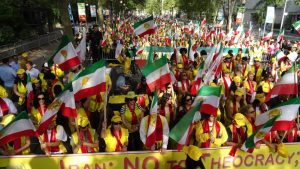
As the 80th session of the United Nations General Assembly convened, thousands of Iranian Americans and supporters of the Iranian Resistance gathered across the street from the UN headquarters for the second day on September 24, 2025. Their protest targeted the presence of Masoud Pezeshkian, the president of the clerical regime, denouncing him as an illegitimate representative of the Iranian people. The rally amplified the voices of a nation demanding freedom and democratic change, showcasing a clear alternative to the current theocracy while firmly rejecting any return to past dictatorships.
Speaker after speaker took to the stage to condemn the regime’s abysmal human rights record, particularly its escalating use of executions as a tool of suppression. They called on the international community to abandon policies of appeasement, enforce existing UN sanctions, and recognize the right of the Iranian people and their organized Resistance to establish a democratic republic.
Maryam Akbari Monfared: Continued Denial of Medical Care in Qarchak Prison

Maryam Akbari Monfared, a resistant political prisoner held in Qarchak Prison, Varamin, remains deprived of access to specialized medical treatment. This comes despite explicit directives from the Legal Medicine Organization, which stressed the urgent need for her to undergo daily physiotherapy and chiropractic sessions. Medical specialists warn that such treatment is vital to alleviate her chronic back and knee pain and to prevent worsening leg numbness and mobility disorders. Without appropriate medical intervention, she could be deemed “unfit to serve her sentence.” Nevertheless, Qarchak prison authorities have refused to facilitate her daily transfer for treatment, citing a lack of resources, and instead suggested that she petition the presiding judge. Although she submitted the request two weeks ago, no response has been issued to date.
Gothenburg Protest Hits 87 Weeks, Standing with Iranian Political Prisoners

Gothenburg, Sweden – September 23, 2025: Supporters of the People’s Mojahedin Organization of Iran (PMOI/MEK) gathered in Gothenburg to mark the 52nd consecutive week of local participation in the global “No to Execution Tuesdays” campaign. The movement protests the Iranian regime’s escalating wave of executions and systematic repression.
Two British Tourists Arrested in Iran to Stand Trial on Charges of Espionage
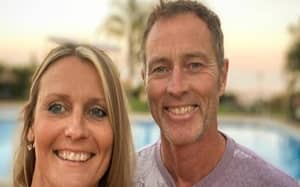
Lindsay and Craig Foreman, a British couple who were arrested in Iran nearly nine months ago on charges of “espionage,” are scheduled to be tried at Tehran’s Revolutionary Court on Saturday, September 27, 2025. They are being held in Evin Prison and Qarchak Prison in Varamin. The British couple are expected to appear in court for their final hearing while their family remains “completely in the dark” about the upcoming session. Joe Bennet, the couple’s son, said they are living in horrific conditions and facing repeated human rights violations. He called on the British government to take action. This news comes about a month after the two British citizens were suddenly transferred to a court in Tehran, an event that their relatives said they had no prior knowledge of, and to this day no details have been provided to them.
The UN Stage and Iran Regime’s Leaders: A Ritual of Rhetoric and Contradictions

Iranian regime presidents have long treated the UN General Assembly as a platform for posturing rather than problem-solving, leaving ordinary Iranians with nothing but higher costs and empty promises. Each September, when world leaders gather in New York for the United Nations General Assembly, Iran regime’s president arrives with a large entourage. Officially, these trips are billed as diplomatic opportunities. In reality, they have come to symbolize an expensive annual ritual that produces little benefit for the Iranian people. Instead of advancing the country’s foreign relations or addressing its domestic struggles, these visits are often reduced to rehearsed speeches, ceremonial banquets, and meetings with lobby groups. The hefty costs only deepen the perception that the UN stage is less about diplomacy and more about theater.