

THIS PAGE WILL BE UPDATED WITH THE LATEST NEWS
UPDATE: 8:30 PM CEST
After Withdrawal of “Shiite Duo” Ministers, Lebanese Government Approves Army Plan to Restrict Weapons
The Lebanese Cabinet today approved the army’s plan to confine weapons exclusively to the state, during a session chaired by President Joseph Aoun, from which ministers aligned with the so-called “Shiite Duo” — Hezbollah and the Amal Movement — withdrew in protest.
Following the session, Information Minister Paul Morcos stated that “the government welcomed the army’s plan to restrict weapons and affirmed the necessity of asserting state authority over all our territories.” He added that discussions on the plan remain open and ongoing.
Morcos stressed that “no investments will come without placing all weapons under state control,” revealing that Lebanon had received commitments from several countries to support the army. He also noted that the Prime Minister emphasized the need to pair any economic reforms with consolidating the state’s monopoly over arms, warning that “the economy will not grow without security.”
UK Terrorists Being Recruited Online by Iran’s Hardline Revolutionary Guard

The demonstration in Brussels on Saturday has been organized by the National Council of Resistance of Iran (NCRI) and over 300 Iranian communities across Europe. Shahin Gobadi, a member of the Foreign Affairs Committee of the National Council of Resistance of Iran, said: “Terrorism is in the DNA of this regime. So long as it remains in power, it will not abandon repression at home and terrorism abroad. Tens of thousands of Iranians from across Europe will gather in Brussels on Saturday to reject both foreign war and appeasement, and to support Maryam Rajavi’s Third Option: regime change by the Iranian people and their organized resistance.
Maryam Rajavi has been elected by the National Council of Resistance of Iran as the President of Iran for the transitional period following the overthrow of the clerical regime.”
Former U.S. Vice President Mike Pence to Join Protest Calling for Regime Change in Iran

Former U.S. Vice President Mike Pence is set to participate in a protest demonstration advocating for the overthrow of Iran’s clerical regime. The rally, organized by the National Council of Resistance of Iran (NCRI), is scheduled to take place next Saturday in Brussels.
According to Politico, the demonstration will also call for new, tougher sanctions against Tehran over its nuclear program.
The organizers have announced that several other prominent figures are expected to attend, including former Belgian Prime Minister and current EU Parliament member Guy Verhofstadt, former Speaker of the UK House of Commons John Bercow, and former U.S. Congressman Patrick Kennedy.
Rep. Mike Lawler, Lawmakers Call on Trump to Bar Iran U.N. Visit: ‘They Are Criminals Who Fuel Terrorism’

Rep. Mike Lawler (R-NY) on Thursday spearheaded a congressional letter to President Donald Trump urging him to block Iranian regime officials from entering the United States for the upcoming United Nations General Assembly in New York, warning, “They are criminals. They support terrorism. They sow hatred and instability across the Middle East.”
The letter, signed by 40 lawmakers, presses the administration to deny visas and restrict the movement of Iranian President Masoud Pezeshkian and his delegation, insisting Tehran must not be allowed to exploit the U.N. platform “to present a deceptive image of moderation”:
“We respectfully urge you to restrict the Iranian delegation’s freedom of movement, and, to the extent possible, refrain from issuing visas to key delegation members, including for its President, Masoud Pezeshkian,” the lawmakers wrote.
Lawler Urges Trump to Restrict Visas of Iranian Regime Officials Ahead of UN General Assembly

New York GOP Rep. Mike Lawler on Thursday urged President Donald Trump in a letter to restrict the visas of certain Iranian officials and their movement in the United States, ahead of the United Nations’ (UN) general assembly next week. Global leaders are expected to gather in New York City next Monday for the general assembly, where some leaders are expected to recognize a Palestinian state as part of a so-called two-state solution between Israel and Palestine.
Lawler, who serves as chairman of the House Foreign Affairs Subcommittee on the Middle East and North Africa, highlighted Iran’s worsening human rights abuses and its support for terrorism in the wake of its 12-day war with Israel.
Rallying Against Executions and Repression in Iran

The world is once again confronted with the horrifying reality of Iran’s increasing use of executions as a tool of state control. On 29 August 2025, the United Nations Office of the High Commissioner for Human Rights (OHCHR) issued a stark warning to Iran, urging the country to halt its escalating executions and impose a moratorium on the death penalty.
According to the OHCHR, Iranian authorities have executed at least 841 people in 2025 alone, with 110 people executed in July more than double the number during the same month last year. Since President Masoud Pezeshkian took office in August 2024, the regime has executed nearly 1,600 people in just 12 months, including women, juvenile offenders, and political prisoners. In the past 30 days alone, at least 162 people were hanged, many in public. Yet only around 4% of these executions have been officially acknowledged, underscoring what observers say is a deliberate strategy of secrecy and fear.
UPDATE: 2:00 PM CEST
Jonathan Burke Vows Aggressive Action Against Iran’s Illicit Finance in Senate Testimony
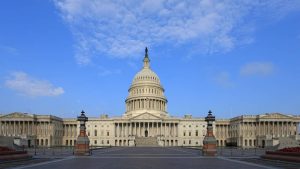
Jonathan H. Burke, nominee for Assistant Secretary for Terrorist Financing at the U.S. Treasury Department, pledged to take a tougher stance against the Iranian regime’s illicit financial activities during his confirmation hearing before the Senate Committee on Banking, Housing, and Urban Affairs.
Burke highlighted his prior experience at the Treasury from 2008 to 2012, where he “played a key role in Treasury’s efforts to use sanctions to combat Iran’s illicit access to the international financial system.” He emphasized that Iran’s persistent attempts to bypass restrictions make robust enforcement essential: “Financial measures, including sanctions, are important tools in the U.S. arsenal to respond to geopolitical challenges and counter threats to the safety of the American people and our economy,” Burke said.
He warned that Tehran’s growing use of sophisticated financial networks, digital platforms, and proxy entities has increased the difficulty of tracking and cutting off funds used to support terrorism, including groups like Hezbollah. Burke argued that the Treasury must move faster to “identify new vulnerabilities in the financial ecosystem before they are exploited.”
If confirmed, Burke pledged four key priorities:
-
Strengthening sanctions enforcement, particularly on Iran’s financing networks.
-
Closing regulatory gaps to prevent Tehran’s access to international markets.
-
Enhancing public-private cooperation by engaging financial institutions directly.
-
Leveraging technology to counter Iran’s evolving tactics in money laundering and terror funding.
Burke stressed that sanctions must be “clear, targeted, and enforceable,” calling for better alignment between U.S. regulators, global banks, and allied governments. The Senate committee is expected to vote on Burke’s confirmation in the coming weeks. If approved, he would lead efforts to intensify financial pressure on Tehran.
Asharq Al-Awsat: Iraq Rejects Iran’s Plea to Move Millions to Hezbollah via Border Crossing

A senior Iraqi official received a message from Iran in late August 2025, requesting “extraordinary facilities” at an official border crossing in the country’s west to enable the transfer of cash shipments to Lebanon’s Hezbollah via Syrian territory.
Asharq Al-Awsat spoke with the official, who requested anonymity due to the sensitivity of the matter, and who claimed that he “did not respond to the Iranian message because of political and security complications.”
According to multiple intersecting sources, Syrian and Lebanese security agencies have tracked intensified Iranian attempts in recent weeks to channel financial aid to Hezbollah, which is under pressure from a disarmament plan.
The Next Supreme Leader? What Pahlavi is Really Proposing

Adolf Hitler once observed, “By means of shrewd lies, unremittingly repeated, it is possible to make people believe that heaven is hell – and hell heaven. The greater the lie, the more readily it will be believed.” Crown Prince Reza Pahlavi, son of Iran’s ousted Shah, appears to be drawing from that dark playbook. On August 1, he unveiled a plan for Iran’s future following a hoped-for collapse of the clerical regime. The “Pahlavi Plan,” as set out, centers on a transition in which he presides with sweeping, personal authority for at least three years—appointing the heads of the executive, legislature, judiciary, and intelligence services, and answering to no one. The architecture resembles rule by decree.
Each time the theocracy looks unsteady, Pahlavi—now 64—reemerges from his home outside Washington, D.C., to remind Iranians of his claim to the Peacock Throne. His father, Mohammad Reza Shah Pahlavi, was toppled in 1979 amid mass anger over repression, corruption, and an extractive political economy. The Shah’s rule—marked by SAVAK, the feared secret police—left an indelible record of human-rights abuses and public loathing that helped fuel the revolution.
Iran: Erasing the Traces of the Past to Better Repeat the Horror

In Iran, the erasure of collective memory now goes hand in hand with an escalation of political repression. If the world continues to look away, silence will prevail. On a scorching summer afternoon, beneath the weight of oppressive heat and silence, an elderly mother, her legs heavy with grief, slowly made her way to Behesht-e Zahra cemetery, clutching a small bouquet of flowers tightly to her chest.
For years, she had come quietly, discreetly, to pray from a distance near Section 41 — the forbidden plot where those who were never officially acknowledged are buried.
But this time, everything was gone. No stones. No names. No trace of the dead. Bulldozers had erased the memory, flattening the earth into a bare, empty expanse — as if no lives had been lived there, no mourning endured, and no history ever rooted in this place.
UPDATE: 8:00 AM CEST
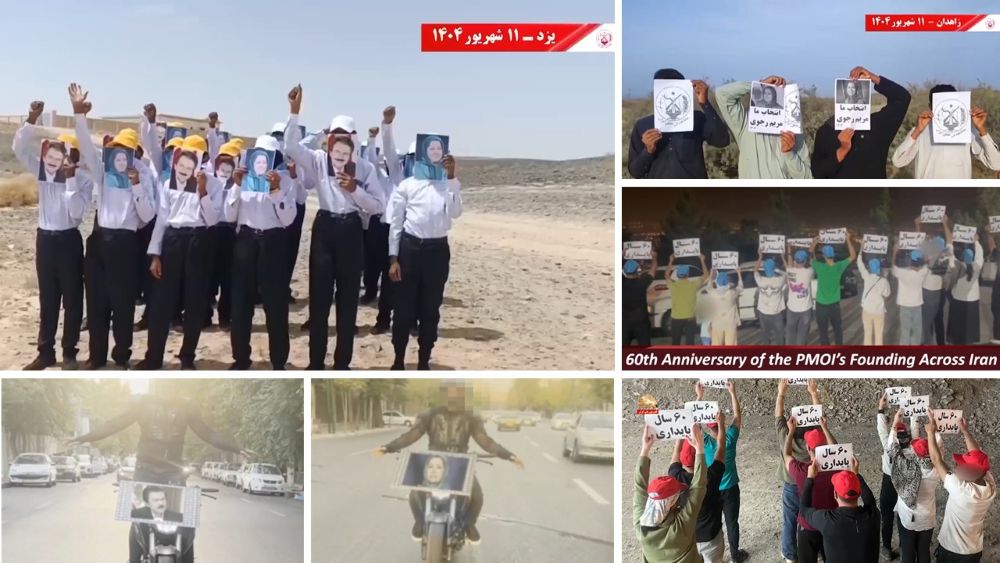
PMOI’s 60th Anniversary: A Legacy of Resilience, A Future Forged by Resistance Units
As the People’s Mojahedin Organization of Iran (PMOI/MEK) marks its 60th founding anniversary in September 2025, it stands as a testament to six decades of relentless struggle against two successive dictatorships. This milestone is not merely a historical commemoration but a vibrant demonstration of an enduring movement that has weathered immense trials and tribulations.
PMOI’s 60th anniversary: A legacy of resilience, a future forged by Resistance Units https://t.co/9pnD4ukdrm
— People's Mojahedin Organization of Iran (PMOI/MEK) (@Mojahedineng) September 4, 2025
Despite decades of brutal suppression by both the tyrannical regimes of the Shah and mullahs, the PMOI has managed to keep the flames of resistance alive inside Iran and across the world. On September 3, 2025, the PMOI’s domestic network, the Resistance Units, launched a nationwide campaign of anti-regime activities. These actions prove that the PMOI is not only alive and thriving but is actively organized and steering Iran toward a free and democratic future through regime change.
Retired Teachers and Literacy Movement Instructors Hold Protests
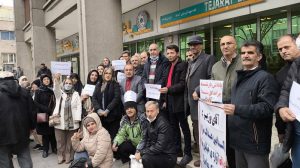
On Tuesday, September 2, 2025, the central headquarters of the mullahs’ Ministry of Education in Tehran witnessed a joint protest by two groups: retired teachers and instructors from the National Literacy Movement (Nehzat-e Savad Amouzi). Women educators played a central role in these protests, making up the majority of participants. Retired teachers—particularly those who left service in 2023—chanted slogans such as “Stop saying there are no funds; we are tired of empty promises,” demanding immediate payment of long-overdue salary adjustments under the ranking plan, arrears that have been stalled for over four years.
Gothenburg: Rally Against Executions in Iran, Marking 84th Week of “No to Execution Tuesdays” Campaign

Gothenburg, Sweden – September 2, 2025: Supporters of the People’s Mojahedin Organization of Iran (PMOI/MEK) gathered in Gothenburg to mark the 49th consecutive week of local participation in the global “No to Execution Tuesdays” campaign. The movement protests the Iranian regime’s escalating wave of executions and systematic repression.
Zurich, Switzerland: Iranians Honor 60th Anniversary of PMOI and Promote ‘Brussels Free Iran Rally’

Zurich, Switzerland – September 1, 2025: Supporters of the People’s Mojahedin Organization of Iran (PMOI/MEK) held an exhibition, urging freedom-loving Iranians to to participate in the upcoming “Free Iran” demonstration in Brussels on September 6, 2025. The events emphasized the importance of uniting voices across Europe to demand justice, human rights, and a democratic future for Iran.
Iran Human Rights Monthly Report – August 2025

August 2025 witnessed a brutal and unprecedented surge in human rights violations by the Iranian regime, escalating its campaign of repression across the country. A staggering 173 executions were carried out, including 8 women, and 2 in public. The month was also marked by a wide-ranging crackdown on supporters and family members of the People’s Mojahedin Organization of Iran (PMOI/MEK), arbitrary arrests, the issuance of new politically motivated death sentences, and the egregious destruction of burial sites for PMOI/MEK victims from the 1980s. Since the beginning of Pezeshkian’s presidency in July 2024, the total number of executions has surpassed 1,670.
Total executions: 173
Public executions: 2, in Kordkuy and Larestan
Women executed: 8, including Nahid Jokar, Mahtab Bayati, Soudabeh Ghasemzadeh, Maliheh Haghi, Mahsa Akbari, Mitra Yasini, and Banoo Moghaddam, along with one unnamed woman in Khorramabad
Executed on “espionage” charges: 2, Roozbeh Vadi and an unnamed individual
Qarchak Prison – The Slaughterhouse of Human Dignity and Forgotten Justice – Part 7

Qarchak Prison in Varamin once again became a stage for women’s resistance. This time, in response to the sudden and secret executions of two political prisoners, Mehdi Hassani and Behrouz Ehsani, women prisoners in Qarchak held a protest gathering to express their anger and opposition to the regime’s machinery of death. This act of defiance, carried out inside one of Iran’s harshest and most insecure prisons, reflects the voices of women who have not surrendered to the gallows but have instead expressed solidarity with other political prisoners through chants, songs, and hunger strikes. On the evening of Saturday, July 27, 2025, women prisoners gathered in the quarantine corridor of Qarchak’s women’s ward to hold a memorial and protest ceremony. The event honored Mehdi Hassani and Behrouz Ehsani, two political prisoners executed at dawn the same day in Qezel Hesar Prison.
Iran’s Fake Charities: Corruption, Money Laundering, and Manufactured Poverty

September 5, coinciding with the anniversary of Mother Teresa’s passing, has been designated by the United Nations as the International Day of Charity. The philosophy of this day is to honor solidarity and the global fight against poverty, serving as a reminder of human dignity and the crucial role of voluntary assistance in charities in improving the lives of the most vulnerable.
In Iran under the rule of the mullahs, however, this day carries an entirely opposite meaning. Institutions operating under the name of charity – such as the Foundation of the Oppressed (Bonyad Mostazafan), Astan Quds Razavi, and the Khomeini Relief Committee – have become centers of corruption, money laundering, and the reproduction of poverty. Poor families and child laborers, who should be the first to benefit from support, are instead trapped in a vicious cycle of dependency and deprivation.
Three Dams in Iran Dried Up, Eight More Near Collapse

With the intensifying water crisis and the Iranian regime’s failure in resource management, official reports indicate a serious decline in reservoir levels behind the dams. Three dams in the country have completely dried up, while eight other important and large dams are on the brink of drying out.
According to data from Iran’s Water Resources Management Company, since the beginning of the current water year (September 22, 2024, to August 30, 2025), the total inflow into the country’s dams has been recorded at 24.19 billion cubic meters, which represents a 42% decrease compared to 41.56 billion cubic meters during the same period last year.
Regime Officials Admit Failure in Iran’s Water and Electricity Management

The Iranian regime continues to blame international sanctions and natural factors such as drought and climate change for the country’s deepening economic and social crises. This narrative is intended to conceal the regime’s own responsibility for decades of mismanagement, corruption, and misplaced budgetary priorities. Yet, the scale of destruction across Iran makes it increasingly difficult to disguise the truth.
On Tuesday, Abbas Aliabadi, the regime’s Minister of Energy, delivered a report in a parliamentary session that inadvertently exposed the extent of failure in managing Iran’s water and electricity sectors. His remarks confirmed that the regime’s prioritization of funding its malign activities has drained resources away from essential public infrastructure.
Why the Iranian Regime Sees War as Safer Than Reform
Despite the heavy blows it suffered during the recent war with Israel, the Iranian regime continues to speak of “resistance” and “readiness for battle.” For the ruling elite, the costs of negotiation and reform appear far greater than those of military confrontation.
As the “snapback” sanctions mechanism looms, Tehran has tried to project an image of “active diplomacy” by participating in the Shanghai Cooperation Organization summit, presenting itself as part of an Eastern bloc against Western threats. Yet inside Iran, political and economic experts warn that pursuing this course without fundamental reforms will only deepen the crisis. In his August 24 speech, the regime’s Supreme Leader Ali Khamenei made clear that the system will stay on its current path.