

THIS PAGE WILL BE UPDATED WITH THE LATEST NEWS
UPDATE: 7:30 AM CET
PMOI Resistance Units Respond to Execution of January Uprising Protesters with 30 Operations Across Iran
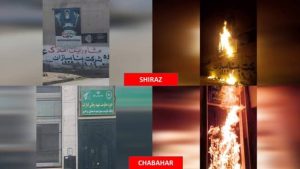
On November 4, 2026, Resistance Units affiliated with the People’s Mojahedin Organization of Iran (PMOI/MEK) carried out 30 operations across Iran in response to the execution of two young political prisoners, Amir Hossein Maleki and Amir Hossein Ebrahimi, who had been arrested during the January 2026 uprising.
The operations targeted institutions affiliated with the regime, bases of the Islamic Revolutionary Guard Corps (IRGC) Basij, and propaganda symbols featuring the regime’s current and former leaders. They took place in numerous cities, including Tehran, Isfahan, Tabriz, Mashhad, Shiraz, Kermanshah, and Zahedan.
The campaign came just one day after the regime executed the two 20-year-old protesters at Dastgerd Prison in Isfahan. While the regime is attempting to preserve its rule through executions and intimidation, the Resistance Units’ nationwide response demonstrated that its campaign of repression has not extinguished organized resistance.
Several operations targeted institutions associated with the regime’s security apparatus and its political and economic structures.
In Tehran, Resistance Units set fire to the local headquarters of the Khomeini Foundation, while in Bandar Abbas, they targeted the local headquarters of the regime-run Bonyad Shahid Foundation.
Dowlatabad Women’s Prison: Overcrowding, Torture and Inhuman Conditions
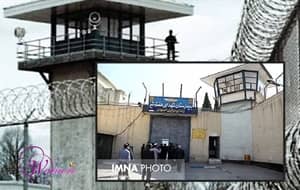
Dowlatabad Women’s Prison in Isfahan is the facility where women are held in this major city. The prison is located on Farzanegan Boulevard in Isfahan, adjacent to the juvenile correction and rehabilitation center. Following the closure of the women’s ward at Dastgerd Prison, a large portion of the province’s female inmates were transferred here. The administration of this facility includes a section controlled by the Revolutionary Guard Corps (IRGC), while a larger portion operates under the oversight of the State Security Force (SSF or FARAJA) and the Guidance Patrol (Morality Police). Reports emerging from the facility point to a critical situation inside the prison.
At least 600 women are imprisoned in Isfahan’s Dowlatabad Prison. The facility consists of nine rooms or wards, with sections allocated to mothers and children, elderly women, drug-related offenders, financial debtors and convicts, a health ward, and political prisoners and protest detainees. The principle of separating crimes is not observed in this prison, and female political prisoners are held alongside offenders of ordinary and violent crimes.
Each room in this ward was originally designed for 24 people, but currently, more than 60 prisoners are crammed into each room. According to reports from inside the prison, the population in one of the rooms has reached 67.
Iran Regime’s Internet Restrictions Threaten Universities, Scientific Progress, and Young People’s Future
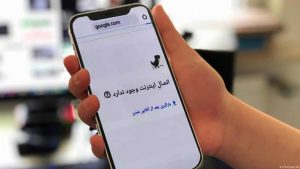
The Iranian regime’s escalating restrictions on internet access are doing far more than limiting people’s ability to communicate or access social media. They are undermining education, obstructing scientific research, and threatening the future of an entire generation of students and academics.
Whenever the regime senses growing public discontent and the possibility of another uprising, it turns to familiar instruments of social control. Restrictions on women’s clothing and tighter control of the internet are among the measures repeatedly used to impose its authority and restrict public freedoms.
Recently, Kayhan, the newspaper affiliated with Supreme Leader Ali Khamenei, again emphasized the need to control cyberspace, invoking Khamenei’s earlier statements. Meanwhile, the regime has been pursuing a policy of effectively restricting internet access through slower connections, higher service costs, and increasingly explicit warnings by officials about possible shutdowns.
The consequences extend well beyond ordinary internet users. Small businesses and independent livelihoods are among the immediate casualties, but university students, researchers, and academic institutions face particularly damaging consequences.
Robert Torricelli: The Claim That Iran Has No Democratic Alternative Is False
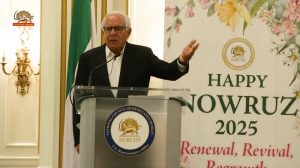
In an interview with Steve Gruber on America’s Voice, Torricelli, a former Democratic senator from New Jersey and longtime supporter and legal adviser to the NCRI, discussed the prospects for political change in Iran, the condition of the regime, and the role of an organized opposition in shaping the country’s future.
Assessing developments since February 28, Torricelli argued that the prolonged U.S. campaign had substantially weakened the regime’s domestic security apparatus and inflicted serious damage on its economy. In his assessment, these developments had created conditions that could facilitate political change.
Pahlavi Supporters Threaten Iranian Opposition Activist with Death in Belgium, Vowing to Revive SAVAK
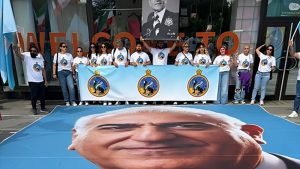
Supporters of Reza Pahlavi threatened to kill Dr. Ali Bagheri, a prominent Iranian opposition activist in Belgium, as Pahlavi visited the country. The threats, posted on X on October 31, invoked the killing of Iranian dissident Masoud Masjoody in Canada and explicitly called for the restoration of SAVAK, the Shah’s notorious secret police.
Bagheri, a senior research engineer at an aeronautical research center and president of the International Coalition for Freedom of Expression in Belgium, is a known supporter of the People’s Mojahedin Organization of Iran (PMOI/MEK). He had publicly opposed Pahlavi’s visit and protested against giving a platform to the son of the former Shah, whom he and other Iranian activists regard as an authoritarian figure seeking to impose a new hereditary rule.
The threats appeared in comments posted under Bagheri’s protest messages on X. One account, operating under the name Kurosh e Bozorg (@Schoenikowski), wrote on October 31: “We will rebuild SAVAK and get each and every single one of you traitors to the Iranian people.”
Iran Regime Faces Growing International Isolation Over Terrorism, Human Rights Abuses, and Foreign Interference
The Iranian regime is facing an expanding wave of international condemnation and diplomatic pressure over its interference in other countries, terrorism, human rights violations, and nuclear activities. The latest development came from Azerbaijan, which declared 14 individuals linked to the regime persona non grata over alleged activities against its national security and efforts to change the country’s government.
The move is particularly significant because it included four members of the Iranian regime’s parliament and Khamenei’s representative at the Kayhan newspaper. Azerbaijan’s decision followed the reported disruption of sabotage plots linked to the Islamic Revolutionary Guard Corps (IRGC).
This development comes amid a broader series of diplomatic confrontations and international statements against Tehran over the past six weeks. These developments span several countries and international institutions, indicating that pressure on the regime extends beyond the region’s ongoing military confrontation.
Iran Regime’s Food Voucher Scheme Excludes Millions as Living Costs Continue to Soar

Iran’s deepening economic crisis is shrinking household food budgets, forcing millions of families to cut back on basic necessities. Despite government promises to ease the pressure through a food voucher scheme known as Kalabarg, the program has failed to provide meaningful relief. Instead, the regime is preparing to exclude millions more people from eligibility while the purchasing power of existing benefits continues to erode.
The crisis comes as the regime’s own media acknowledge persistently high inflation and warn of the threat of hyperinflation. Yet beyond the headline inflation figures, the most immediate consequence is visible in Iranian households: families are increasingly unable to afford basic food items.
President Masoud Pezeshkian’s government has presented the Kalabarg scheme as a means of protecting vulnerable households. However, the gap between official promises and actual implementation reveals the limited reach and declining value of the assistance.
The Kalabarg program was introduced in response to deteriorating economic conditions and the growing difficulty families face in purchasing essential food products.
The scheme was designed to help cover the cost of basic necessities, including milk, cheese, yogurt, eggs, chicken, beef, cooking oil, pasta, rice, sugar, and legumes. Purchases were to be made through large retail chains participating in the program.
Gothenburg Rally Supports 145th Week of “No to Execution Tuesdays” in 66 Prisons Across Iran
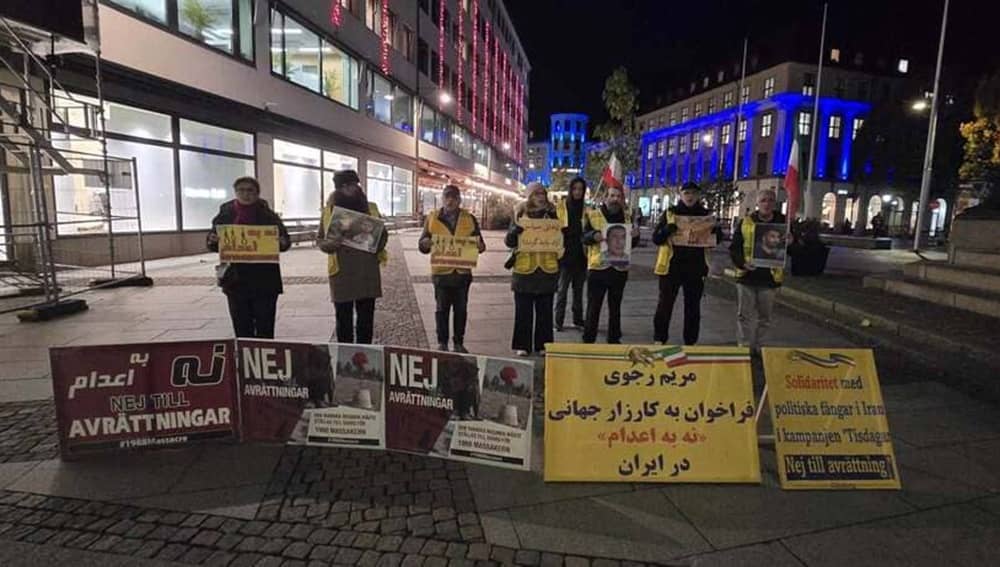
Gothenburg, Sweden — November 3, 2026: Supporters of the People’s Mojahedin Organization of Iran (PMOI/MEK) held a rally in solidarity with the 145th consecutive week of the “No to Execution Tuesdays” campaign, a movement protesting the Iranian regime’s escalating executions and systematic repression. The demonstrators strongly condemned the executions of Amirhossein Maleki and Amirhossein Ebrahimi, two protesters who had participated in the January uprising.
Participants also highlighted the regime’s intensifying crackdown, the rising number of executions, and broader repressive measures. They chanted slogans such as “Down with the executioner regime” and called for the immediate release of all political prisoners.
Freedom-loving Iranians in Gothenburg expressed support for Mrs. Maryam Rajavi, President-elect of the National Council of Resistance of Iran (NCRI), and her call to expand the “No to Executions” campaign globally.

At the Gothenburg gathering held in solidarity with the “No to Execution Tuesdays” campaign, protesters warned that political prisoners in Iran face an increasingly grave risk of execution amid an escalating wave of repression. They expressed deep concern over the growing number of death sentences against political detainees and protesters, arguing that the Iranian authorities are using executions to silence dissent and spread fear across society. Calling for urgent international action, the demonstrators urged the global community to help prevent further executions and protect the lives of prisoners facing death sentences.