

THIS PAGE WILL BE UPDATED WITH THE LATEST NEWS
UPDATE: 8:00 PM CEST
Thousands of Iranian Americans to Rally Outside UN as World Leaders Gather in New York

Thousands of Iranian Americans from across the United States are expected to gather outside the United Nations in New York on September 22 and 23, as world leaders convene for the 81st session of the UN General Assembly.
The demonstrations, planned for Dag Hammarskjöld Plaza, will focus on political executions and repression in Iran, while participants will voice support for democratic change and the National Council of Resistance of Iran (NCRI), led by its President-elect, Maryam Rajavi.
A bipartisan group of American dignitaries, human rights advocates, former political prisoners and Iranian opposition supporters is expected to participate.
Speakers scheduled to address the September 22 gathering include retired Gen. Keith Kellogg, former U.S. Special Presidential Envoy for Ukraine; retired Gen. Wesley Clark, former Supreme Allied Commander Europe; and former U.S. Ambassador Carla Sands.
UPDATE: 7:00 PM CEST
UN Fact-Finding Mission on Iran Focuses on Plight of Civilians

In a report released Monday, the mission concluded that killings by security forces “occurred on a massive scale in all provinces” of Iran, during the Government’s “violent crackdown” on mass protests that stretched from last year into this year.
The mission also reported that at least 221 children – some as young as two years old – were killed and that security forces attacked health care facilities, “beating and arresting wounded protesters and arresting some health care workers, discouraging victims from seeking life-saving care.”
The mission added that tens of thousands of people were subjected to arbitrary detention, where they faced “torture, solitary confinement and denial of legal advice, while families were left without any information about the whereabouts of their loved ones, amid circumstances that raise concerns about enforced disappearances.”
The mission noted the execution of at least 29 men in connection with the protests following summary trials – five of whom were publicly executed – and warned that more than 70 people, including five women and three boys, still face imminent risk of execution.
After a Massacre Iran’s Underground Opposition Is Changing Its Tactics

When Iran doubled the price of gasoline purchased beyond subsidized quotas on Sept. 8, the government appeared ready for an explosion. Police, Basij forces, plainclothes agents and anti-riot units were deployed around fuel stations and streets in Tehran, Mashhad, Shiraz, Karaj, Isfahan, Tabriz and other cities. Internet connections reportedly slowed in some locations. The precautions recalled the nationwide protests triggered by a sudden fuel-price increase in 2019.
But no comparable uprising immediately followed. That absence could be read as resignation. A more plausible explanation is that January’s massacre fundamentally changed the risks and tactics of protest.
On Jan. 8 and 9, security forces fired directly on demonstrators during an uprising that had spread across Iran. Estimates of the dead vary dramatically, reaching into the tens of thousands, because authorities cut communications, concealed bodies, pressured families and blocked independent investigators. The exact toll remains unknown. What is clear is that the repression was designed not only to clear the streets, but to destroy the networks capable of bringing people back into them.
The fuel increase nevertheless produced signs of continuing resistance. Workers, nurses, teachers, retirees and drivers held strikes and gatherings in several cities between Sept. 6 and 9 over unpaid wages, benefits, working conditions and the cost of living. These actions cannot automatically be attributed to the fuel decision, nor to any political organization. Their fragmented and sectoral character, however, illustrates what dissent looks like after a massacre: anger persists, but large centralized crowds have temporarily given way to dispersed actions conducted under an intense security presence.
UPDATE: 2:30 PM CEST
US Offers $15m for Information on IRGC Financial Network

The US has announced a reward of up to $15 million for information about Iran’s Islamic Revolutionary Guard Corps’ financial network.
“The IRGC uses digital asset exchanges to launder money, fund terrorism and retain covert access to international financial systems,” the Rewards for Justice programme said in a post on X.
The IRGC uses digital asset exchanges to launder money, fund terrorism, and retain covert access to international financial systems.
UPDATE: 1:00 PM CEST
Iran is Rapidly Reconstructing Taleghan 2

Vantor Technologies satellite imagery from September 13, 2026, shows that Iran is rapidly moving forward with the reconstruction of the Taleghan 2 facility located at the Parchin military complex. Iran has erected a tarp above the destroyed hardened buried facility, hiding the reconstruction activity that is occurring underneath from satellite view or aerial reconnaissance (see Figure 1). Significant activity can be seen throughout the construction site. Construction vehicles, including dump trucks, bulldozers, concrete pump trucks and concrete mixers, and cranes, are actively working to rebuild the facility (see Figure 2). Repair and rehabilitation work began in June 2026, first with Iran repairing and placing concrete caps over the penetration holes caused by the multiple bunker buster weapons dropped on the facility.[1] Iran has also built a new concrete apron reinforcement on the right side of the facility, the one on the left side that we noted in our July 2026 update now appears complete. This will provide additional blast protection from an aerial attack.
The facility has been attacked twice: first in October 2024, then after having been rebuilt from May 2025 as a hardened buried facility, it was attacked again in early March 2026.[2] The second attack saw the use of multiple bunker buster weapons against the facility, blowing out the internal structure and causing surrounding structures to collapse. During its reconstruction starting in May 2025, the Institute observed the installation of a cylindrical structure, which may have been a high explosive containment vessel. Given the precision of the March 2026 attacks, the high explosive containment vessel was likely destroyed.
UPDATE: 9:30 AM CEST
US Sanctions Iranian Financier’s Crypto Exchange, Says It Processes Hormuz Payments
LONDON Sept 17 (Reuters) – The United States announced sanctions on an Iranian cryptocurrency exchange controlled by sanctioned Iranian financier Babak Zanjani on Thursday, accusing it of processing payments for ships to transit safely through the Strait of Hormuz.
Treasury said BitBank had routed hundreds of millions of dollars to the Islamic Revolutionary Guard Corps and described the exchange as a key component in Iran’s digital assets-based sanctions-evasion infrastructure. The exchange was used to transfer funds paid to Iran’s newly established Hormuz Safe Marine Services Authority, Treasury said in a statement.
Zanjani has long been a key figure in Iran’s sanctions-evasion networks. He was sentenced to death by Iranian authorities in 2016 for embezzlement. His sentence was commuted in 2024. The following year he re-emerged as a backer of Iranian government economic projects.
UPDATE: 7:30 AM CEST
Iran’s Mounting Pressures, Regime Fears, And the Role of Resistance Units
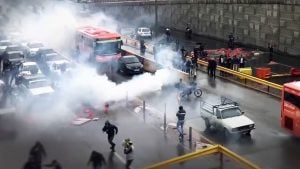
The Iranian regime continues to hold the institutions of state power, but that fact alone does not resolve the deeper question of its domestic stability. Four years after the September 2022 uprising and only months after another nationwide protest wave in January 2026, the authorities continue to treat the prospect of renewed unrest as a serious security concern.
That concern was visible again around the fourth anniversary of the 2022 uprising. On September 15, 2026, amid heightened security measures, PMOI Resistance Units carried out projections, graffiti, poster campaigns, and other public activities in cities including Tehran, Mashhad, Isfahan, Shiraz, Kermanshah, Karaj, Kerman, Hamedan, and Kashan. This is while State Security Forces chief Ahmadreza Radan had spoken of pursuing and arresting PMOI members to create fear in society.
This is a clear indication that while the regime is using violence to suppress protests, the political and social pressures that produced previous uprisings have not disappeared.
The scale of Iran’s economic deterioration helps explain why officials remain sensitive to renewed unrest. In the past months, the rial fell from around one million to more than 2.2 million to the U.S. dollar. In September, official 12-month average inflation stood at 69.9%, unemployment had risen to 9.1%, and an average monthly salary of approximately $125 was far below estimated basic household spending of around $450.
From “Finger on the Trigger” to “No to Executions”: Iran’s Prisons Become Centers of Resistance
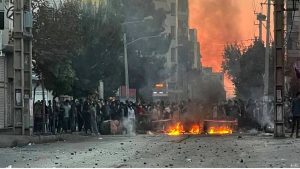
Iran’s regime is escalating its language of threats and intimidation as it seeks to deter renewed unrest. Judiciary Chief Gholam-Hossein Mohseni Ejei has repeatedly defended executions and demanded that those accused of opposing the regime be rapidly identified, prosecuted, and punished. Police chief Ahmad-Reza Radan has likewise warned that security forces are “finger on the trigger” and will not hesitate to arrest opponents. Yet inside Iran’s prisons, where repression is at its most concentrated, another message is emerging: fear has not produced submission. The continuing expansion of the “No to Execution Tuesdays” campaign offers one of the clearest examples. What began as a prison-based protest has developed into a sustained campaign involving prisoners in dozens of facilities across Iran. In its 138th week, the campaign was being maintained in 62 prisons.
The contrast is striking. While officials publicly threaten harsher punishment to deter dissent, prisoners repeatedly use the limited space available to them to challenge executions and express solidarity with political resistance.
Tehran’s Efforts to Circumvent the Economic Blockade
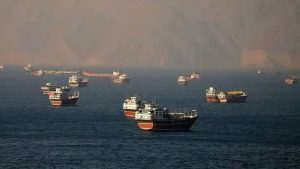
Tehran’s efforts to circumvent the naval blockade through land and air routes have failed. Iran’s regime had promised to shift more trade through land borders, but the plan is not progressing as expected.
Hundreds of Iranian truck drivers are stranded at the Iran-Pakistan border and are unable to deliver their cargo into the neighboring country. They complain of administrative obstacles and rising costs, many of which they say are caused by the actions of the Iranian government. Similar conditions are being seen at the borders with Turkey, Turkmenistan, and Afghanistan, disrupting trade along the few routes that remain available.
The drivers say several tons of apricots have spoiled during these delays. Profitable shipments of iron ore, cement, and liquefied gas have also been stuck at entry points along the borders with Pakistan and Afghanistan.
Wages in Iran Are No Longer Enough to Make Ends Meet

The gap between workers’ wages and living costs in Iran has reached a point where even receiving their full salaries on time no longer covers a family’s food needs. A married worker with one child earns less than 250 million rials (approximately $107), while the minimum cost of living has exceeded 920 million rials (approximately $392), and the prices of food, medicine, housing, and transportation continue to rise rapidly.
As purchasing power collapses, many workers in the mining, railway, oil, and manufacturing sectors do not even receive these inadequate wages on time. Months-long salary delays, unpaid insurance contributions, loss of healthcare coverage, subcontracting arrangements, and the constant threat of layoffs have become a routine part of life for millions of workers and their families.
Gatherings and protests over the past week, from Sirjan and Rasht to Ahvaz and Isfahan, show that the labor crisis is no longer limited to one company, contractor, or province. Workers and retirees have taken to the streets to demand their wages, insurance coverage, and legally mandated benefits, while the government has failed even to fulfill its promise to review wage adjustments in the second half of the year.
CENTCOM: Iran’s Regime Has No Control Over Strait of Hormuz

The United States Central Command (CENTCOM) announced that commercial shipping through the Strait of Hormuz is continuing, and traffic along this strategic route has increased in recent months.
In a statement issued on Wednesday, September 16, CENTCOM said that thousands of commercial vessels and nearly one billion barrels of oil had passed through the Strait of Hormuz in recent months. The US military command emphasized that Iran’s regime has no control over this international waterway and that the Strait of Hormuz remains open to shipping and global trade.
The US Central Command also accused Iran’s regime of attempting, at various times, to create an atmosphere of intimidation and insecurity along this maritime route through actions against civilian ship crews.
These remarks come as Iranian regime officials have repeatedly claimed in recent months that they control and dominate the route used by ships passing through the Strait of Hormuz. Washington, however, has rejected these claims and previously stated that US forces have played a significant role in ensuring the safe passage of hundreds of commercial vessels and the transport of hundreds of millions of barrels of oil through the waterway.
Iran: Escalating Repression of the Arab Minority in 2026
Since the nationwide protests of December 2025- January 2026, Khuzestan Province has witnessed one of the most extensive waves of repression targeting Arab citizens in recent years. The evidence documented in this report indicates that the scope of this repression extends well beyond political activists and has included cultural activists, Sunni citizens, women, adolescents, and individuals engaged in peaceful religious or social activities. The killing of Arab citizens during security operations, widespread arrests, prolonged detention in Ministry of Intelligence facilities, denial of effective access to legal representation, the withholding of information from families regarding the fate and whereabouts of detainees, allegations of torture, collective trials, and the imposition of severe sentences collectively paint a deeply concerning picture of the human rights situation affecting Iran’s Arab minority.
These developments have occurred despite Articles 15 and 19 of the Constitution of the Islamic Republic of Iran, which affirm equality among citizens and recognize the cultural and linguistic rights of ethnic communities. Iran is also bound by Article 27 of the International Covenant on Civil and Political Rights (ICCPR), which guarantees the rights of ethnic and religious minorities to enjoy their culture, practice their religion, and use their language.
Iranian Media Report Growing Disputes Over US Talks, State TV and Hardline Attacks on Senior Officials
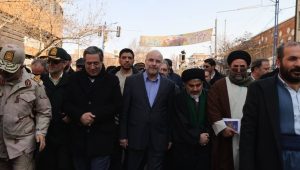
Disputes over negotiations, the management of state television and hardline attacks on senior officials have brought divisions within the Islamic Republic’s political establishment into public view.
Differences among Iran’s ruling factions over how to deal with the United States, the consequences of war and the role of state media have become more public. In recent days, media outlets close to different currents within the Islamic Republic have reported on hardline attacks against the heads of the three branches of government, criticism from conservative media of the government’s negotiating policy, and President Masoud Pezeshkian’s confrontation with the management of state broadcaster IRIB.
These tensions are emerging as Islamic Republic officials stress the need to preserve domestic unity in the face of foreign military and economic pressure. However, material published by Iranian media indicates that disagreements over how to confront the United States and manage the political environment after the war have also spread into state institutions.
Paris Exhibit Spotlighting Iran Executions Urges Accountability for Human Rights Abuses
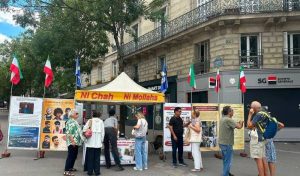
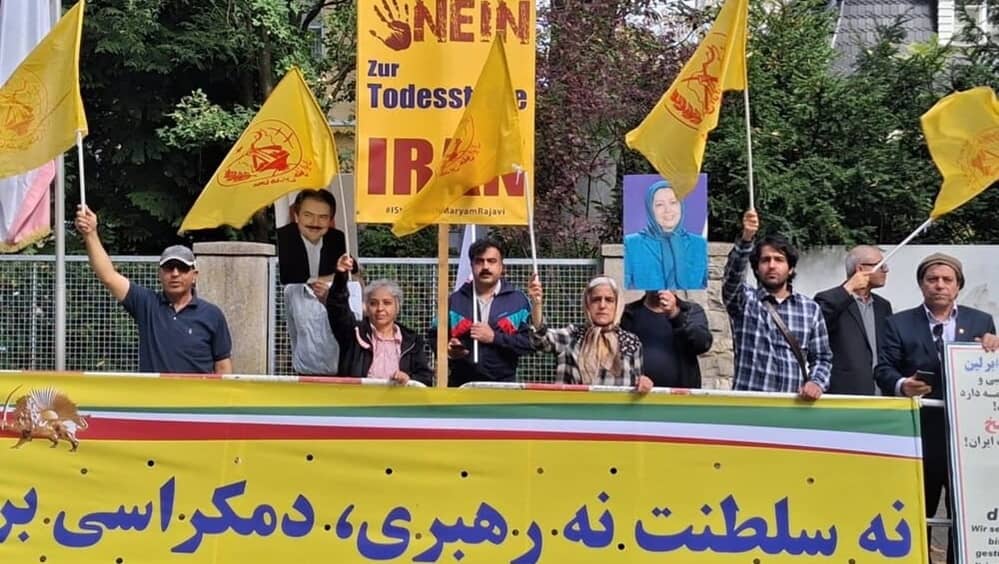
Paris, France – September 16, 2026 – Supporters of the People’s Mojahedin Organization of Iran (PMOI/MEK) held a book table and photo exhibition in Paris to condemn the severe human rights violations in Iran, including death sentences in general and especially the execution of political prisoners and protesters arrested during Iran’s nationwide uprisings.
Organizers said the event reflected the Iranian people’s demand for a democratic republic and their aspirations for peace, freedom, justice, and fundamental rights. They also highlighted the Iranian Resistance’s call for greater international solidarity with the people of Iran.
The organizers urged the French public and the international community to recognize the suffering of Iranians and their rejection of dictatorship in both monarchical and theocratic forms.
Photographs, personal testimonies, and other materials showcased the courage and sacrifices of those who took part in the January 2026 uprising. The exhibition also drew attention to what organizers described as the Iranian regime’s ongoing human rights violations, including executions of political prisoners and the continued imprisonment of protesters.
Gothenburg Rally Supports 138th Week of “No to Execution Tuesdays” in 62 Prisons Across Iran
Gothenburg, Sweden — September 15, 2026: Supporters of the People’s Mojahedin Organization of Iran (PMOI/MEK) held a rally in solidarity with the 138th consecutive week of the “No to Execution Tuesdays” campaign, a movement protesting the Iranian regime’s escalating executions and systematic repression.

Participants also highlighted the regime’s intensifying crackdown, the rising number of executions, and broader repressive measures. They chanted slogans such as “Down with the executioner regime” and called for the immediate release of all political prisoners.
Freedom-loving Iranians in Gothenburg expressed support for Mrs. Maryam Rajavi, President-elect of the National Council of Resistance of Iran (NCRI), and her call to expand the “No to Executions” campaign globally.