

THIS PAGE WILL BE UPDATED WITH THE LATEST NEWS
UPDATE: 6:30 PM CEST
Iran’s IRGC Behind ‘Many’ Cyber Attacks On UAE, Says Security Chief

The UAE’s cyber security chief said the country is continuing to contend with a barrage of daily online threats, with Iran’s Islamic Revolutionary Guard Corps behind many of the attacks.
Dr Mohamed Al Kuwaiti said the Emirates faced 640,000 attacks on Tuesday alone, and that Iran remains “one of the main players” in the high-tech offensive, which is being exacerbated by the rise of artificial intelligence.
The UAE was forced to thwart thousands of missile and drone attacks from Tehran at the height of the conflict and remains on high alert over a dangerous cyber threat.
“There are great footprints that show who is actually behind those attacks,” Dr Al Kuwaiti told CNN’s Becky Anderson on Wednesday. “Yes, Iran is one of the main players; the IRGC is the specific one behind many of those aspects.
“They continue [the attacks] – 640,000 attacks we saw yesterday [Tuesday], for example.”
He said the country was dealing with a lower number of hacking attempts than in the early months of the conflict, but was still being attacked.
Iran Is Bulldozing a Crime Scene — And the UN Is Standing By

There are places whose importance cannot be measured in bricks and concrete. They are witnesses to history — and sometimes witnesses to crimes.
For Iran, Gohardasht Prison is such a place.
On Sept. 13, Iranian authorities began a new phase in the demolition of the notorious prison in Karaj, west of Tehran. State media showed the walls coming down as officials announced that the site would be cleared for residential or commercial development. The head of Iran’s prisons organization said the demolition was proceeding under direct instructions from the head of the judiciary and that all of the prison’s surrounding walls would be destroyed within a month.
UPDATE: 12:30 PM CEST
Türkiye Orders Iran’s Mahan Air to Suspend Flights

Turkish authorities have directed Mahan Air, Iran’s largest carrier, to suspend all flights to Türkiye, according to a person familiar with the matter cited by the Associated Press.
The suspension affects Mahan Air flights between Tehran and Ankara in both directions and is expected to take effect this week, according to Iran’s ISNA news agency. No timeline has been given for when the service could resume.
The Iran-Türkiye air corridor is one of the busiest routes connecting Iran with the outside world, serving passengers, cargo and business traffic between the two countries.
The decision represents a setback for Mahan Air and comes as Iran’s aviation sector continues to operate under international sanctions, with airlines facing aging fleets and limited access to aircraft, spare parts and other aviation equipment.
Robust House Majority Backs Sanctions on Russia and Iran

The House voted Wednesday evening to pass sanctions legislation targeting Russia and Iran, sending the long-delayed package to the Oval Office.
The vote was 262-159 on the bill, which includes a childhood education measure that the Senate had used as a vehicle for the sanctions text. The Senate passed the sanctions package last month with a resounding 86-11 vote.
The GOP conference was solidly behind the bill, with only seven Republicans opposing the measure.
As for Democrats, even as senior members in their ranks — including Minority Leader Hakeem Jeffries of New York — opposed the bill over provisions to authorize new tariffs, fully 58 of them, including many defense hawks, voted “aye.”
President Donald Trump is expected to sign the bill into law. In a July statement of administration policy, the White House indicated the president’s advisers would recommend he do so.
Coast Guard and FBI Boarded 2 Energy Tankers Due To Cyberattacks. How Big Is the Risk?

U.S. Coast Guard personnel and FBI agents boarded two Texas-bound energy tankers last month after cyberattacks struck the vessels while they were traveling toward the United States, according to U.S. officials.
One of the vessels was the VL Prosperity, a 1,093-foot Liberian-flagged crude oil tanker headed to Galveston, Texas. Iranian state media identified the ship shortly after the incident and claimed hackers had gained access to its propulsion, navigation and cargo systems, knocking out communications for 30 hours.
The Coast Guard has not publicly pinned the attacks on Iran. But Rear Adm. Amy Grable, commander of U.S. Coast Guard Cyber Command, told CBS News in a network exclusive interview that investigators did find evidence of a malicious cyber actor.
“They started out by doing an assessment of the information technology and the other systems on board the vessel, and they did find malicious cyber activity,” Grable said.
UPDATE: 7:30 AM CEST
Resistance Units Defy Regime’s Security Alert on Fourth Anniversary of Iran’s 2022 Uprising
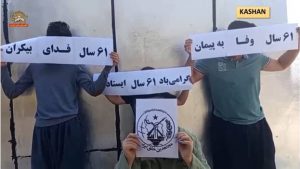
On September 15, 2026, on the eve of the fourth anniversary of Iran’s 2022 uprising, PMOI Resistance Units carried out a series of anti-regime activities across the country despite the heightened alert of the regime’s security apparatus.
The activities came as the regime’s State Security Forces Chief Ahmadreza Radan claimed that authorities were pursuing and arresting PMOI members. Nevertheless, Resistance Units projected messages in public places and organized dozens of other activities, directly challenging the regime’s attempts to impose fear and silence dissent ahead of the anniversary.
Resistance Units conducted image projections in Kerman, Hamedan, and Kashan and carried out 30 additional activities in cities including Tehran, Mashhad, Isfahan, Shiraz, Kermanshah, Saveh, and Karaj.
Their methods included collective displays, graffiti, and the placement of posters and leaflets in public locations. In Shiraz, Resistance Units put up messages at several separate points, while graffiti appeared at multiple locations in Mashhad and Shiraz. Activities were also reported in several areas of Isfahan.
The geographic dispersion and variety of these actions were particularly significant given the security conditions. Every public projection, inscription, or collective display required participants to evade the regime’s surveillance and repressive forces. By carrying out activities in several cities at the same time, the Resistance Units demonstrated that the regime’s threats and security mobilization had failed to suppress organized opposition.
Why Is Iran’s Regime Staging a Massive Basij Exercise as the 2022 Uprising Anniversary Approaches?
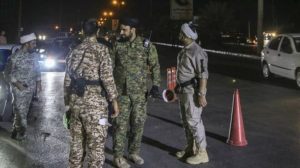
As the anniversary of Iran’s 2022 nationwide uprising approaches, the regime is preparing one of its largest-ever Basij mobilizations in Tehran. The scale and timing of the exercise have drawn attention because they come amid persistent economic hardship, widespread social grievances, and repeated warnings from regime officials about the possibility of renewed unrest.
On September 15, Tehran Province IRGC commander Hassan-Zadeh announced plans for a major Basij exercise in the capital on September 18, with regime-linked reports putting the number of participants at as many as 330,000. Other official statements have cited different figures, reflecting the inconsistent numbers frequently associated with such regime mobilization campaigns.
Whatever the exact number, the timing is significant.
The exercise is being presented by the authorities as a demonstration of readiness and organizational strength. But the concentration of such a large security-related mobilization in the capital, immediately around the anniversary of the 2022 uprising, also provides an indication of how seriously the regime is monitoring the possibility of renewed protests.
Geoffrey Robertson: Iran’s 1988 Massacre Must No Longer Remain a Crime Without Accountability
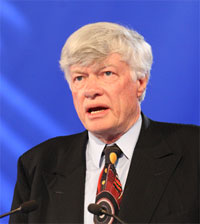
The unresolved legacy of Iran’s 1988 massacre continues to shape the country’s political repression, according to Geoffrey Robertson KC, the international human-rights lawyer who investigated the killings and documented the evidence in a landmark report.
Speaking at the September 4 conference, “Ongoing Crimes Against Humanity: Political Executions in Iran and the Duty to Act,” Robertson recalled his investigation into the mass execution of political prisoners and argued that the absence of accountability helped create the conditions for subsequent atrocities. The conference, organized by Justice for the Victims of the 1988 Massacre in Iran (JVMI), brought together international jurists, former UN officials, human-rights experts, and victims’ representatives to examine both the 1988 massacre and the continuing use of executions against political opponents in Iran.
Robertson, a former founding president of the UN Special Court for Sierra Leone, said he began investigating the 1988 killings in 2009. He interviewed approximately 50 survivors and victims, examined previously published accounts, and reviewed Iranian government newspapers from the period. His findings were subsequently published in a detailed report, The Massacre of Political Prisoners in Iran, 1988, and in his book Mullahs Without Mercy.
Rising Prices of School Supplies and Tuition Fees and Children Dropping Out of School in Iran
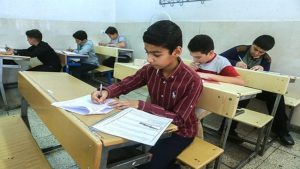
As the new school year approaches, school expenses have become one of the heaviest financial concerns for many Iranian families. A market review shows that purchasing a complete set of supplies for one student—from a schoolbag and shoes to stationery and a school uniform—has reached approximately 200 million rials for families with one child. The burden is considerably heavier for families with two or three schoolchildren.
According to Shargh, a state-run Iranian daily, the prices of stationery, school uniforms, and school fees collected under the name “school assistance” have increased severalfold, creating difficult conditions for families already under economic pressure. “Hamed,” the father of two elementary schoolchildren, says he has paid nearly 120 million rials for his children’s stationery and uniforms, excluding tuition.
Afkham Sabbagh, the director of a charity working to support the education of disadvantaged children, tells Shargh that school dropout is most widespread among the lowest income deciles, and that these children are forced to enter the labor market.
Workers’ Poverty: A Narrative of the Livelihood Crisis in Iran’s Poor Neighborhoods

Workers’ poverty in southern Tehran has reached the point of eliminating meat from household diets, buying chicken scraps, purchasing bread on credit, and seeing shop sales collapse. In southern Tehran’s neighborhoods, poverty is no longer merely an economic indicator. It can be seen in bread lines, empty shops, and increasingly sparse tables. Requests to buy on credit have also increased in southern Tehran’s neighborhoods. However, small business owners can no longer bear this burden. The accounts of vendors and customers offer a clear picture of the economic pressure on daily life.
Data presented by state-run media indicate that inflationary pressure on households is intensifying. According to these figures, year-on-year household inflation reached 89% in August. The consumer price index also increased by 3.4% during the same month.
Annual inflation has also reached 69.9%. The economic pressure has reportedly been greater on lower-income deciles. Annual inflation for the second decile was reported at 78.3%, compared with 76.6% for the tenth decile. In the food and beverages category, year-on-year inflation reached 127.5%. Such figures take on meaning when viewed in the context of people’s daily lives.
Iran: Widespread Executions, Destruction of Evidence of Crimes Against Humanity
Between August 23- September 15, 2026, the Islamic Republic of Iran executed at least 61 prisoners across detention facilities nationwide. This unprecedented surge demonstrates a systematic escalation in the use of executions as a tool of repression, social intimidation, and political cleansing. During this period, one person was executed every 9.6 hours.
Alongside the wave of non-political executions, two new death sentences were issued against individuals arrested during the 22 December 2025- 22 January 2026), heightening concerns about the use of capital punishment to suppress dissent and intimidate the younger generation.
2/4 | Prison Walls to Be Gone Within a Month
Prisons Organization chief Heydar Asiabi said the demolition was ordered by the judiciary chief and that all surrounding walls would be demolished within a month, clearing the site for residential and commercial development. pic.twitter.com/UwnX41jwIM
— SIMAY AZADI TV (@en_simayazadi) September 16, 2026
Simultaneously, the government has undertaken the demolition of Gohardasht Prison and the destruction of mass graves of victims from the 1980s and the 1988 massacre in multiple cities. These actions constitute the erasure of evidence of crimes against humanity, obstructing truth-seeking efforts and, under international law, amount to the continuation of the crime.
This report calls for urgent, concrete, and preventive action by United Nations mechanisms to halt the execution machinery, prevent the destruction of evidence, and ensure accountability for these grave human rights violations.
Paris Exhibition Highlights Iran’s Executions and Calls for Accountability for Human Rights Violations

Paris, France – September 15, 2026 – Supporters of the People’s Mojahedin Organization of Iran (PMOI/MEK) held a book table and photo exhibition in Paris to condemn the execution of political prisoners and the ongoing detention of protesters arrested during Iran’s January 2026 uprising.
The event underscored what organizers described as the Iranian people’s demand for a democratic republic and their aspirations for peace, freedom, justice and fundamental rights. It also highlighted the Iranian Resistance’s call for greater international solidarity with the people of Iran.
Organizers called on the French public and the international community to acknowledge the suffering of the Iranian people and their rejection of all forms of dictatorship, whether monarchical or theocratic.
Through photographs, personal testimonies, and other materials, the exhibition highlighted the courage and sacrifices of those who participated in the January 2026 uprising. It also drew attention to what organizers described as the Iranian regime’s ongoing human rights violations, including the execution of political prisoners and the continued detention of protesters.
PMOI Supporters Continue 200-Day Berlin Sit-In, Call for End to Executions in Iran and Back NCRI Alternative
Berlin, Germany — September 15, 2026: Supporters of the People’s Mojahedin Organization of Iran (PMOI/MEK) have continued their sit-in protest outside the Iranian regime’s embassy in Berlin for the 200th consecutive day.
The protesters are calling for the closure of the embassy, which they describe as a center of espionage and terrorism operated by the Iranian regime in Germany. They are also demanding accountability for the regime’s systematic repression, human rights violations, and continuing executions in Iran.

The sit-in reflects the protesters’ opposition to both the clerical dictatorship and a return to the former monarchical system. Their position is expressed in the slogan, “Down with the oppressor, be it the Shah or the Supreme Leader.” They say Iran’s future should be based on a free and democratic republic rather than another form of dictatorship.
Rally in Bern Highlights Iran’s Use of the Death Penalty and Honors Victims of the 2022 Uprising
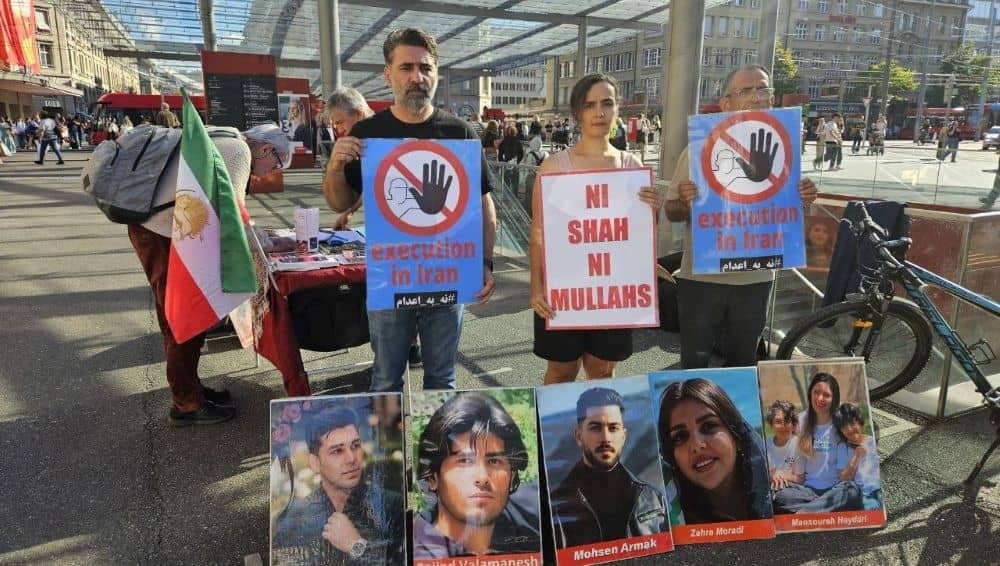
Bern, Switzerland – September 14, 2026 – Supporters of the People’s Mojahedin Organization of Iran (PMOI/MEK) held a rally and photo exhibition in Bern to protest the Iranian regime’s continued use of the death penalty and draw international attention to the plight of political prisoners and protesters facing execution.

The event also expressed solidarity with the “No to Execution” campaign. It marked the fourth anniversary of Iran’s nationwide uprising in September 2022, featuring a photo exhibition commemorating protesters who lost their lives during the uprising. The exhibition paid tribute to those who gave their lives in the struggle for freedom and sought to keep their memory and aspirations alive.