

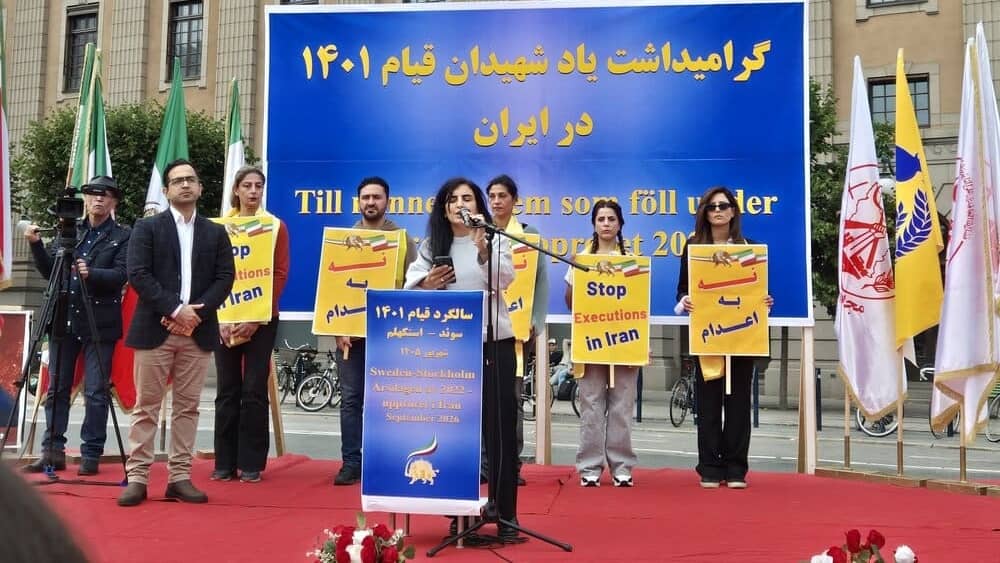
THIS PAGE WILL BE UPDATED WITH THE LATEST NEWS
UPDATE: 4:00 PM CEST
Sweden Expels Iran Embassy Employee Over Anti-Jewish Threats

“We know that Iran, over a long period of time, has conducted activities that threaten security in and against Sweden, targeting both individuals who oppose the Iranian regime and various Jewish and Israeli interests in our country,” Justice Minister Gunnar Strommer said in a statement to AFP.
“This has, among other things, been done by making use of criminal networks.”
The Iranian embassy did not immediately respond to AFP’s request for a comment.
The Swedish Security Service (Sapo) has previously accused Iran of recruiting criminal gang members to commit “acts of violence” against Israeli and other interests in Sweden — a claim Iran has denied.
Iran: Architects Of Crimes Against Humanity to Suppress Protests Must Face International Justice to Deter Further Massacres

In a landmark new report marking the fourth anniversary of the start of the Woman Life Freedom uprising, Amnesty International warns that those responsible for crimes against humanity committed to brutally crush nationwide protests in 2022 continue to control Iran’s deadly state machinery of repression today.
The report, Architects of Atrocities: State Machinery Orchestrating Crimes Against Humanity in Iran’s 2022 Woman Life Freedom Uprising –more than 1,000 pages long – details how Iranian authorities committed the crimes against humanity of murder, torture, enforced disappearance, imprisonment, rape and persecution on political, gender, ethnic and religious grounds in order to crush the uprising. It also documents deadly protest repression operations and command structures, identifying 87 officials who should be criminally investigated for crimes against humanity.
Amnesty International is calling for an international criminal justice mechanism to be established urgently by the UN General Assembly to ensure Iranian authorities responsible for crimes against humanity are held to account and to deter further atrocities such as the large-scale protest massacres committed on 8-9 January 2026.
Georgia To Suspend US-Sanctioned Iranian Airline Flights from September 21, Affecting Tbilisi and Batumi Routes

Tbilisi, September 16, 2026: Iran’s Ambassador to Georgia Ali Mojani said Tehran reserved the right to make its own choices after Tbilisi announced that it would comply with US sanctions on Iranian airlines, Iranian media reported on September 14. The move will shut down one of the few remaining direct air connections between Iran and Georgia, with the route currently accounting for about 10 round trips a week to Tbilisi and Batumi. It could also affect Iranian leisure travel to Georgia, which has emerged as a visa-free, short-haul destination for Iranian travellers.
The decision comes as Tbilisi faces scrutiny in Washington over its ties with Moscow, Beijing and Tehran, including the handling of Russian crude at the Kulevi terminal. Compliance with the airline sanctions gives the Georgian government an opportunity to demonstrate adherence to US measures at a comparatively limited cost.
Trump Has a Third Option on Iran: Stand with the Iranian People

For decades, I have worked with people struggling for human rights and freedom under authoritarian governments around the world. During my years as president of Freedom House and throughout my subsequent work on democracy and human rights, I learned an enduring lesson: Dictatorships depend not only on repression at home, but also on the assumption that the outside world will eventually look away.
I have also learned that those truly struggling against such regimes rarely ask outsiders to fight their battles for them. More often, they ask to be heard, to have their rights recognized, and to know that democratic nations will not legitimize their oppressors while ignoring those risking their lives for freedom.
Nongovernmental organizations have an indispensable role in shaping policy, not only by providing lawmakers with expert analysis, but by transmitting the voices and experiences of people living under repression. At their best, NGOs create a bridge between those confronting dictatorship and policymakers who have the power to hold their persecutors accountable.
Scoop: U.S. Attacked Iranian Boats Trying to Seize Navy Drone

The U.S. military destroyed two Iranian small boats Monday after the Islamic Revolutionary Guard Corps tried to steal a Navy drone patrolling the Strait of Hormuz, U.S. officials told Axios.
Why it matters: The unusual incident shows how efforts to restore normal shipping through the Strait of Hormuz continues direct confrontation with Iran.
- The U.S. military initially didn’t disclose the strike, and Iranian media presented it as a drone strike on “fishing boats.”
Driving the news: According to Iranian media, two fishing boats were struck Monday off the coast of the port city of Kargan and near Larak Island in Hormozgan province.
- Ahmad Nafisi, the province’s deputy governor for security affairs, attributed the strike to the U.S. military.
- Nafisi said an unspecified number of fishermen were missing and that search-and-rescue operations were underway, according to Iran’s semi-official Mehr News Agency.
UPDATE: 7:00 AM CEST
Iran’s Regime Demolishes Gohardasht Prison in New Attempt to Erase Evidence of The 1988 Massacre
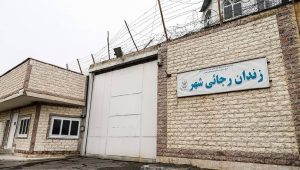
On September 13, 2026, Iranian state media broadcast the demolition of Gohardasht Prison in Karaj in the presence of Heydar Asiabi, head of the Prisons Organization. Asiabi said the work had begun on orders from the judiciary chief and that the prison walls would be demolished within less than a month to prepare the site for residential or commercial development.
Gohardasht, however, was one of the regime’s main centers for the torture of political prisoners in the 1980s and a principal execution site during the 1988 massacre. After Evin, the highest number of prisoners in Tehran were hanged there. The demolition therefore marks an escalation: after years of destroying graves and burial grounds, the regime is now eliminating one of the massacre’s best-documented crime scenes.
The destruction of Gohardasht follows a pattern documented across Iran. In August 2025, Plot 41 of Tehran’s Behesht-e Zahra cemetery, containing the graves of thousands of PMOI members executed in 1981, was leveled with heavy machinery. Tehran officials later acknowledged that the area had been turned into a parking lot.
Iran’s Rial Crisis Deepens as Dollar Surges Toward 240,000 Tomans

The Iranian rial is undergoing another sharp and destabilizing decline, with the U.S. dollar surging from around 198,000 tomans to nearly 240,000 tomans within two days. The speed of the increase has intensified concerns among households, businesses, and economic actors already struggling with inflation and declining purchasing power.
The latest plunge is not simply a short-term fluctuation in the foreign-exchange market. It reflects deeper weaknesses in Iran’s economy, including the deterioration of its principal source of foreign-currency income, restrictions on international financial transactions, and structural corruption and mismanagement.
Iran’s economy remains heavily dependent on oil and petroleum-product exports for its foreign-currency earnings. Any major disruption to this flow immediately affects the regime’s ability to supply the foreign-exchange market.
Recent reports indicate that the average volume of Iranian crude being loaded onto tankers has fallen dramatically. Between January and April, the figure was reportedly around 1.8 million barrels per day. More recent estimates put the volume at only 200,000 to 250,000 barrels per day—an estimated decline of roughly 85 percent.
Iran’s Drug Crisis Deepens as Prices Soar and Shortages Persist

Iran’s healthcare crisis is increasingly reaching patients directly, with medicine shortages, soaring prices, and mounting insurance debts making treatment less accessible across the country.
Health Minister Mohammad Reza Zafarghandi said on September 14 that 32 types of medicine are currently in short supply, including both imported drugs and medicines for which domestic alternatives exist. He said the shortage had reached 63 items before the war, rose to 43 during the war, and has now fallen to 32.
But the decline in the number of officially reported shortages has done little to ease pressure on patients. Reports from across Iran describe people struggling to find prescribed medicines and being forced to search multiple pharmacies to complete their treatment.
Zafarghandi attributed part of the problem to disruptions in transportation. When maritime imports are unavailable, he said, shipments have to be transported by air through several stages before reaching Iran by land. According to the health minister, the cost of this process has risen to 10 times its normal level.
The pharmaceutical industry, meanwhile, is confronting a much broader cost crisis.
Iran Regime Calls Protesters ‘Enemies’ as Economic and Social Pressure Mounts
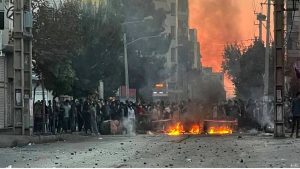
Iran’s regime is once again escalating its threats against protesters, with senior security officials warning that anyone who takes part in unrest will be treated as an enemy.
The latest warning came from Ahmad-Reza Radan, the regime’s police chief, who declared that the country was in a “war situation” and warned that anyone allegedly seeking to create insecurity would be confronted as an enemy. He emphasized that the security forces were fully prepared to respond.
Radan also claimed that more than 6,000 people had been arrested as “rioters” and referred to alleged arrests of members of the People’s Mojahedin Organization of Iran (PMOI/MEK).
Behind the regime’s increasingly aggressive rhetoric, however, lies a broader question: Why does the ruling establishment feel compelled to portray protesters as enemies in the first place?
Iran’s Regime at an Impasse Over Strait of Hormuz; Regional Meeting Postponed

A joint meeting between Iran’s regime and the Gulf states on the Strait of Hormuz, which was scheduled to be held in Oman on Monday, was postponed. The development is another sign of growing regional disagreements with Iran’s regime and Tehran’s failure to advance its plans regarding this vital waterway.
Oman’s Foreign Minister Badr Albusaidi announced that the meeting had been postponed to another date with the aim of reaching “consensus.” Iranian regime officials also confirmed the news. The decision was announced just one day after Bahrain officially withdrew from the proposed meeting. Manama stressed that it was not opposed to dialogue but had already conveyed its position to Oman through official channels.
Iran’s regime has tried to portray the issue as being limited solely to the creation of “temporary and safe routes” for vessel traffic. At the same time, regime officials have said that this understanding would not mean the full reopening of the Strait of Hormuz or the establishment of lasting security there.
Calls to Remove Iran’s President Masoud Pezeshkian Expose Divisions Inside the Ruling Establishment

A proposal by a hardline lawmaker to strip Masoud Pezeshkian of his powers was opposed by a majority of lawmakers and Parliament Speaker Mohammad Bagher Ghalibaf; at the same time, conservative and reformist figures say the move contradicts Mojtaba Khamenei’s directive to preserve unity.
The renewed push in parliament to declare Masoud Pezeshkian politically unfit has exposed a dispute at the highest levels of the Islamic Republic: part of the hardline faction wants to remove or restrict the president, while other forces within the establishment say such a move directly conflicts with Mojtaba Khamenei’s stated policy of preserving cohesion under wartime conditions. The proposal, raised during a meeting between lawmakers and Mohammad Bagher Ghalibaf, was opposed by the speaker and a majority of those present.
According to KhabarOnline, Hamid Rasaei raised the issue of Pezeshkian’s political incompetence during the lawmakers’ meeting with Ghalibaf and proposed that the president’s powers be taken away and transferred to the first vice president. Rouhollah Lak-Aliabadi, a member of parliament’s Independents Faction, said Rasaei had argued that Pezeshkian “does not have the necessary competence” and called for his powers to be transferred. According to him, most lawmakers and Ghalibaf opposed the proposal, and the parliament speaker emphasized the need to preserve unity.
Iranian Resistance Supporters Rally in Vienna During IAEA Board Meeting
As the Board of Governors of the International Atomic Energy Agency (IAEA) convened in Vienna, freedom-loving Iranians and supporters of the Iranian Resistance held a protest rally, bringing the Iranian people’s call for the overthrow of the theocratic dictatorship and the establishment of a non-nuclear Iran to the attention of the international community.

The rally by supporters of the Iranian Resistance was held in Vienna on Tuesday, September 8, alongside the meeting of the IAEA Board of Governors.
Join the New York Rally: Stand for a Free and Democratic Iran
NEW YORK — Thousands of Iranian Americans and supporters of a Free Iran are expected to gather in New York on September 22 and 23, 2026. The rallies will take place at Dag Hammarskjöld Plaza, across from the United Nations.
Raise your voice for the people of Iran and demand freedom, justice, and peace. Join us in NY as we rally against this tyrannical Iranian regime.
📍Dag Hammarskjold Plaza – 2nd Ave & 47th St, NYC pic.twitter.com/f0H7BcTJCG
— OIAC: Organization of Iranian American Communities (@OrgIAC) September 14, 2026
The Organization of Iranian American Communities (OIAC) is organizing the rallies. The group is calling on Iranian Americans and human rights supporters across the United States to join the gatherings in New York.
The rallies will call for an end to executions and repression in Iran and express support for the Iranian people’s struggle for freedom, human rights, and the establishment of a free, democratic, and secular republic.