

THIS PAGE WILL BE UPDATED WITH THE LATEST NEWS
UPDATE: 8:00 PM CEST
London Penthouses Linked to Ayatollah Up for Sale

Two London flats “owned” by Iran’s supreme leader and worth almost £36m have been put on the market. The luxury penthouses are registered to Ali Ansari, an Iranian businessman described as a “key financier” for Mojtaba Khamenei. Mr Ansari is sanctioned by the UK and US for allegedly bankrolling Iran’s Islamic Revolutionary Guard Corps (IRGC).
The businessman, who lives in Dubai, was banned from travelling to Britain and his assets were frozen.
According to Land Registry documents seen by The Telegraph, Mr Ansari bought the properties, near the official residence of the Prince and Princess of Wales, for nearly £36m in 2014 and 2016.
The Government has granted permission for the flats to be put on the market after he defaulted on the mortgages, The Sunday Times reported.
UPDATE: 10:00 AM CEST
Condemns Iran’s Destabilizing Actions in the Middle East

Today, the Honourable Anita Anand, Minister of Foreign Affairs and the Honourable François-Philippe Champagne, Minister of Finance and National Revenue, issued this statement:
“Canada condemns and calls on Iran to immediately end its destabilizing activities in the Middle East. Iran’s actions, including its continued threats to vessels seeking to transit the Strait of Hormuz, its pursuit of illicit nuclear activities, and its support for regional proxy groups, continue to undermine global peace and security.
“Canada is working closely with partners, including within the G7, to maintain significant pressure on Iran.
“This includes support for efforts led by the United States, as well as France and the United Kingdom, to reopen the Strait of Hormuz, and continued sanctions on Iran, such as those announced under U.S.-led Operation Economic Outcast. Canada continues to support effort aimed at disrupting Iran’s ability to finance terrorist activities.
UPDATE: 8:30 AM CEST
Mahnaz Maimanat Elected Secretary-General of the PMOI At a Major Gathering Marking the Start of the Organization’s 62nd Year
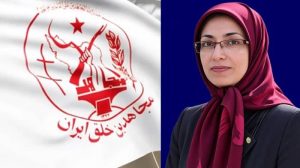
At the start of the sixty-second year of the founding of the People’s Mojahedin Organization of Iran (PMOI/MEK), the Organization’s new Secretary General was elected in three sequential rounds of voting in seven countries.
In its large gathering on September 6, 2026, held simultaneously in France, Germany, the United Kingdom, Sweden, Switzerland, the Netherlands, and Albania, the PMOI elected Ms. Mahnaz Maimanat as the Organization’s new Secretary General. The position is a two-year term and can be renewed by the PMOI’s Central Council. The Secretary General is elected in three rounds. In the first round, members of the Central Council and in the second round, officials and cadres from various sections engaged in deliberations. The voting is carried out by secret ballot. In the third and final round, all available members vote by raising their hands.
The large gathering to elect the new Secretary General was convened by Ms. Zohreh Akhyani, the Chair of the PMOI’s Central Council. In the first round, Ms. Mahnaz Maimanat, Badri Pourtabbakh, and Narges Azdanlou received 56%, 24%, and 20% of the vote respectively.
Born in 1959 in Tehran, Ms. Maimanat became acquainted with the PMOI as a university student. She took part in demonstrations and the uprising against the Shah’s dictatorship and became a member of the PMOI after the victory of the anti-monarchical revolution. She continued her studies at Tehran University’s School of Agriculture until universities were shut down during Khomeini’s so-called Cultural Revolution.
Iran’s Cost-of-Living Crisis: Families Forced to Choose Between Food, Housing, Healthcare and Education

Iran’s economic crisis has reached a point where millions of families are no longer struggling simply with higher prices. They are being forced to choose which basic necessities they can afford and which they must sacrifice.
Rising food prices, soaring rents, and the growing costs of healthcare and education have combined to push the country’s cost-of-living crisis into a new and more dangerous phase. For many families, paying for housing means cutting food consumption; paying medical expenses means postponing education costs; and keeping children in school can require sending them into the streets to work.
A recent report by Iran’s ILNA news agency on the lives of women street vendors in southern Tehran offers a stark illustration of this reality. One woman in Darvazeh Ghar said her monthly rent had risen from 100 million to 200 million rials, while her family had gone six months without eating meat. Another woman said she and her husband worked until 11 p.m., yet their landlord had increased the rent on their small home from 150 million to 250 million rials. Another family had been forced to send its children onto the streets to help earn money for rent.
These are not affluent neighborhoods. Darvazeh Ghar and the Shush area are among Tehran’s lower-income districts. When even these traditionally cheaper areas become unaffordable, it demonstrates how far the housing crisis has penetrated Iran’s poorest communities.
Iran’s Currency Crisis Deepens as Dollar Surge Erodes Purchasing Power and Paralyzes Markets
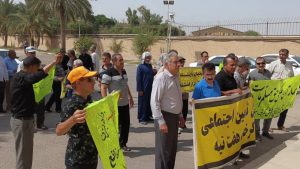
The Iranian rial’s accelerating collapse is driving up the cost of imports, production, and food while weakening demand and pushing businesses into economic paralysis.
The Iranian regime’s currency crisis is entering another dangerous phase as the value of the rial continues to collapse and the U.S. dollar climbs to new records. The rapid depreciation of the national currency is no longer merely a problem for currency traders or importers. It is increasingly becoming one of the main engines of inflation, directly affecting household purchasing power, production, employment, and the overall functioning of Iran’s economy.
The dollar has moved beyond the 220,000-toman threshold, fluctuating sharply within a matter of hours. At one point, it reached approximately 228,000 tomans, illustrating the speed at which the currency crisis is unfolding.
But the significance of these figures goes beyond the exchange rate itself.
According to economic analysis presented by Dr. Mohammad-Hossein Tsouji, professor of electronic engineering, a member of the New York Academy of Sciences and a member of the National Council of Resistance of Iran, the continuing rise of the dollar is effectively a measure of the collapse in the value of Iran’s national currency.
Iran’s Education Crisis: When a Notebook and School Uniform Become Unaffordable Luxuries

For children in Iran, the beginning of the school year should be a time of excitement—the smell of new books, the anticipation of meeting classmates, and the simple joy of wearing a new school uniform. Under the rule of the Iranian regime, however, even these basic experiences are increasingly becoming unattainable luxuries.
As September approaches, families across Iran are confronting a harsh reality: the cost of notebooks, pens, colored pencils, uniforms, backpacks, and other basic school supplies has risen beyond the reach of many households. For children from impoverished families, returning to school is no longer simply an educational milestone. It can become a painful reminder of deprivation and inequality.
The crisis extends far beyond the price of school supplies. It reflects a broader collapse of Iran’s education system, where poverty, inadequate infrastructure, unequal access to quality education, and the growing number of children who are unable to attend school are placing the future of an entire generation at risk.
Iran Faces Gasoline Shortfall as Naval Blockade Limits Imports

TEHRAN — Iran’s gasoline supply crisis has intensified; domestic consumption has significantly outpaced production, while the U.S. naval blockade has made it more difficult to make up the shortfall through imports, according to Iranian officials and recent government data.
The pressure is mounting as clashes around the Persian Gulf have intensified once again. U.S. forces targeted three Iranian oil tankers on September 5, after Washington said Iranian forces had fired ballistic missiles at two U.S. Navy vessels. Iran said it subsequently targeted tankers traveling along routes Tehran considers “unauthorized.”
The latest confrontation has added to a fuel problem that Iranian officials acknowledge existed before the most recent escalation.
Data published by Iran’s state-run IRNA news agency, citing the Oil Ministry and the National Iranian Oil Products Distribution Company, show that average gasoline consumption exceeded 148 million liters per day during the first eight days of Shahrivar, reaching as high as 154.4 million liters on some days.
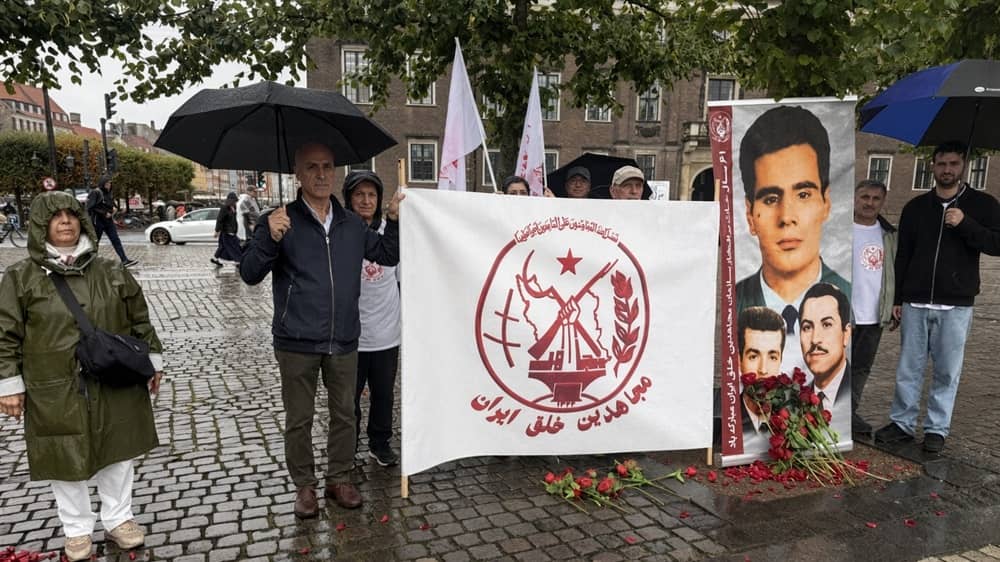
MEK Supporters Rally in Copenhagen to Mark the 61st Anniversary of the PMOI’s Founding
Copenhagen, Denmark – September 4, 2026: Supporters of the People’s Mojahedin Organization of Iran (PMOI/MEK) gathered in Copenhagen to mark the 61st anniversary of the PMOI’s founding.
Alongside commemorating the anniversary, they renewed their pledge to honor the memory of those who have sacrificed their lives in the struggle for freedom—from the organization’s three founders to more than 100,000 PMOI members and supporters killed under the clerical dictatorship, as well as those who have lost their lives in Iran’s nationwide uprisings.

They pledged to continue their struggle in support of the PMOI until freedom, democracy, and justice are achieved and a democratic republic is established in Iran, with particular emphasis on supporting the PMOI’s Resistance Units inside the country and the courageous political prisoners who continue to stand against the regime from within its prisons and voice their support for the PMOI and its Resistance Units.