

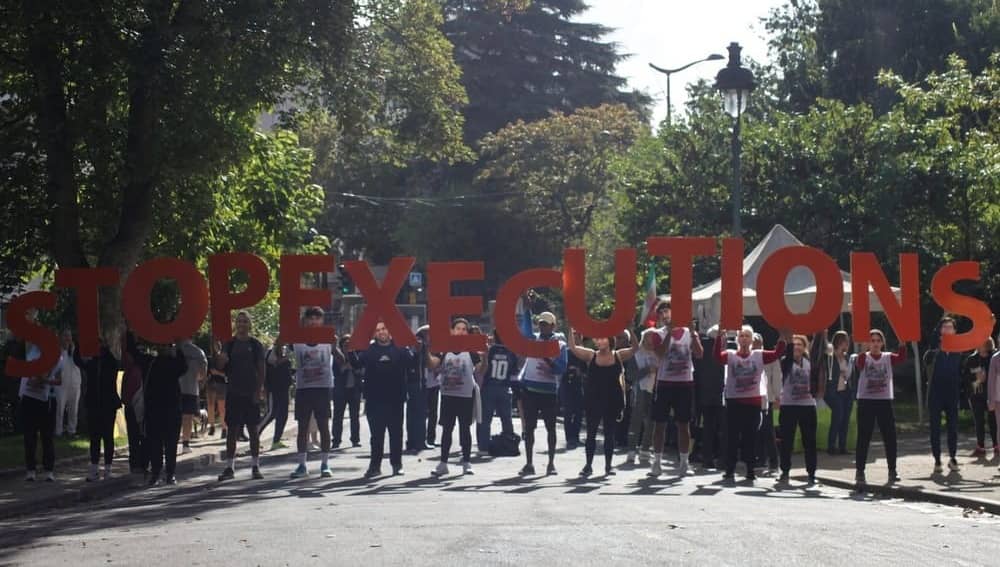
THIS PAGE WILL BE UPDATED WITH THE LATEST NEWS
UPDATE: 9:30 AM CET
PMOI Resistance Units in Zahedan Defy Executions and Reject Both Religious and Monarchical Dictatorship

On November 6, 2026, Resistance Units affiliated with the People’s Mojahedin Organization of Iran (PMOI/MEK) resumed their weekly anti-regime activities in Zahedan, southeastern Iran, displaying placards in public locations to challenge the regime’s escalating campaign of executions and reaffirm their rejection of all forms of dictatorship.
The placards carried messages of resistance against repression, opposition to both the ruling theocracy and the former monarchy, and support for a democratic republic established through the struggle of the Iranian people. One of the slogans captured the central message of the campaign: “From Zahedan to Tehran, down with the oppressor, be it the shah or the supreme leader.”
The activities emphasized that neither executions nor political maneuvering can extinguish the Iranian people’s aspirations for freedom and democratic change.
A central theme of the Resistance Units’ activities was the rejection of executions as a means of suppressing dissent. Against the backdrop of the regime’s growing use of capital punishment, the Resistance Units emphasized that repression would not succeed in silencing the opposition.
Women Nurses in Iran Face Intimidation, Disciplinary Cases and Wage Cuts After Workplace Protests
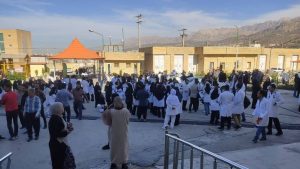
Women nurses in Iran, who make up the majority of the country’s nursing workforce, have faced disciplinary cases, intimidation, forced pledges and reductions in income after pursuing workplace demands and labor rights. A recent case at Fayazbakhsh Hospital in Tehran reported by ILNA news agency on November 4, 2026, highlights the growing pressure on nurses who seek improved working conditions and fair compensation.
Hospitals and medical centers affiliated with the Social Security Organization have long struggled with staffing shortages, overcrowding and heavy workloads. Women nurses bear much of this burden, often working long shifts and mandatory overtime while receiving wages and benefits that fail to reflect their workload.
Nurses in these facilities have repeatedly protested low pay, delays in bonus payments, the incomplete implementation of nursing service tariff laws and disparities between their employment classifications and those of healthcare workers employed by the Ministry of Health.
Nurses at Fayazbakhsh Hospital spent more than a year pursuing their demands through written petitions, negotiations and elected representatives. Despite these efforts, their grievances remained unresolved and officials failed to fulfill promises made to the nursing staff.
Frankfurt City Council Members Across Party Lines Condemn Award to Reza Pahlavi
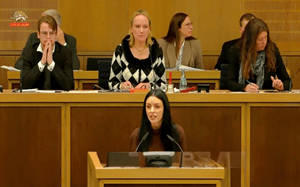
Members of Frankfurt’s City Council from four different political parties have publicly challenged the decision to award Reza Pahlavi the Friedrich Naumann Foundation’s Freedom Prize, arguing that honoring the son of Iran’s last Shah risks legitimizing hereditary rule and disregarding the crimes committed under the former monarchy.
During the council’s November 5, 2026, session, representatives of the Social Democratic Party (SPD), The Left (Die Linke), Alliance 90/The Greens, and Volt voiced serious objections to Pahlavi receiving an award supposedly on behalf of the Iranian people. Their interventions highlighted the Shah’s record of political persecution, imprisonment, torture, and executions, as well as Pahlavi’s failure to clearly distance himself from his father’s dictatorship.
The speakers also challenged the assumption that an unelected individual can claim to represent Iran’s diverse population without a democratic mandate.
Sarya Atac of the Social Democratic Party (SPD) rejected the idea that Reza Pahlavi could legitimately accept the award on behalf of Iran’s population.
Sarya Atac of the Social Democratic Party (SPD) rejected the idea that Reza Pahlavi could legitimately accept the award on behalf of Iran’s population.

Sanaei, who is active in the Society of Germans of Iranian Origin and works with the United Nations Human Rights Council, argued that Reza Pahlavi is not entitled to receive a prize on behalf of an entire population whose political aspirations and historical experiences are far from uniform.
She described how her father’s family suffered from poverty and corruption during the Shah’s rule. She also maintains contact with people who were imprisoned for distributing leaflets or expressing criticism of the monarchy. According to Sanaei, some of these former prisoners still bear physical scars from the torture they endured.
Her opposition is rooted in these experiences and in the absence of a clear political break by Reza Pahlavi with his father’s record. She questions how someone who has not adequately distanced himself from the former monarchy’s repression can be presented as a representative of freedom and democracy.
A University Voice from Inside Iran
The following report was written by Kaveh, a student at the University of Tehran and a member of the “Republican Student Alliances” in Iran. In this statement, he outlines the growing student movement, the severe repression, economic hardships, and the strong rejection of both the current clerical dictatorship and any return to monarchical rule. We are publishing the full, unedited text of his letter below: I am a republican student, like thousands of other students currently studying at universities across Iran. But we no longer think only about our studies, grades, and degrees. We are a group of republican students who have formed republican student coalitions over the past year, and these coalitions are growing every day. Our position against every form of dictatorship is absolutely clear, firm, and non-negotiable: no Shah’s dictatorship, no mullahs’ dictatorship, and no other system that promotes personality cults and the worship of an individual. We do not want our country to fall into the hands of any form of tyranny again, whether a dictatorship dressed in the robes of monarchy or one cloaked in religion. It makes no difference to us what name a dictator bears or what clothes they wear. The fundamental principle is that power must not be concentrated in the hands of one individual or a particular group.
Freedom Award for the Son of Iran’s Former Dictator: A Betrayal of History and Democratic Ideals
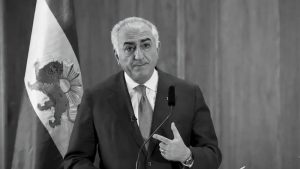
Reza Pahlavi, son of Iran’s former dictator, received the Friedrich Naumann Foundation’s “Freedom Award” in Frankfurt on Saturday, November 7.
Awarding a prize to a dictator’s son is an issue that has recently prompted German and international media to consider a question: Can awarding a prize to the son of a criminal dictator absolve one of responsibility when he has not clearly condemned his father’s crimes? Where is the boundary between individual responsibility, historical ethics, and the defense of democratic values?
Undoubtedly, a German foundation’s decision to award the so-called Freedom Award to the son of Iran’s former shah and dictator cannot be considered unrelated to fascist tendencies. This action is an affront to the historical ideals of freedom and anti-fascism.
Adolf Hitler had no known and confirmed children. Therefore, the idea of “an award for Hitler’s son” is a historical and ethical hypothetical, not an actual event. Nevertheless, this hypothetical can serve as a serious test of the ethical standards, historical memory, and sincerity of those who claim to uphold democracy.
US Sanctions Iranian-Linked Exchange Offices and Financial Services Companies in Canada

The United States has sanctioned eight exchange offices and financial services companies in Canada for allegedly facilitating financial and cryptocurrency transactions linked to Iran’s regime and the Islamic Revolutionary Guard Corps (IRGC).
The US Treasury Department announced sanctions against eight exchange offices and financial services companies operating in Canada, accusing them of facilitating financial transactions linked to Iran’s regime. The measure, announced on Friday, November 6, targets a network of companies operating in Toronto, Vancouver, Montreal, and surrounding areas.
The US Treasury Department’s Office of Foreign Assets Control (OFAC) announced that eight exchange offices had been added to its sanctions list: Amin Exchange in Vancouver, Farah, C, Cryptoyal, Darvish, Million, Nia, and Amin in Toronto. Some of these businesses have operated under different trade names.
According to the US Treasury Department’s statement, these companies facilitated international transactions linked to Iran’s regime by enabling the conversion of Iranian rials and other currencies into cryptocurrencies. Washington also alleges that some of these exchange offices played a role in transferring assets through sanctioned Iranian cryptocurrency exchanges and account addresses linked to the IRGC.
Unemployment After the War: Millions of Jobs Destroyed in Iran

Following the 40-day war between Iran’s regime and the United States, estimates indicate that between three and three and a half million jobs have been lost. Young people, women, and university graduates face an uncertain employment future. After two periods of war, Iran’s labor market is facing a new wave of unemployment and job losses. Expert estimates indicate that between three and three and a half million jobs were lost at various points during this crisis. Even if some jobs have been restored since the ceasefire, the figure illustrates the scale of the damage inflicted on the economy and the livelihoods of millions of households.
The crisis has intensified even though Iran’s economy was already struggling with inflation, a production slump, declining investment, and economic uncertainty before the war. A large segment of society is now facing the question of how to cover living expenses as employment opportunities become increasingly limited.
Hamid Haj-Esmaeili, a labor market expert, told the state-run Fararu news website, citing estimates by Iran’s Ministry of Cooperatives, Labor, and Social Welfare, that approximately 1.5 million people lost their jobs during these developments. However, estimates at certain points have also indicated that between three and three and a half million jobs were destroyed.
These figures show that the employment crisis cannot be attributed solely to the direct damage caused by the war. Business closures, disruptions to supply chains, declining consumer demand, rising production costs, and instability in the foreign exchange market are among the factors that have disrupted employment.
PMOI Supporters Hold Book Table and Photo Exhibition in Paris Highlighting Executions in Iran
Paris — November 6, 2026 — Supporters of the People’s Mojahedin Organization of Iran (PMOI/MEK) held a book table and photo exhibition in Paris, drawing attention to Iran’s deepening human rights crisis and the regime’s systematic execution of political prisoners and protesters detained during nationwide uprisings.
Participants called on the French public and the international community to recognize the suffering of the Iranian people and their rejection of dictatorship in both its monarchical and theocratic forms.

Photographs, personal testimonies, and related materials highlighted the courage and sacrifices of those who took part in Iran’s nationwide uprisings.
The exhibition also drew attention to the regime’s continuing human rights violations, including the execution of political prisoners and the prolonged imprisonment of protesters.
Academics in Exile Campaign Against Executions in Iran in London
London — November 5, 2026 — Members of the Academics in Exile Association in the UK, supporters of the Iranian Resistance and the National Council of Resistance of Iran (NCRI), organized a book table, photo exhibition, and petition drive in London’s Trafalgar Square as part of the “No to Executions” campaign. The event aimed to raise public awareness of the Iranian regime’s escalating use of executions and systematic human rights violations.
The initiative featured a book table displaying publications documenting human rights abuses and executions in Iran, alongside a photo exhibition highlighting political prisoners and victims of executions.
On 5 November 2026, members of **Academics in Exile** took to London’s Trafalgar Square as part of the #NoToExecutions campaign.
Through our photo exhibition and petition drive, we raised awareness of the escalating executions and systematic human rights violations under Iran’s… pic.twitter.com/BtPF3ImkXk
— Academics In Exile Association (@iranianacademic) November 6, 2026
Campaign posters and photographs displayed around the exhibition drew attention to the human cost of repression and the suffering endured by ordinary people in Iran. Visitors were also invited to sign a petition calling for an end to executions.
The public response reflected solidarity with the Iranian people’s struggle for freedom, democracy, justice, and the establishment of a secular republic.