

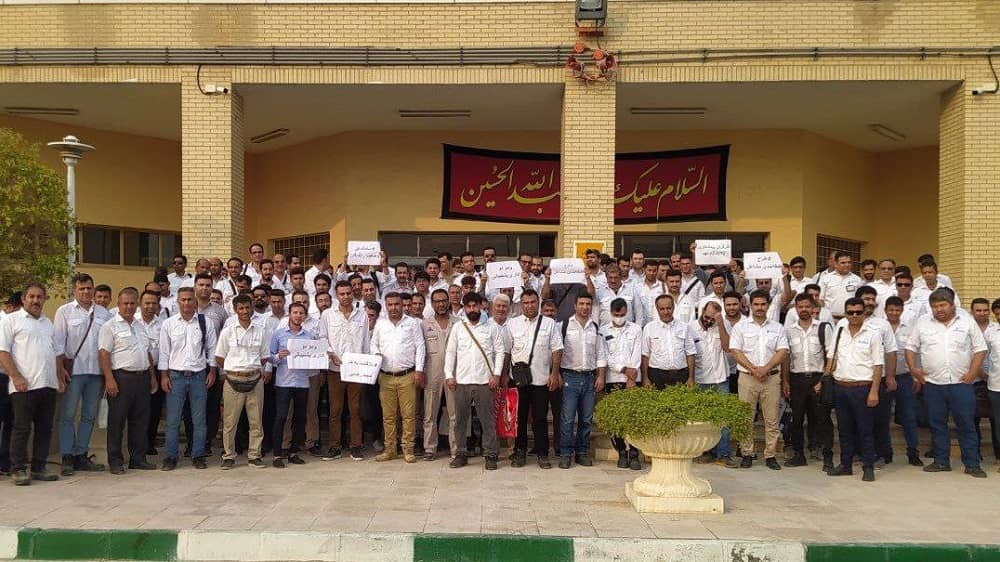
In an escalating wave of discontent, various sectors across Iran are witnessing a surge in protests as citizens demand better working conditions, fair wages, and the recognition of their rights. On August 13, literacy educators in Tehran staged a significant rally in front of the Education Ministry, demanding their promotion to official teaching positions. This demonstration reflects the broader dissatisfaction with the government’s handling of public sector employment, particularly in the education sector.
In Kangan, southern Iran, nurses joined the nationwide protests that have gripped the healthcare sector. The primary grievances include poor working conditions, workforce shortages, and low wages—issues that resonate with their counterparts in other parts of the country.
Similarly, nurses in Eslamabad-e Gharb, western Iran, and Arak, central Iran, took to the streets, echoing demands for improvements in their work environment and pay. These protests are part of a larger movement that has seen healthcare workers in several cities voice their frustrations with the government’s neglect of the healthcare sector.
August 13—Arak, central Iran
Nurses join the nationwide protests against poor working conditions, low wages, workforce shortage, unfair rules for extra work hours.#IranProtestspic.twitter.com/qBwTUY8iqw— People's Mojahedin Organization of Iran (PMOI/MEK) (@Mojahedineng) August 13, 2024
In Taft, central Iran, nurses also joined the protest wave, aligning with the strike that began in Shiraz. Reports indicate that up to 80% of nurses in Shiraz have ceased work, protesting similar issues of poor working conditions and low pay. The situation in Shiraz is particularly dire, with nurses from nine hospitals, including Rajai, Namazi, and Chamran, participating in the strike. Despite threats and attempts by security forces to break the strike, the protest continues to gain momentum.
Meanwhile, in Isfahan, central Iran, farmers continue their protest rallies at Khorasgan Square, demanding immediate government action to address severe water shortages. The crisis, which has left many farmers struggling to sustain their livelihoods, has been met with silence from the authorities, further fueling the unrest. The ongoing protest highlights the deepening agricultural crisis in the region, exacerbated by inadequate water management policies.
The unrest is not limited to healthcare workers and farmers. In prisons across Iran, political prisoners have launched the “No to Executions Tuesdays” campaign, now in its 29th week. Inmates from 18 prisons, including Tehran’s Evin Prison, Ghezel Hesar, and Tabriz, have joined a hunger strike to protest the alarming rise in executions.
August 13—Taft, central Iran
Nurses in Taft join the strike started by nurses in Shiraz. Nurses are protesting poor working conditions, workforce shortages, low wages, and other basic needs. #IranProtests pic.twitter.com/dF7haaF9wz— People's Mojahedin Organization of Iran (PMOI/MEK) (@Mojahedineng) August 13, 2024
Adding to the tensions, workers in the oil and gas sector have also ramped up their protests. Employees of third-party contractors at several refineries in the South Pars Gas Complex, including the third, fifth, and seventh refineries, have renewed their demands for better wages, job security, and the elimination of intermediary contractors. The workers, who have long been subjected to harsh conditions, including poor food quality and inadequate living quarters, are calling for immediate change in policies.
The protests across Iran reflect a growing discontent with the government’s failure to address critical issues affecting various sectors. As social pressures mount, the clerical dictatorship continues to neglect the demands of the people, banking on the idea that it can brutally crack down on dissent whenever it deems the situation as “out of control.”
Tehran
Photos of NCRI president-elect Maryam Rajavi with the messages:
"The blood of the victims of the 1988 massacre is still alive"
"Consecutive generations of Iran's rebellious youth are inspired by the martyrs of 1988" pic.twitter.com/CVKh83No6o— People's Mojahedin Organization of Iran (PMOI/MEK) (@Mojahedineng) August 13, 2024