

In recent days, protests erupted across Iran, as workers, retirees, students, and marginalized groups took to the streets in various cities to demand justice, fair wages, and accountability from government officials. These demonstrations reflect the intensifying frustration of the Iranian people against systemic neglect and economic mismanagement.
December 15
In Ilam, western Iran, municipality workers rallied outside the provincial governorate to protest six months of unpaid wages and ten months of overdue insurance. Workers expressed anger over broken promises, including an unfulfilled pledge to pay three months of back wages. Protesters revealed they were threatened with termination instead of receiving their due payments, intensifying their outrage.
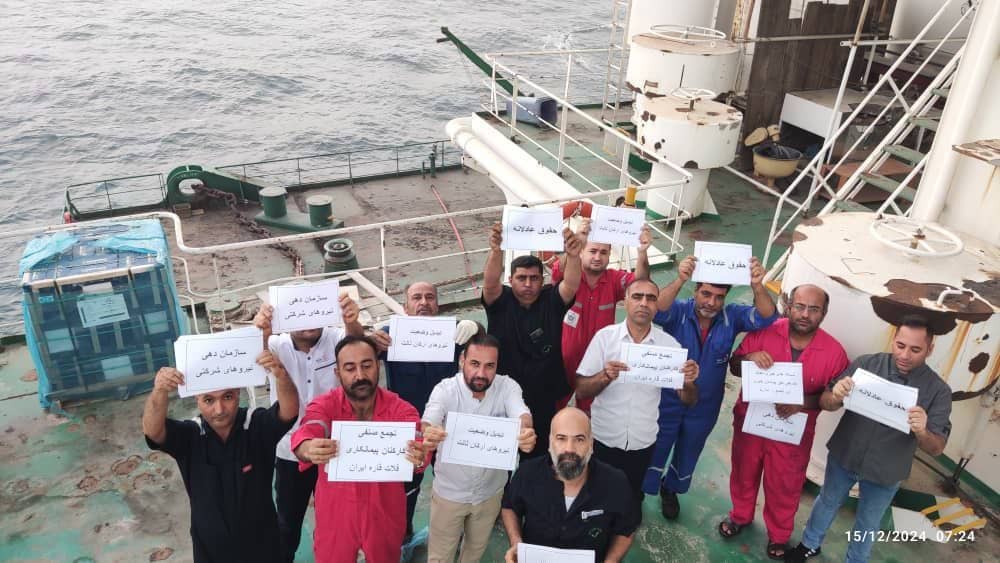
In Bushehr, southern Iran, employees of the Iranian Offshore Oil Company resumed protests against inadequate wage policies and exploitative employment practices. Workers demanded fair pay, reforms in tax deductions, and the elimination of outsourcing, which has worsened their economic conditions.
Decembe 15—Bushehr, southern Iran
Employees of the Iranian Offshore Oil Company resume protests as authorities continue to ignore their demands for changes to the wage determination policies and other basic needs. #IranProtests pic.twitter.com/2JjnEQ2lWM— People's Mojahedin Organization of Iran (PMOI/MEK) (@Mojahedineng) December 15, 2024
In Isfahan, central Iran, retirees from the steel industry gathered to demand pension increases in line with the regime’s own laws. Protesters criticized the government’s disregard for their financial hardships and called for immediate action to improve their living conditions.
In Tehran, disabled individuals who had traveled to the capital after being summoned by the Welfare Organization were left stranded when they arrived to find the office closed. These individuals had expected employment processing following a recruitment exam, but the disorganization and lack of communication from authorities caused widespread frustration.
December 14
In Ardakan, central Iran, farmers rallied in front of the governorate to protest persistent power outages affecting their irrigation wells. Farmers highlighted the devastating impact of the outages on their livelihoods and demanded urgent intervention.
December 13—Tehran, Iran
Protest rally by students of the Azad University Sohanak Campus. Students are protesting the tripling of tuition fees.#IranProtests pic.twitter.com/ykocNg3gEI— People's Mojahedin Organization of Iran (PMOI/MEK) (@Mojahedineng) December 13, 2024
In Zabol, Sistan and Baluchestan Province, locals protested the suspension of the “Razagh Plan,” a program vital for economic survival in the region. Demonstrators condemned the government’s neglect, with one elderly protester warning, “Have some shame before God; you will end up like Bashar al-Assad.”
In Zahedan, Sistan and Baluchestan Province, PMOI Resistance Units denounced the regime’s execution policies and reaffirmed their commitment to regime change despite intensified crackdowns by security forces.
December 13
Students at Azad University’s Sohanak Campus in Tehran held a protest rally against a threefold increase in tuition fees. The demonstrators voiced frustration over the financial strain imposed on them and their families by the abrupt fee hike.
PMOI Resistance Units in Zahedan condemn executions, reaffirm commitment to regime change in Iran https://t.co/MHytYPFBdo
— People's Mojahedin Organization of Iran (PMOI/MEK) (@Mojahedineng) December 15, 2024
In Nowsud and Piranshahr, western Iran, two Kurdish freight carriers (kulbars) were shot by IRGC forces near the border. One of them, Musab Sabzevari, succumbed to his injuries after being shot in the head, while another, Abdollah Maroufi, sustained severe gunshot wounds. Maroufi, a father of two, remains hospitalized. These incidents highlight the ongoing violence against kolbars, who risk their lives to earn a living under dire economic circumstances.
December 11
Retired teachers in Tehran rallied, decrying the regime’s oppression and economic mismanagement. They chanted slogans like:
- “Enough of this injustice!”
- “Justice, where are you?”
- “Iran is wealthy—what has become of you?”
The protests continued in Tehran’s metro system, with participants demanding accountability and economic justice.
Meanwhile, medical students at the University of Medical Sciences in Yazd staged their own protest, highlighting grievances over educational conditions and systemic neglect.
More footage of the protest by retired teachers in Tehran.#IranProtestspic.twitter.com/I03XEfvQKr
— People's Mojahedin Organization of Iran (PMOI/MEK) (@Mojahedineng) December 11, 2024
The recent wave of protests, involving workers, retirees, students, and marginalized communities, underscores the regime’s failure to address the mounting economic and social crises. From unpaid wages to inadequate pensions and systemic neglect, the grievances of the Iranian people reflect a nation increasingly dissatisfied with its leadership. The persistence of these demonstrations signals a growing demand for justice and accountability.