

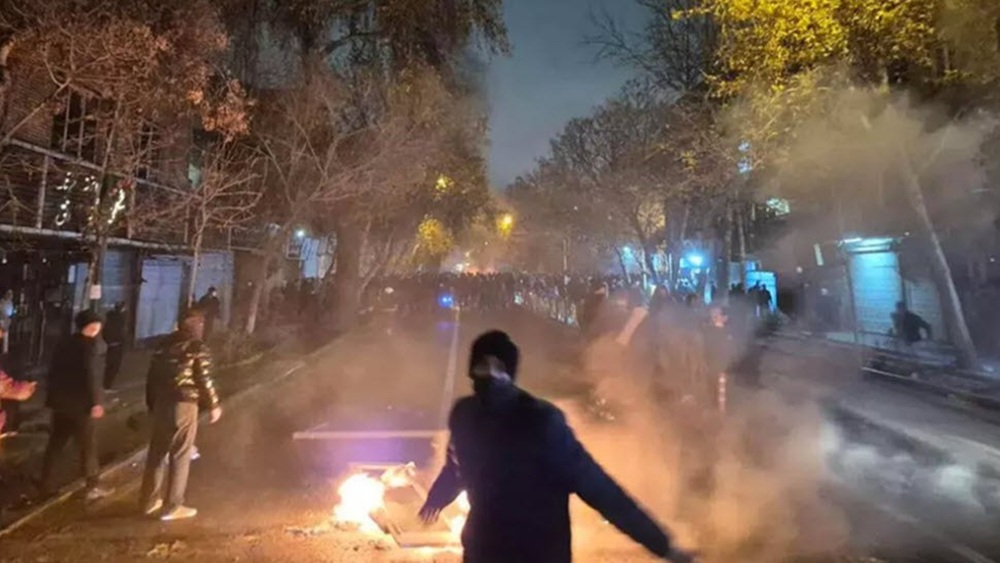
As the nationwide uprising in Iran marks its 26th day, the clerical regime faces an unprecedented challenge to its survival. While authorities have imposed a total internet blackout for two weeks to conceal the extent of the unrest, internal reports and official admissions reveal a volatile landscape where protests have evolved into open conflict. As security forces deploy heavy weaponry usually reserved for battlefields against civilians, the international community has taken historic steps to isolate the regime’s Revolutionary Guards (IRGC).
Regime Officials Confess to Large-Scale Protests
Despite state media’s attempts to project stability, high-ranking officials are acknowledging the sheer magnitude of the revolt. On Wednesday, January 21, Ali Akbar Pourjamshidian, Secretary of the regime’s Security Council, admitted that the uprising has engulfed more than 400 cities and towns across the country. In a staggering confession of lost control, he noted that in Tehran alone, security forces faced simultaneous clashes in 100 different locations.
Pourjamshidian described the situation as a “coup or semi-coup,” confirming that the unrest is not merely scattered protests but a coordinated movement. He provided detailed statistics regarding the damage inflicted upon the regime’s apparatus of suppression: 4,014 regime buildings, including governorates and state offices, have been damaged or destroyed. Furthermore, protesters have targeted 120 Basij bases and 89 seminaries, symbols of the theocracy’s ideological power. The official also stated that 749 police vehicles and 305 buses used for transporting forces had been burned, alongside 750 banks, signaling a total rejection of the state’s financial and security infrastructure.
War Zones in the Streets: Heavy Weaponry and Mass Graves
Reports emerging from behind the internet curtain depict scenes reminiscent of a war zone. In Karaj and the town of Mohammadshahr, reports indicate that authorities have escalated from tear gas to heavy combat weaponry. Witnesses describe DShK heavy machine guns mounted on pickup trucks firing into crowds, and snipers targeting civilians from the rooftops of banks and medical buildings.
January 9—Arak, central Iran
Newly obtained footage from Arak shows the people resisting the armed thugs of the regime and chanting "Down with Khamenei!" while being shot at.#IranProtests pic.twitter.com/w9nR8n1BlN— People's Mojahedin Organization of Iran (PMOI/MEK) (@Mojahedineng) January 22, 2026
The human toll is catastrophic. In Mohammadshahr alone, local sources report approximately 150 deaths over a two-day period (January 8 and 9). In Mashhad, the violence has led to the hasty creation of mass graves. A reliable source reported that trenches were dug in the Behesht Rezvan cemetery to bury around 200 bodies. A stonemason in the city revealed receiving an order for 148 tombstones in a single day, all for youths born between 2000 and 2007.
The regime has also monetized the slaughter. Families seeking to recover the bodies of their loved ones face extortion. In the case of Amirhossein Sohrabi, a young man killed by direct gunfire on January 8, authorities demanded his family sign a waiver or pay an exorbitant fee—ranging between 800 million and over 1 billion Tomans—to retrieve his remains. Even then, burials were forced to take place before sunrise, with only immediate family present, to prevent public gatherings.
Defiance Amidst Suppression
Despite the “shoot to kill” orders given to the IRGC’s “Fatehin” and “Imam Ali” battalions, the resistance remains active. The NCRI has received reports of defiant youths attacking centers of repression across the country. On the night of January 20, the ‘Malek Ashtar’ Basij base in Tehran’s Atabak district was set ablaze by rebellious youths. Similar clashes were reported in Rasht, Kermanshah, and Zahedan, where protesters blocked logistics routes used by regime forces.
Citizens emphasize that the current quiet in some areas is deceptive. A report from Karaj quotes a protester stating, “It may seem quiet now, but this is not silence; it is suppressed anger. We will rise again.” Another report from Tehran highlights that the internet blackout has failed to silence the population, noting that people are finding new ways to communicate and that “the path to calm lies in understanding, not filtering.”
Global Condemnation and the Terrorist Designation of the IRGC
As the regime intensifies its crackdown, international patience has run out. On January 20, the Parliament of Luxembourg voted unanimously to call for the terrorist designation of the IRGC, citing the Guard’s central role in arbitrary executions and the violent suppression of protests.
🚨BREAKING | European Parliament on Iran
The European Parliament passed a resolution by an overwhelming majority (562–9) condemning Iran’s violent crackdown.
Key points:
– Calls to immediately designate the IRGC as a terrorist entity
– IRGC and police killed and detained… pic.twitter.com/tPi4OPhhlI— SIMAY AZADI TV (@en_simayazadi) January 22, 2026
Following suit, on January 22, the European Parliament adopted a strong resolution with 562 votes in favor, condemning the regime’s “brutal repression” and demanding the immediate designation of the IRGC as a terrorist organization. The resolution highlighted that the killing of protesters signals a shift in the regime’s strategy from deterrence to “strategic elimination.”
Mrs. Maryam Rajavi, President-elect of the National Council of Resistance of Iran (NCRI), welcomed the European Parliament’s decision. She described the resolution as a “courageous and timely act of solidarity with the Iranian people’s uprising,” thanking the MEPs for standing with Iranians in their legitimate demand for freedom and democracy.
The European Parliament’s resolution condemning the brutal repression of protesters in Iran is a courageous and timely act of solidarity with the Iranian people’s uprising.
I sincerely thank President @RobertaMetsola and the Members of the European Parliament for standing with… pic.twitter.com/VGYwnDby0x— Maryam Rajavi (@Maryam_Rajavi) January 22, 2026