

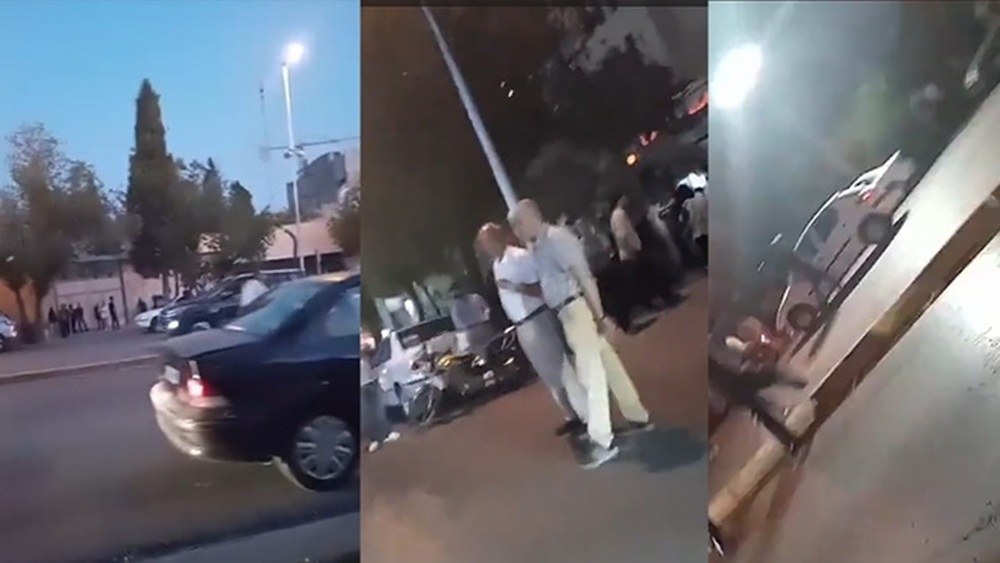
A new wave of intense anti-regime protests swept across Iran on Friday, August 22, as thousands of citizens, enraged by crippling power and water outages, took to the streets in cities like Shiraz, Kazerun, and Tehran. What began as demonstrations against the regime’s gross mismanagement of basic utilities rapidly evolved into a direct political challenge, with protesters chanting slogans demanding an end to the clerical dictatorship.
The regime’s response was swift and brutal. In Shiraz, security forces deployed tear gas to disperse crowds and arrested numerous demonstrators. The following day, the anguish of the crackdown was palpable as families gathered outside detention centers, seeking any news of their detained loved ones, only to be met with hostility and dismissal by authorities. These events highlight not just a failing state unable to provide for its people, but a population that increasingly sees the regime as the sole source of its suffering.
From Utility Bills to Political Defiance
In Shiraz on Friday, protests centered around the provincial governor’s office and Falakeh Gaz, where citizens initially voiced their frustration with demands for basic services. Chants of “Water and electricity are our undeniable right” soon gave way to powerful anti-regime slogans that cut to the heart of the people’s grievances.
🚨 BREAKING #Iran News
For the second day, protests erupt in Shiraz over repeated power outages.
Despite brutal attacks by the regime's forces using tear gas, protesters stood their ground chanting:
“Water, electricity, life are our fundamental rights”
& “Shame on you!” pic.twitter.com/gLEGbLYN4v— SIMAY AZADI TV (@en_simayazadi) August 22, 2025
Crowds were heard chanting “Death to the dictator,” and “Iran is not your inheritance.” In a direct rebuke of the regime’s foreign policy priorities, which drain national resources while citizens suffer, protesters chanted, “No Gaza, no Lebanon, only the people of Iran.” In a powerful display of national pride and defiance, citizens in Shiraz also joined together to sing the patriotic anthem “Ey Iran,” symbolically reclaiming their country from the ruling clerics.
The Regime’s Brutal Response
Faced with growing dissent, the regime resorted to its only known tool: repression. In Shiraz, security and police forces sealed off streets and attacked demonstrators with tear gas. To prevent the documentation of their crimes, authorities confiscated the mobile phones of citizens who were filming the protests.
🚨 Exclusive – Tehran on Military Lockdown
According to the Iranian Resistance, since Aug 17, IRGC has launched a city-wide maneuver in Tehran to suppress potential uprisings. The operation continues with:Over 23,000 IRGC/Basij & 19,000 security forces on alert
Checkpoints &… https://t.co/C0cRrQXRSU
— SIMAY AZADI TV (@en_simayazadi) August 23, 2025
The cruelty continued into Saturday, August 23. Families of those arrested gathered outside the “Soroush” detention center, desperate for information. According to sources, they were met with harsh treatment. A plainclothes officer, identifying himself as a judicial official, callously informed the families that the judge was absent and they should disperse, leaving them in a painful state of uncertainty.
A Widening Front of National Dissent
The unrest is not confined to one city or issue. Similar protests against utility outages were reported in Kazerun and Lamerd in previous days. In the capital, Tehran, merchants and employees at the Ferdowsi Passage held their own rally on Friday, protesting severe market stagnation, crippling taxes, and the same power cuts that are devastating their businesses.
August 21—Kazerun, southern Iran
Locals protest prolonged electricity and water outages and the regime's lack of action.
"Water and electricity are our inalienable right!" protesters chant.#IranProtests pic.twitter.com/bkCtMhv3yB— People's Mojahedin Organization of Iran (PMOI/MEK) (@Mojahedineng) August 22, 2025
By Saturday, the protest movement had been joined by critical labor sectors. At the Karun 4 Dam and power plant, workers protested the regime’s firing of approximately 30 of their colleagues under the pretext of “economic problems.” Simultaneously, official workers on the Ilam and Nasr oil platforms held rallies to protest their deteriorating working and living conditions, demonstrating that discontent is simmering throughout Iran’s most vital industries.
A Regime Failing on All Fronts
The ongoing protests expose a regime teetering on the edge of collapse, utterly incapable of performing the basic functions of a government. The planned power and water cuts, which began this year as early as May and last for 8 to 10 hours daily in some cities, are not a temporary inconvenience but a sign of deep-seated structural failure and corruption.
The convergence of protests—from ordinary citizens demanding electricity, to merchants fighting economic ruin, to oil workers demanding their rights—paints a clear picture. Different segments of Iranian society are united in their understanding that the root cause of their misery is the clerical regime itself. Despite violent crackdowns and mass arrests, the Iranian people’s resolve to reclaim their country is only growing stronger. Their chants are a clear declaration that the era of this illegitimate dictatorship is over.