

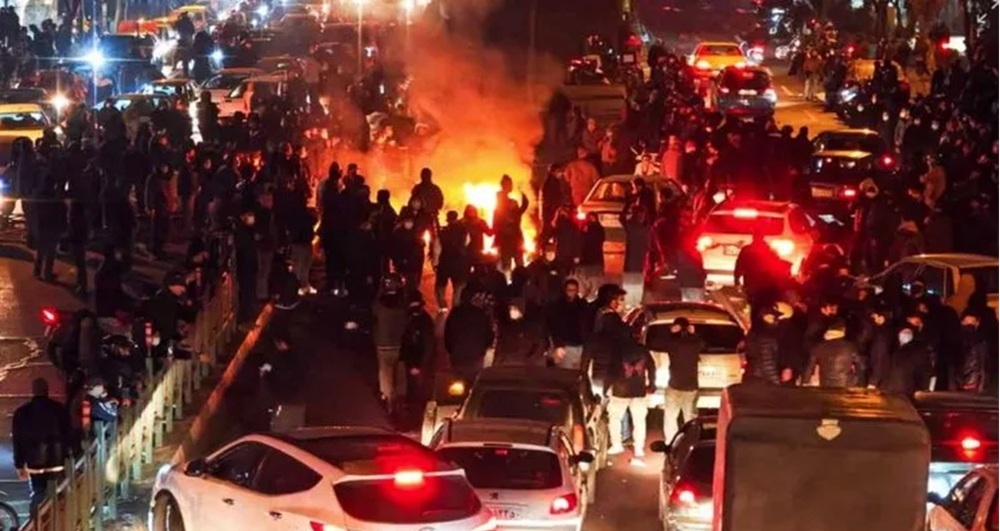
As the nationwide uprising in Iran continues, the clerical regime has imposed a draconian information blockade to conceal the extent of its crackdown. According to the internet watchdog NetBlocks, the country remains in the grip of an 18-day internet blackout, obscuring a “deadly crackdown on civilians.” Yet, despite the digital silence, the regime’s own officials are issuing panicked statements that reveal the unprecedented scale of the revolt, admitting to casualties in the thousands and unrest in “almost all cities.”
On Monday, January 26, the People’s Mojahedin Organization of Iran (PMOI/MEK) released the names of 69 newly identified martyrs of the uprising. This latest report brings the total number of verified identities released by the PMOI to 700. The demographics of the victims highlight the indiscriminate nature of the state’s violence: the new list includes six women and ten children and adolescents aged between 12 and 17. Among the young victims are 12-year-old Amir Abbas Amini from Saveh and 15-year-old Mohammad Hossein Parnoon from Khorramabad. The geographic spread of the martyrs—hailing from Tehran, Isfahan, Karaj, Rasht, Saveh, and beyond—confirms the nationwide breadth of the resistance.
⚠️ Update: #Iran's internet blackout continues through its 18th day, obscuring the extent of a deadly crackdown on civilians.
Meanwhile, gaps in the filternet are being tightened to limit circumvention while whitelisted regime accounts promote the Islamic Republic's narrative. pic.twitter.com/Jj76EGrkJz
— NetBlocks (@netblocks) January 26, 2026
Regime Officials Confirm “War” Conditions
While the regime publicly attempts to downplay the protests as scattered disturbances, internal reports from senior officials portray a system facing an existential threat. In a session of the regime’s parliament, Speaker Mohammad-Bagher Ghalibaf admitted that the uprising began “simultaneously in almost all of our cities,” describing the events as a “terrorist war” that dealt the regime a defeat more humiliating than any foreign military attack.
Even more telling are the casualty figures cited by regime insiders, which far exceed initial reports. Ebrahim Azizi, head of the Parliament’s Security Commission, stated that the protests had escalated to a “fourth level” involving armed action by protesters, resulting in “over 3,000 killed.” Similarly, Ahmad Khatami, the Friday Prayer leader in Tehran appointed by Supreme Leader Ali Khamenei, cited a death toll of 2,427. In a rhetoric typical of the regime’s judicial brutality, Khatami labeled the protesters as “Mohareb” (those who wage war on God) and demanded the judiciary administer the “harshest punishment”—execution—to detained leaders.
The Battle for Rasht: A Case Study in Resistance
Reports smuggled out of the northern city of Rasht offer a glimpse into the intensity of the confrontations described by regime officials as “war.” What began as a strike by market merchants on December 28 rapidly evolved into direct clashes with security forces.
By January 7, the dynamic on the streets had shifted from protest to active resistance. Rebellious youth were reported confronting security forces. In one notable instance, protesters managed to disarm a member of the Islamic Revolutionary Guard Corps (IRGC), confiscating his weapon and shocker.
🚨 Simay Azadi EXCLUSIVE — Karaj
Azimieh, Karaj | January 8, 2026
Defiant youth set the municipality building on fire. They also chant anti-regime slogans. #IranProtests pic.twitter.com/C79lu0wemZ— SIMAY AZADI TV (@en_simayazadi) January 26, 2026
The situation escalated further on January 8. As protesters chanted “Freedom, Freedom,” they established control over parts of the city by burning tires to block roads. Government symbols became primary targets; reports indicate the burning of the “Khojasteh” Basij base, a police trailer, and several banks.
The regime’s response was lethal. Security forces were observed firing war bullets at civilians near the Governor’s office and targeting protesters from rooftops with sniper fire. Despite this, the state-run Tasnim News Agency—affiliated with the Qods Force—was forced to admit the scale of the damage in Rasht alone: 17 fire trucks, 11 regime buildings, and 16 bank branches were set ablaze or severely damaged.
Economic Paralysis and Political Deadlock
The uprising has also inflicted severe economic costs on the regime’s infrastructure. In Kermanshah, the governor’s office reported preliminary damages to public and government properties totaling 1.2 trillion tomans. The official noted that seven bank branches were “completely destroyed” in the province.
As the internet blackout continues, the regime finds itself in a precarious position. Ahmad-Reza Radan, the criminal head of the State Security Forces (SSF), described the recent days as a “very dangerous and complex pass.” While the regime attempts to project control through censorship and threats of mass execution, the simultaneous nature of the uprising across dozens of cities and the defiance shown by the youth in places like Rasht suggest a population that has moved beyond fear, pushing the ruling theocracy toward an irreversible breaking point.