

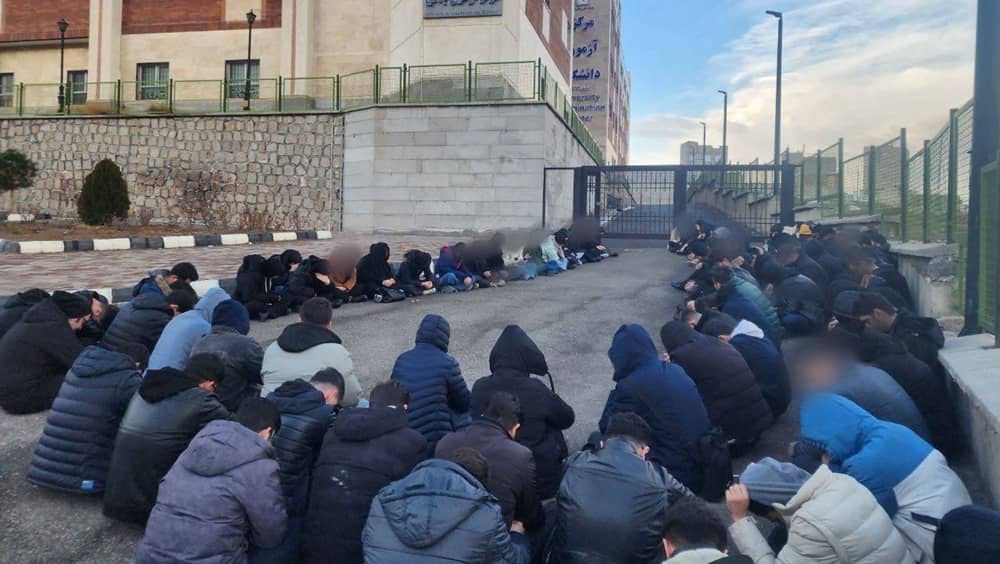
On Thursday, February 5, 2026, the campuses of the Iran University of Medical Sciences in Tehran and the Shiraz University of Medical Sciences became the latest flashpoints in the nationwide uprising. Despite the regime’s heavy-handed tactics and internet blackouts designed to obscure the scale of unrest, reports confirm that students staged sit-ins to protest the killing and detention of their colleagues. These demonstrations occur as the clerical regime faces deepening internal fractures and escalating anxiety over its international isolation under the new U.S. administration.
The University Front: Voices for the Healers
In Tehran, students gathered on the grounds of the Iran University of Medical Sciences to condemn the regime’s crackdown on medical professionals. Witnesses reported that the “Herasat” (university security) and regime mercenaries violently raided the peaceful assembly. The students were protesting the lethal force used against doctors and nurses who have been aiding the wounded during the uprising.
Meanwhile, in Shiraz, students marked their fifth consecutive day of protest. Their demands were specific and urgent: the immediate release of nurses and medical staff arrested during the January uprising. The persistence of these students, despite the violent raid in Tehran, highlights the failure of the regime’s intimidation tactics to silence the academic community.
#Breaking #Iran News| Documented evidence
Newly released documents by the Iranian Resistance expose the transfer of 66 injured protesters and 8 martyrs to Tehran hospitals between Jan. 8–11.
Among them are Ali-Mohammad Kord Kazemi (22), killed by live fire during protests, and… pic.twitter.com/CpBEAab1m4— SIMAY AZADI TV (@en_simayazadi) February 6, 2026
Exposed Atrocities: New NCRI Documents
The brutality facing these protesters was further illuminated by documents released by the Security and Counterterrorism Committee of the NCRI on February 5. Leaked Emergency Services records from January 8-11, 2026, reveal that in just four days, 66 wounded individuals and 8 martyrs were transferred to Tehran hospitals alone. The victims included 14 women and 7 teenagers under the age of 18.
The records paint a grim picture of the state’s response to dissent: 50 individuals were recorded as being wounded by live ammunition or pellets, while 15 suffered injuries from machetes, knives, stun guns, or batons. One harrowing account details a 30-year-old woman, Narges Elmi, whose skull was shattered by a shotgun blast while driving. Another record describes a 30-year-old man, Majid Soleimaninejad, who died from a gunshot wound to the abdomen; the report notes that his family had attempted to treat him at home with a private doctor to avoid arrest—a desperate measure taken by many as security forces frequently abduct the wounded from medical centers.
Iran: Systematic Crackdown on Doctors and Medical Personnel
In the aftermath of the nationwide protests of January 2026 in #Iran, the clerical regime turned hospitals into instruments of repression and killing:
🔻deliberately cutting off ventilators,
🔻blocking medical… pic.twitter.com/7cgQRG8uGV— Women's Committee NCRI (@womenncri) February 4, 2026
Defiance on the Ground
Beyond the universities, the resistance has taken a more direct form. On the night of February 4, an armed individual attacked a police station in Gachsaran, southwest Iran. The state-run IRNA news agency confirmed the incident on February 5, acknowledging that a security agent was killed during the confrontation. Despite the regime’s security forces being on high alert, the attacker managed to breach the perimeter and subsequently escape the scene. This incident highlights the vulnerability of the regime’s suppression apparatus even when fully mobilized.
Simultaneously, the Ministry of Intelligence announced the arrest of 56 “main elements” of the uprising in North Khorasan province. This admission by the regime’s own intelligence apparatus confirms that the unrest is not localized but spans the entirety of the country, from the southwest to the northeast.
Shiraz in revolt: Field reports reveal regime’s paralysis as rebellious youth turn city into fortress of resistance https://t.co/RDmZcsRGKd
— People's Mojahedin Organization of Iran (PMOI/MEK) (@Mojahedineng) February 6, 2026
A Regime in Panic: Internal Fractures and External Threats
The persistence of the uprising is exacerbating fissures within the ruling elite. State media reflects growing panic regarding negotiations in Muscat, Oman. The regime’s Shabakeye Khabar expressed alarm over the presence of the U.S. CENTCOM commander in the American delegation.
Domestically, the rhetoric has shifted from confidence to blame. Yousef Pezeshkian, the son of the regime’s president Masoud Pezeshkian, publicly questioned the competence of the intelligence services on Telegram. He admitted that protesters have been killed in clashes and warned of “infiltration” within the security apparatus, asking, “I don’t know when or where the IRIB announced victory, but there was no victory.”
This sentiment of impending danger was echoed by former MP Ali Motahari, who warned on state television about a looming “cycle of revenge” if the crackdowns continue. Conversely, MP Esmail Kowsari admitted that security forces have been authorized to use weapons by the Security Council, asserting that the regime would “play” with the Americans rather than seek genuine diplomatic solutions.