

Iran’s ruling theocracy is confronting a convergence it cannot arrest away: expanding street-level defiance, renewed “livelihood” protests that increasingly sound like political indictments, and campus activism resurfacing as an organizing engine. Over the past two days, reports describe synchronized demonstrations by retirees and bakers, student mobilization in Tehran, and commemorations for those killed in January that are morphing into rally points. The regime’s response—threats, speeded-up prosecutions, and public messaging aimed at criminalizing dissent—signals not consolidation but anxiety that society is steadily shedding fear.
The operational logic is now unmistakable: dispersed acts of resistance and protest stretch enforcement capacity while normalizing open contempt. Crucially, this social defiance is colliding with basic survival politics—bread, wages, pensions—so that “economic” protests increasingly read as a referendum on the state itself.
Iran’s Resistance Units mark 1979 anniversary with a clear message: neither shah nor mullahs https://t.co/xCYMqFwJfg
— People's Mojahedin Organization of Iran (PMOI/MEK) (@Mojahedineng) February 16, 2026
Bread and Dignity: Retirees, Bakers, and the Politics of the Empty Table
In Kermanshah, retirees staged a street protest on February 15, 2026, denouncing worsening living conditions while explicitly linking hardship to repression. Reported chants framed the past months’ bloodshed as the price paid for demanding “bread and dignity,” turning pensions and healthcare into a political ledger against the state.
In Ahvaz, bakers protested the same day, invoking an image that has become a recurring symbol of the crisis: the empty table. Their slogans—reportedly warning that “promises and threats are enough” while “our table is empty”—cast price pressure and policy failures not as technical mismanagement but as deliberate abandonment. When bread producers and pensioners mobilize in parallel, the regime’s preferred compartmentalization (“livelihood” vs. “security”) breaks down.
Rebellious youth keep the flame of freedom alive on anniversary of 1979 revolution https://t.co/lp0EyCuw1P
— People's Mojahedin Organization of Iran (PMOI/MEK) (@Mojahedineng) February 16, 2026
Campus as Accelerator: Student Mobilization in Tehran
Student activism is reappearing as a parallel fault line. On February 14, 2026, students at Tehran University of Medical Sciences reportedly held a protest expressing solidarity with detainees and those facing execution, framing their role as “future doctors” with an obligation to speak for prisoners.
In Iran’s protest cycles, campuses repeatedly function as accelerators: they turn scattered grievances into coordinated messaging and connect professional identities—students, medical staff, teachers—to a wider political agenda. That network effect is precisely what the state fears: once protest language travels across constituencies, repression produces not silence but replication.
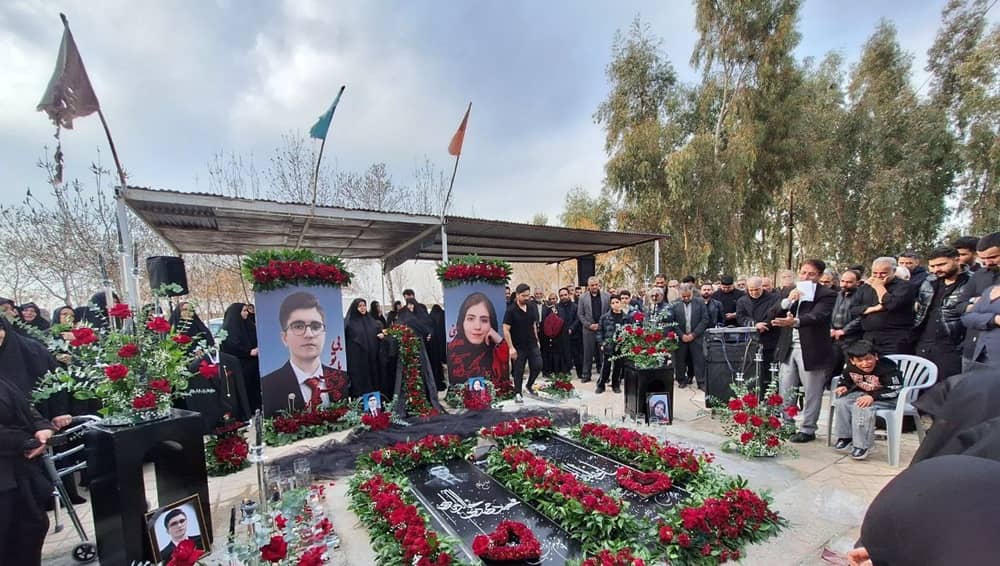
The political calendar is also amplifying risk. In several cities in Fars Province—including Nurabad, Kazerun, and Kuhchenar—gatherings marking the 40th day for those killed in the January 2026 uprising reportedly evolved into public recommitment rituals rather than private mourning. Participants chanted anti-Ali Khamenei slogans and emphasized continuing the path of those killed—an old Iranian social form repurposed into a recurring political trigger.
February 15—Iran
PMOI Resistance Units mark the 47th anniversary of the 1979 revolution with anti-regime activities. The Resistance Units reiterated their rejection of both the mullahs' and shah dictatorships and their commitment to the establishment of a democratic republic.… pic.twitter.com/HWtOfDCiYE— People's Mojahedin Organization of Iran (PMOI/MEK) (@Mojahedineng) February 16, 2026
Political Developments: A State Talking to Itself
Against this backdrop of street defiance, the regime’s senior officials have shifted into damage-control mode—oscillating between alarm, threats, and selective admissions that inadvertently validate the opposition’s central claim: the system is under strategic pressure.
In remarks broadcast on regime television on February 15, 2026, Masoud Pezeshkian described recent arson incidents and attacks on security forces as “really unimaginable,” repeatedly stressing that “something is not working” in multiple areas. The content mattered—but so did the tone. Regimes projecting confidence do not linger on disbelief; they normalize, minimize, and compartmentalize. His insistence on shock read as a signal of internal unease, not public reassurance.
The regime’s fear is also written into its enforcement posture. On February 16, 2026, Gholamhossein Mohseni-Ejei, speaking in Isfahan, urged officials to act “without leniency” and “quickly” against those detained in the uprising, emphasizing “leaders” and “supporters” as priority targets and complaining that verdicts take too long under existing procedures.
The subtext is strategic: when legitimacy erodes, the state tries to replace consent with predictable punishment. But acceleration cuts both ways—speed can deter, yet it can also manufacture fresh grievances, deepen family-based mobilization, and feed the very cycle it is meant to stop.
Field reports: Rebellious youth shatter regime crackdown during Iran’s January uprising https://t.co/Gp4wmFCTLZ
— People's Mojahedin Organization of Iran (PMOI/MEK) (@Mojahedineng) February 15, 2026
“Lose-Lose” Language from Inside the Executive
In parallel, VP Mohammad-Reza Aref reportedly described the recent unrest as a “lose-lose game” for the system—an unusually blunt concession that the regime’s options are narrowing. When senior insiders acknowledge strategic damage even while demanding tougher measures, it suggests a leadership that recognizes the trajectory but lacks an off-ramp.
In the Majles, Mohammad-Bagher Ghalibaf acknowledged that 34% of the population is living in poverty and in some cases “absolute poverty,” arguing that official decile categories do not reflect real household capacity. Whatever the intent—alarm bell or controlled narrative—the admission carries political weight: it validates the bread-and-pension protests as systemic, not episodic.
🚨 Simay Azadi EXCLUSIVE | Mashhad
Mashhad — January 9, 2026Another exclusive clip from the city shows defiant youth attacking an SSF station and smashing a security forces vehicle during confrontations reported in different areas of Mashhad. #IranProtests2026 #Iran pic.twitter.com/yrYsZFMqpI
— SIMAY AZADI TV (@en_simayazadi) February 15, 2026
Unrest Cycle Keeps Rebuilding Itself
Put together, the sequence is consistent: society signals defiance first—through bread protests, pension rallies, campus solidarity, and mourning gatherings that double as political assemblies—then the state answers with damage control, not solutions: intimidation, accelerated prosecutions, and tightly managed messaging designed to rally a demoralized base.
But the deeper dynamic is running the other way. As purchasing power collapses and everyday life becomes a rolling reminder of intolerable economic, social, and political hardship, the public mood keeps sliding toward anger—broad, cumulative, and harder to compartmentalize. The regime can escalate repression, but it cannot de-link the two drivers now converging in the street: material collapse and political contempt. When those synchronize, unrest doesn’t resolve—it resets, spreads, and returns with wider participation and less fear. At that point, the next wave is no longer a question of if, but when.