

Four-minute read
In the tightly controlled media landscape of the clerical dictatorship, state-sanctioned retrospectives are rarely mere history lessons. They are meticulously crafted signals that reflect the immediate anxieties of the ruling clerics. A recent, extensive report published by Hawzah News, the official agency of the Qom seminary, offers a profound glimpse into this defensive posture. Notably, rather than resorting to the regime’s standard pejorative term “Monafeqin” (hypocrites), the report explicitly uses the formal name, the People’s Mojahedin Organization of Iran (PMOI). Rather than a simple condemnation, the lengthy treatise serves as a glaring admission of the regime’s current vulnerability and its acute awareness of the Resistance’s continuous strategic adaptation to changing circumstances and geographical locations over nearly half a century.
To understand the timing and the reason behind this sudden, deep dive into the evolution of the Iranian Resistance, one must look at the unprecedented crises engulfing Tehran. The clerical establishment is currently navigating a perfect storm: a crippling economic meltdown, profound infighting among the hardline elite, and terrifyingly low morale among its once-reliable loyalist base. Hanging over the Supreme Leader’s inner circle is the perpetual fear of an imminent, nationwide uprising. In such desperate times, the regime feels an existential need to explain its most organized adversary to a fractured base that is rapidly losing faith, and to do so, it must acknowledge the sophisticated nature of the threat.
Hawza News traces the PMOI’s trajectory from its early urban operations in the wake of the 1979 revolution, to its establishment of a classic military force, and its eventual pivot to a multifaceted modern campaign. While the regime’s propagandists attempt to frame this history with their customary hostility, the text inadvertently betrays a deep-seated fear of the opposition’s agility. Conceding the PMOI’s modern tactical prowess, the Qom seminary publication observes that the Resistance’s strategy has transformed into “a combined model of political, military, intelligence, and cyber activities, as well as exploiting internal unrest”.
"For Iran’s rulers, the most dangerous part of the January 2026 uprising was not simply that crowds poured into the streets. It was that the @Mojahedineng-led Resistance Units were there with them—helping people stay together under attack, getting families out of kill-zones,…
— NCRI-FAC (@iran_policy) January 27, 2026
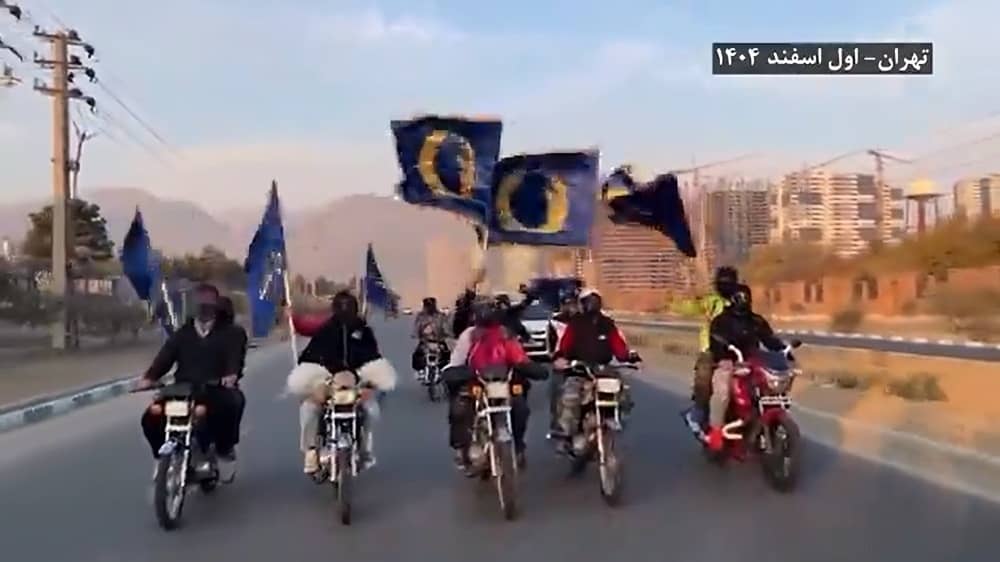
The most striking admissions in the report concern the domestic impact of the PMOI’s “Resistance Units.” The regime drops its usual dismissive posture to plainly state the profound social impact these networks have achieved on the ground. Acknowledging their effectiveness, the state media writes: “It is worth mentioning that these units have always played a major role in the nationwide protests inside the country”.
This acknowledgement is particularly significant against the backdrop of the Resistance Units’ expanding activities and, above all, the decisive role attributed to them during successive nationwide uprisings. Despite waves of arrests, harsh prison sentences, and executions intended to intimidate a younger generation and deter it from joining or supporting these networks, the number and scope of the Resistance Units have continued to grow. The regime’s repressive campaign appears to have produced the opposite of its intended effect, while its own media is now compelled, in the regime’s characteristic language, to acknowledge the influence and operational reach of these networks. Such an admission is revealing in itself: it reflects the authorities’ deepening anxiety over the growing presence of what they regard as their principal organized opposition force inside the country.
“The activity attributed to these units extended beyond field operations into security, cyber, and media domains,” the report said. “Notably, the ‘Uprising till Overthrow’ hacker group—affiliated with the organization—claimed responsibility for a May 7, 2023, cyberattack on the servers of the Ministry of Foreign Affairs, leaking classified documents. Consequently, the report concludes that the PMOI’s strategy has evolved from 1980s conventional warfare and 1990s urban assassinations into a ‘combined model’ encompassing political, military, intelligence, and cyber operations alongside the exploitation of domestic unrest.”
The Illusion of the External Enemy: How Domestic Agency Is Redefining #Iran’s Future https://t.co/4s1rqCF8gE
— Iran Freedom (@4FreedominIran) July 12, 2026
Furthermore, the timing of this publication coincides with volatile regional conflicts, prompting the state media to examine how the organization adapts its approach across changing circumstances and geographical locations. Conceding this continuous evolution, the Hawza News report notes: “An examination of the trend of the PMOI’s combat activities from the end of ‘the imposed war’ (war with Iraq) to ‘the Ramadan War’ (40-day war with Israel and the United States) shows that rather than adhering to a single, fixed method of struggle, the organization has always sought to adapt its strategy to political, security, and regional developments”. Highlighting the Resistance’s strategic positioning during recent Middle Eastern conflicts, the report adds: “The organization tried to present the war not as a foreign action against Iran, but as a sign of the government’s weakness and an opportunity to activate opposition forces”.
The regime further acknowledges the sophistication of this approach, stating, “By avoiding open support for foreign military operations, the organization tried to present itself as an independent movement that considers regime change not as the product of a foreign attack, but as the result of the activity of ‘organized resistance'”. By putting these exact words to print, Tehran reveals its frustration with an adversary that refuses to fall into predictable geopolitical traps, instead advancing regional developments to strike the clerical dictatorship.
Watch and judge how an #Iranian state official reveals his fear of the MEK #ResistanceUnits in the midst of #IranRevoIution pic.twitter.com/ludxvDwmSl
— NCRI-FAC (@iran_policy) January 17, 2023
The social impact of such a publication is profound. For the broader, disillusioned Iranian public, the regime’s obsession with a supposedly defeated enemy only serves to validate the PMOI’s relevance and organizational capacity. If the opposition were truly neutralized, the religious nerve center in Qom would not dedicate its resources to analyzing its every move and do a great deal of explanation for its audience.
More importantly, for the regime’s loyal base—the Revolutionary Guards, the Basij militia, and the clerics themselves—this narrative serves as an urgent, panicked rallying cry. By illustrating the multifaceted nature of the PMOI’s operations and quoting the opposition’s strategic successes, the state is trying to shock its demoralized ranks out of their complacency. It is a desperate plea for unity in the face of an adversary that, according to the regime’s own admission, has successfully adapted to every strategic hurdle thrown its way over the last four decades. Ultimately, Tehran’s decision to study the long struggle of its greatest rival reveals a decaying establishment terrified of its ultimate fate, reading the writing on the wall in real-time.