

Three-minute read
For too long, discussion about Iran’s future has been distorted by a false question: who is more popular under a dictatorship? In a country ruled by censorship, repression, and systematic political exclusion, popularity cannot be measured in any meaningful democratic sense. The real issue is not who can generate the most noise, but whether there is a serious democratic alternative capable of ending religious tyranny and placing sovereignty in the hands of the people.
That is where the National Council of Resistance of Iran (NCRI) assumes its importance.
The significance of the NCRI is not that it asks to be accepted in place of the people. On the contrary, its political meaning lies in its commitment to the people’s right to decide Iran’s future. Its role is to represent an organized democratic alternative to the ruling theocracy and to demonstrate that Iran is not condemned to choose between continued clerical rule and the return of another dictatorship.
This distinction is essential. Iran does not need a change in faces while the structure of oppression remains intact. It does not need a new form of authoritarian rule, whether under religious or monarchical banners. The Iranian people deserve a republic based on freedom, pluralism, and the ballot box. The NCRI’s importance lies in the fact that it has consistently advanced that vision: a democratic republic founded on the separation of religion and state, equal citizenship, and popular sovereignty.
Democratic change in #Iran shines on the horizon. But until that true moment of joy and relief enables the power of the ballot box, perhaps we shall opt for “#integrity over popularity” by measuring actions rather than words.https://t.co/B6fXrDkBWb
— NCRI-FAC (@iran_policy) August 10, 2023
The struggle in Iran is not merely against a ruling faction or a failed government. It is a struggle against the principle of religious dictatorship itself. The demand is not for reform within tyranny, but for a complete break from the system of Velayat-e Faqih and the establishment of a republic answerable to the people.
This vision is defined by democratic principles. It calls for freedom of expression, freedom of parties and assembly, the abolition of repression, and equality before the law. It rejects discrimination in all its forms and insists on the rights of Iran’s diverse ethnic and national communities, including Kurds, Baluch, Arabs, and Turkmen, who have suffered under successive dictatorships. It also insists that the future of Iran must be built on gender equality, not as a symbolic promise, but as a governing principle.
Women’s leadership is central to this democratic outlook. Any genuine alternative to the current regime must recognize the decisive role of women in both the struggle for change and the building of a free society. A political movement that does not uphold women’s equal participation in leadership cannot credibly claim to represent a democratic future for Iran. In this respect, the Iranian Resistance has made equality a matter of structure, principle, and political practice.
Khomeini,the great thief of the century arrived
He was at peak of his social & religious popularity, making the situation more complex for us
In half a century of dictatorship, the Shah & his father had only made room for the network of mullahs to flourishhttps://t.co/wRK0GeiAOo— Maryam Rajavi (@Maryam_Rajavi) February 4, 2023
Another defining feature of this alternative is its independence. Iran’s future cannot be shaped through foreign arrangements, imposed formulas, or external bargaining over the heads of the Iranian people. The overthrow of the regime and the birth of a democratic republic must come through the people of Iran and their organized resistance. This is not only a matter of legitimacy; it is the only path to lasting change. A free Iran cannot be imported. It must be won by the Iranian people themselves.
Developments inside the country underscore this reality. The persistence of protest, uprising, and organized resistance shows that the demand for change is alive and irreversible. Despite repression, executions, and intimidation, the regime has not succeeded in extinguishing the will of the people. The existence of organized resistance on the ground carries an important meaning: democratic change in Iran is not a fantasy or an abstract hope. It has a social force, a political direction, and a determined constituency.
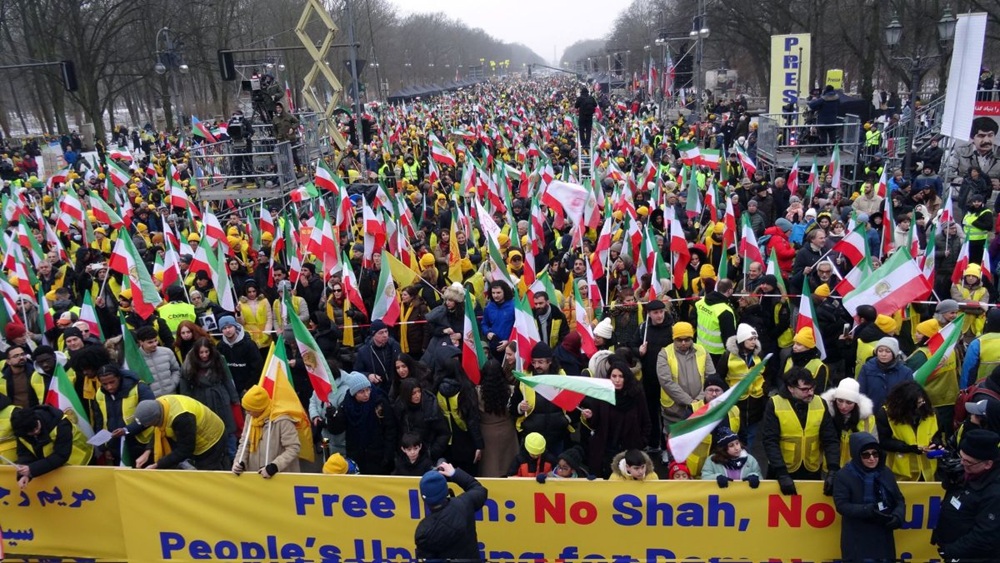
This is why the NCRI matters in the current moment. It stands for a democratic alternative that rejects both the Shah and the mullahs, both past and present dictatorship. It affirms that the Iranian people are entitled not simply to protest tyranny, but to replace it with a republic based on freedom, equality, and the sovereignty of the people. That is the real issue before Iran—not a contest of appearances, but the existence of a prepared democratic alternative capable of opening the way to a free republic.